Comments
  Print
Print  Mail
Mail Large Medium Small
Job fears voiced over eased family planning policy
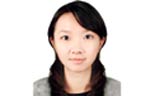
Miao Zhiming has had a choice to make: Child or job?
The 31-year-old Shanghai resident is planning to have a second child this year, after China relaxed its decades-long family planning policy by allowing a couple to have a second child as long as one of them is a single child.
But Miao said that having a second child probably means she will lose her job.
Zhu Hongyan, a senior careers consultant at jobs website zhaopin.com,
said many women will experience the same dilemma.
Employers are hesitant about hiring women who plan to give birth, according to Zhu.
She said the eased family planning policy will place many women who already have a child, but are eligible for a second, at a disadvantage when looking for jobs.
Political advisers offered their suggestions on helping to solve the problem at the meetings of China's top legislature and political advisory body in Beijing on Friday, on the eve of International Women's Day.
Fan Jinshi, a political adviser, said the government should roll out more policies to prevent employment discrimination against women, ensuring that they retain their jobs and that their wages are not cut during pregnancy and maternity leave.
Employers violating the rules should be punished, said Fan, who is president of Dunhuang Academy in Gansu province.
Liu Yanqin, a senior manager at a clothing company in Nantong, Jiangsu province, said the new second-child policy has made the company even more hesitant about hiring young women.
"It is not about discriminating against women," she said. "Our problem is a practical one.
"If half of our management office comprises women aged from 25 to 45, the possibility of many of them asking for maternity leave increases greatly with the second-child policy in place," she said.
"If that happens, our office will stop functioning."
Zhang Ping, another political adviser, said she understands employers' difficulties.
"Enterprises have to think about their own input and output," said Zhang, president of Gansu Maoyuan Accounting Firm.
The Grant Thornton International Business Report 2014, released on Friday, says that Chinese companies have made progress in supporting working mothers.
It says 36 percent of Chinese businesses offer paid maternity leave on top of the legal requirement and that 33 percent of businesses in China retain jobs for up to a year for women on maternity leave.
But improvements are still needed when compared with developed economies, the report said.
Only 30 percent of Chinese businesses allow flexible working hours, far behind the global average of 63 percent, while about 31 percent of Chinese businesses provide additional unpaid leave, lower than the global average by 20 percentage points.
Deng Xiaohong, chief physician at the Beijing Obstetrics and Gynecology Hospital, said companies can adopt flexible work schedules for young mothers.
"For example, women who have to take care of their children can be allowed to sign a part-time contract with their companies," said Deng, who is also a political adviser.
Women should also be allowed to work at home when they are breast-feeding, if conditions allow, she said.
Political adviser Yang Jia suggested companies set up child care centers in the workplace to help young mothers. Yang is also deputy head of the China Blind Persons' Association.
But Lyu Pin, a women's rights advocate in Beijing, said women must learn to make their own decisions on family planning.
"The decision to have a second child, more often than not, is made by the husband or the family. Women, who bear children and all the burdens, are put in a more vulnerable position," she said.
"In China, women's consciousness about making their own decisions regarding whether to have children and how many children they want has been in hibernation because of the old family planning policy."
Contact the writers at yangyao@chinadaily.com.cn and zhengxin@chinadaily.com.cn

Copyright 1995 - . All rights reserved. The content (including but not limited to text, photo, multimedia information, etc) published in this site belongs to China Daily Information Co (CDIC). Without written authorization from CDIC, such content shall not be republished or used in any form. Note: Browsers with 1024*768 or higher resolution are suggested for this site.
License for publishing multimedia online 0108263 Registration Number: 20100000002731