Comments
  Print
Print  Mail
Mail Large Medium Small
With a population of more than 1.3 billion, China, still a developing country, cannot afford excessive welfare programs, particularly in terms of health care provision, a senior legislator said on Saturday.
Chen Zhu, vice-chairman of the Standing Committee of the National People's Congress and former minister of health, said, "Even in some Western countries, health insurance policies in the context of an excessive welfare program have become seriously strained and can hardly be sustained.
"This is certainly the case for China, such a populous country charged with major development tasks."
Chen made the remarks on the sidelines of the ongoing NPC session in Beijing.
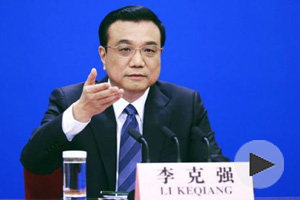
He cited Premier Li Keqiang's comments on health as he delivered the government work report on March 5.
"China must resolutely press ahead with medical reform and work out a Chinese solution to the global problem so that the Chinese people enjoy a happier and healthier life," Li said.
The government work report pointed to a new trend of the ongoing reform to the country's healthcare system: the further improvement of the mechanism by which the government, employers and employees share the costs of basic medical insurance, he added.
"That's a rational and more sustainable method, in fact," Chen said.
Under the medical reforms initiated in 2009, China has to date established almost universal healthcare for the entire population, according to Li Bin, the minister of the National Health and Family Planning Commission.
Government subsidies to the urban-rural household medical insurance scheme will be raised to 320 yuan ($52) per year starting in 2014, she revealed at a news conference on Thursday.
Notably, under the new rural cooperative medical system, people will pay an annual premium of 90 yuan this year, Chen Zhu said, with the government paying the rest.
Previously, the contributions made by individuals were set at 80 yuan, he said.
"The 10-yuan increase just highlights the new reform trend," he said.
Chen Zhongqiang, a CPPCC member and the director of the Peking University Shougang Hospital, noticed the new orientation as well.
"We are still exploring the Chinese solution the premier pointed to," he said.
But he said the aim is clear: to ensure access to basic healthcare for all Chinese people, at a level the country's finances can sustain and in a way that all stakeholders, including the patients and the healthcare providers, support.
With more than 95 percent of the Chinese population now covered by some sort of health insurance program, public demands for quality care have continued to increase, he said.
"Given China's economic situation and limited medical capacity, constant reforms are necessary to strike a balance," Chen said.
China cannot afford a "cover-all" health insurance policy, as seen in some industrial countries, he said, and the low-quality care offered in India would not satisfy the Chinese people.
"So China has to find its own solution; simply copying the experiences of others won't work at all," he said.
Chen urged decision-makers to figure out a clear blueprint for future reform.
Zhong Nanshan, an academic at the Chinese Academy of Engineering and an NPC deputy, agreed with the need for reform.
He denounced the ongoing medical reform as incapable of addressing major problems, such as issues of access and quality in medical care.
Moreover, there has been little improvement in strained doctor-patient relationships, he said.
A lack of confidence and enthusiasm among medics is mainly to be blamed, he pointed out, citing a skewed payment system as the reason behind this.
By way of a solution, he suggested the public hospitals be run as public service providers, rather than interest-oriented businesses.
"Problems in the medical system can only be cured by changes to the system itself," he said.
shanjuan@chinadaily.com.cn

Copyright 1995 - . All rights reserved. The content (including but not limited to text, photo, multimedia information, etc) published in this site belongs to China Daily Information Co (CDIC). Without written authorization from CDIC, such content shall not be republished or used in any form. Note: Browsers with 1024*768 or higher resolution are suggested for this site.
License for publishing multimedia online 0108263 Registration Number: 20100000002731