VII. Respecting and Protecting Freedom of Religious Belief
The Constitution stipulates that freedom of religious belief is one of citizens' fundamental rights. Today's Tibet is home to various religions, such as Tibetan Buddhism, within which exist different sects, Bon, Islam, and Catholicism. After democratic reform, Tibet put an end to theocracy, separating politics from religion and so restoring the latter's true significance. For years, the central government and the local government of Tibet Autonomous Region have fully respected citizens' right to freedom of religious belief, and given equal attention and protection to all religions and sects to ensure normal religious activities and religious beliefs are protected according to law.
Religious activities are respected and protected. Currently, there are 1,787 sites for different religious activities in Tibet, and more than 46,000 resident monks and nuns. Tibet Autonomous Region and seven cities all have Buddhist associations. The Tibetan branch of the Buddhist Association of China has set up the Tibetan Buddhist Institute, the Tripitaka Scripture Printing Lamasery, and the Tibetan Buddhism journal in Tibetan language. Tibetan and other minority ethnic groups lead their religious lives and carry out religious activities according to native traditions. In Tibet Autonomous Region, religious festivals are celebrated in the same way they always were. They include more than 40 major religious activities, such as pilgrimages to holy mountains and lakes, the Saga Dawa Festival, the Buddha Exhibition Festival, and the Lamaist Devil Dance Festival, all of which are protected and inherited. Almost all religious believers have scripture halls or shrines at their homes. Each year, millions of pilgrimages to Lhasa are made. In Tibet, prayer flags and mani stones are seen everywhere. All major temples are full of believers prostrating themselves before Buddha, spinning prayer wheels and paying homage to Buddha. Tibetan people enjoy full freedom in their conduct of religious activities. To meet the religious needs of different believers, Tibet has four mosques and one Catholic church. These religions are also respected and protected according to law and coexist in harmony with other religions.
Tibetan Buddhist culture is respected and protected. The central government and the local government of Tibet Autonomous Region have always regarded Tibetan Buddhist culture as an important component of traditional Chinese culture, offering protection and reinforcing the collection, compilation, publication, and research of religious classics. The central government set a budget of more than 40 million yuan for the revision and publication of the Tibetan Buddhist canons Kangyur and Tengyur, a 20-year project entailing the efforts of more than 100 Tibetan experts. Since the 1990s, the Tibetan-language Chinese Tripitaka - Tengyur (collated edition), A Tibetan-Chinese General Catalogue of the Tibetan Tripitaka, A Commentary on Tshad-ma sde-bdun, Five Treatises of Maitreya, and Annotations on Pramanavarttika Karika - the Solemn Snowland have been successively compiled and published. More than 1,490 copies of Kangyur have been printed, and the ritual procedures, biographies, and treatises on Tibetan Buddhism have also been published to meet the study demands of monasteries, Buddhist monks and nuns, and lay believers. Treatises on Buddhism written and published by religious research institutes, eminent monks and scholars, such as Collation and Research of Pattra-leaf Scriptures, Collation of Sanskrit Pattra-leaf Scriptures Extant in Lhasa, Studies of the Origin and Development of Religions and Religious Sects in Tibet, Reincarnation System of Living Buddhas, History of Buddhism by Guta, Records of Tibetan Bonist Temples, Records of Tibetan Buddhist Monasteries in China, and The Art of Murals of Buddhist Monasteries in Tibet have been published.
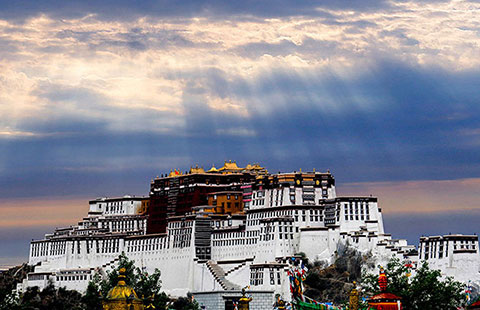
Temples are maintained and protected. Since the 1980s, the state has allocated funds, gold, and silver to maintain, renovate and protect temples. More than 1.4 billion yuan has been spent on restoring Tibetan cultural relics and refurbishing key monasteries. A total of 6.7 million yuan, 111 kg of gold, 2,000 kg of silver, and a large amount of jewelry has been used to renovate stupas and prayer halls from the Fifth Panchen Erdeni to the Ninth Panchen Erdeni. The state budget to build these for the 10th Panchen Erdeni was 66.2 million yuan and 650 kg of gold. In 1994, the state allocated another 20 million yuan to renovate Ganden Monastery. Since 1995, the central budget has given active support to the maintenance and protection of monasteries listed as state key cultural relics units, such as the Potala Palace, Norbulingka and Sakya Monastery.
The Living Buddha reincarnation is proceeding well. The Living Buddha reincarnation is a succession system unique to Tibetan Buddhism, and is respected by the state and governments at different levels of the autonomous region, the state having issued the Measures on the Management of the Reincarnation of Living Buddhas of Tibetan Buddhism. Through traditional religious rituals and historical conventions like drawing lots from a golden urn, in 1995 Tibet Autonomous Region sought out and identified the reincarnation of the 10th Panchen Erdeni, and conferred and enthroned the 11th Panchen Erdeni, with the approval of the State Council. Tibet now has 358 Living Buddhas, more than 60 of whom have been confirmed through historical conventions and traditional religious rituals.
The system whereby Tibetan Buddhist monks learn sutras is improving since the autonomous region issued the Opinions on Building a Branch of the Tibetan Buddhist Institute and Methods of Awarding Academic Ranks in the Tibetan Buddhist Institute (trial). The China Tibetan Language High-level Institute of Buddhism has been set up in Beijing, and the Tibetan Buddhist Institute in Lhasa. Both recruit and train senior Buddhist teaching personnel. More than 60 monasteries of various sects in Tibet have their own sutra learning classes, and teach and confer degrees according to tradition. Since 2005, senior academic ranks examinations and degree conferring ceremonies have been held each year at the China Tibetan Language High-level Institute of Buddhism in Beijing, and degree examinations unique to Gelug held in Jokhang Temple and the three major monasteries in Lhasa. So far, a total of 84 monks have received senior academic titles in Lhasa and 46 in Beijing.


Copyright 1995 - . All rights reserved. The content (including but not limited to text, photo, multimedia information, etc) published in this site belongs to China Daily Information Co (CDIC). Without written authorization from CDIC, such content shall not be republished or used in any form. Note: Browsers with 1024*768 or higher resolution are suggested for this site.
License for publishing multimedia online 0108263 Registration Number: 130349