The autumn in Beijing is not only about foliage. We always have more to expect.
Chinese Communist Party will hold a vital meeting in Beijing from October 26 to October 29, at which the development roadmap for China from 2016 to 2020 will be discussed, namely China's 13th Five-Year Plan.
The Five-Year plans are China's development agendas set by CCP. We have accomplished 12 Five-Year plans in the past, and here comes the 13th. In Chinese traditions, every 60 years marks a circle, so the year 2016 will be the beginning of a new circle. Hence, we have good reasons to believe that the 13th Five-Year Plan will be a brand new start for China.
People all around China are paying close attention to this plan. In accordance with China's development goal, a moderately prosperous society shall be built by 2020. The phrase "moderately prosperous society" or in Chinese "Xiaokang", has its special meaning to Chinese people. For thousands of years, it describes a promising prospect for the development of our nation and the improvement of people's life. It means not only steady economic growth, but also a real leap-forward for people's living standard, including the 70 million impoverished populations in China.
To achieve this goal is critical but not easy. We've seen China's president Xi Jinping discussing this agenda with local government officials from 18 provinces from May to July. This shows how much emphasis the Chinese leaders are putting on this agenda to make it scientifically reasonable and reliable.
The 13th Five-Year plan concerns much more than the future of China. Statistics from the World Bank shows that China has contributed to 30% of the global economic growth in the past two years. Martin Wolf, chief economics commentator at the Financial Times once said, as the second largest economy in the world, if China sneezed, the world economy would catch a cold according. China is promoting the Belt and Road Initiative, which will cover 60 countries and regions with a total population of 4.4 billion, and account for 30 percent of the whole global economy. The blueprint of this imitative shows China's efforts on reforming the geographic distribution of the international economy. That also draws our attention to a key question: "Where will China go in the next five years?"
Like many people have said, China is still facing many unsolved problems. For example, the smog is hovering several major Chinese cities, which even caused discomfort of athletes at China Open. Besides, China has a population of over 1.3 billion, which is over four times more than that of America. The population scale makes all the problems even more challenging. However, the CCP has been quite experienced in facing the complexity of China. During the 12th Five-Year Plan, China's development has amazed the whole world with an 8 percent annual economic growth rate. More importantly, Chinese leaders have explored a unique development path for China and ensured the value of it.
This path is what President Xi Jinping mentioned as "Three laws" and "Three Developments"-- a scientific development path that follows the laws of economics; a sustainable development path that follows the laws of nature; and an inclusive development path that follows the laws of human society. With "laws of economics", "laws of nature" and "laws of human society" being highlighted in CCP's new policies, we can see GDP will no longer be the only performance appraisal for local government officials. China has passed more strict environmental protection provisions and released more specific plans to solve the poverty problems, especially for people living in remote rural areas.
We have confidence that the new development path will forecast the 13th Five-Year Plan a more effective one. This plan will also demonstrate a true meaning of the socialism with Chinese characteristics, which is to play by the laws of the market as well as the government regulation, and to pay attention to economic development as well as people's living standards. It's widely believed that such development path will benefit more people not only limited in China, where its value will apply to the world.
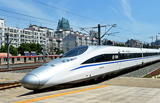
China's high-speed railway has been exported to the United States. Recently, a series of photos is going viral on the Internet, which shows Chinese people are climbing through the windows onto the trains in a railway station 13 years ago in Sichuan, when railroad and trains were still so rare in China. China's development is just like the expansion of its railroads and trains. The 13th Five-Year Plan will set a new track for China. Where will China go in the next five years? Let's just imagine!


Copyright 1995 - . All rights reserved. The content (including but not limited to text, photo, multimedia information, etc) published in this site belongs to China Daily Information Co (CDIC). Without written authorization from CDIC, such content shall not be republished or used in any form. Note: Browsers with 1024*768 or higher resolution are suggested for this site.
License for publishing multimedia online 0108263 Registration Number: 130349