New challenges need attention, including climate change, border issues and relations with the US
China's foreign policy has undergone several significant transformations since the early 1950s.
After three decades of isolation and disputes with the United States, the Soviet Union and India, China is now engaged globally. It has constructed a world class economy (and the second largest in the world), and is rapidly becoming a world power. All of this success, though, presents China with new challenges that require an updated and more nuanced foreign policy as would befit a great power.
The first challenge is how to maintain stable and mutually beneficial relations with the US as it has generally managed to do since the early 1970s. As in the past, there is still much both sides can achieve by maintaining good relations. Contrarily, both sides will suffer from an antagonistic relationship.
Second, China must find a way to maintain reasonably good relations with countries on its borders. Relations have clearly improved with two of its neighbors, Russia and India. The same can be said for the former Soviet republics along China's northern border, aided by periodic, multilateral consultations.
Third, China should seek appropriate measures to fully resolve, or at least sharply reduce, the current enmity that exists with Japan and various nations abutting the South China Sea, including, Vietnam and the Philippines.
Fourth, as one of the two largest emitters of greenhouse gases (the US being the other), China needs to reduce harmful emissions. Domestically, air pollution is driving up death and morbidity rates to unsustainable levels; internationally greenhouse gases have stoked climate change in just a few years to a level scientists thought would take decades to reach. That is a foreign policy problem.
China and the US together generate more than half of the world's greenhouse gasses. They need to work even more closely together and invest more capital to reverse the growth of greenhouse gasses.
Finally, Beijing must find a way-alone, or in concert with others-to reduce or eliminate the nuclear catastrophe unfolding in the Democratic People's Republic of Korea.
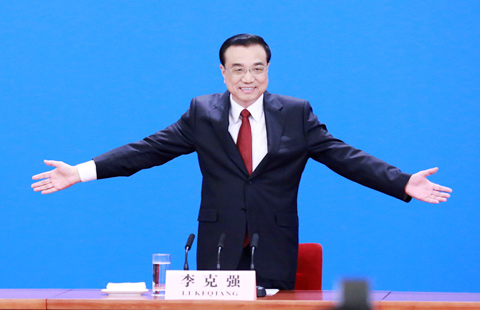
It seems clear that China's foreign policy, under President Xi Jinping, is more globally engaged than any other period in the history. President Xi himself has visited more than 30 countries since assuming office in late 2012, including virtually all of the countries linked in some way to the five foreign policy challenges I listed above.
As an emerging global power, China seeks to expand its influence in East Asia, and to some extent around the world. At the same time, Beijing appears to have calculated that its long term interests will not be best served (and indeed, that they could be seriously harmed) by aggressive behaviors that carry a significant risk of conflict.
Xi's frequent and far-flung travels during the past three years have heightened China's global visibility and, no doubt, its influence, while at the same time opening new economic opportunities to speed China's development.
Among the most important of these meetings was the one between Xi and US President Obama in Sunnylands (California) in 2013. At that meeting, Xi proposed that the US and China should pursue "a new model for major-country relationships", one based on nonconflict, nonconfrontation, mutual respect and win-win cooperation.
Xi's formulation for the conduct of China-US relations helped open the door to an expanded dialogue between the two countries that culminated in Xi's state visit to Washington in September. The meetings during that visit spoke to several of China's foreign policy challenges and also to some of the US's and produced agreements on macroeconomic policy coordination, climate change and nuclear nonproliferation.
There are other issues that weren't covered or were mentioned only in passing without generating an agreement; such as cyber security. Yet the state visit helped build further the understanding and trust between the two leaders that began to crystallize at the Sunnylands meeting two years earlier.
China has the capacity to manage its foreign policy challenges. Doing so would greatly enhance global stability and what nation under those circumstances would deny China a prominent seat at the table of nations?
The author is a respected analyst and official operating at the forefront of the US-China relationship and former president of the Washington State China Relations Council.
Copyright 1995 - . All rights reserved. The content (including but not limited to text, photo, multimedia information, etc) published in this site belongs to China Daily Information Co (CDIC). Without written authorization from CDIC, such content shall not be republished or used in any form. Note: Browsers with 1024*768 or higher resolution are suggested for this site.
License for publishing multimedia online 0108263 Registration Number: 20100000002731