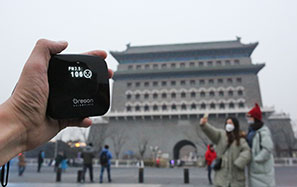
Are we losing the war on pollution?
Beijing - In 2014 Premier Li Keqiang called for a war on air pollution?- a bold and visionary declaration which signaled a major commitment on the part of China's leadership to combat the worst effects of pollution.
But the air pollution levels in China during the past month, and the past week in particular, are sobering. On the worst days, a map showing the geographic scale of pollution and the number of affected communities covered an area nearly the size of western Europe. Both the scale and persistence of the problem should make us pause and ask, are we losing the war?
One of the first phrases any newcomer to China learns is a common reference to 'da feng' (big wind). I have an app on my phone that predicts wind patterns, and parents throughout China plan children's outdoor activities according to wind patterns.
A stiff wind that blows out PM2.5 into the atmosphere and into other communities. An unexpected overnight rain. These will not change the fact that the economic drivers that lifted millions out of poverty over the past generation continue to pump out toxic levels of pollution into the air we breathe.
As the Premier himself said, waiting for wind is not a strategy for winning the war on pollution.
Undoubtedly, the scale of the problem is enormous, and the changes to energy generation and factory emissions cannot happen overnight. But with each passing the day, the costs of status quo are staggering - estimates, including health costs and loss of productivity due to pollution, range between 3% -6% of China's GDP each year.
WHO and the government can, and do, promote efforts to mitigate against the worst effects - advising the public to stay indoors and use air purifiers, to wear face masks that protect against PM2.5 when they must go out and to limit outdoor physical activity. But none of these measures reduce the levels of outdoor air pollution. We need to redouble efforts to address the root causes. The sheer scale of problem, rather than immobilizing us into paralysis, calls out for us to do more and do it more quickly.
In the meantime, we must address the lack of clarity around the four-tier air pollution rating levels. The latest air-pocalypse rated an 'orange alert,' even as actual pollution levels exceeded the more serious 'red alert' levels. Fundamentally, the public doesn't understand the rating systems. A lack of clarity leads to speculation and undermines trust in the system - the very systems meant to combat pollution and help win the war.
Another area deserving immediate attention is research. The national law on pollution called for more research on the public health impacts. We already know that sustained exposure to high levels of air pollution results in increased rates of heart disease, cancer (especially lung) and chronic respiratory problems. But we need to know more about the long-term versus short-term impacts and what measures can accelerate recovery from the worst impacts.
Here China can again take the lead, and combine its considerable scientific research assets with international research centers and contribute to global health scholarship - not only for its own population but for other countries already seriously affected by air pollution. WHO brings an international platform for such collaboration and stands ready to support China's efforts in this area.
Yes, winning the war on air pollution is going to be costly. Yes, it will be difficult. And if any country can defy the odds, it's China. We have seen that determination with the unprecedented economic growth that lifted hundreds of millions out of poverty. And we need to see it now in addressing the worst environmental impacts of that miraculous growth.
Let's win the war on pollution.
The author is World Health Organization Representative in China.