CPC Heroes
Zhou Enlai
(fmprc.gov.cn)
Updated: 2010-09-15 14:13

Zhou Enlai (March 5, 1898-January 8, 1976)
Served as Premier of the Government Administrative Council of the People's Republic of China (replaced by the State Council from September 1954), and Minister of Foreign Affairs before 1958; successively Served as Vice Chairman of the Central Committee of the Communist Party of China (CPC), Vice Chairman of the Central Military Commission, Vice Chairman and later Chairman of the Chinese People's Political Consultative Conference (CPPCC), etc.
A native of Huaian, East China's Jiangsu Province, with ancestral place in Shaoxing, East China's Zhejiang Province, founder of China's diplomacy and one of the main leaders of the country's practical foreign affairs; graduated from Nankai School in Tianjian Municipality in 1917 and went to Japan and France for further study; joined the Communist Party of China (CPC) in 1922 and served as Director of the Political Department of the Huangpu Military Academy from 1924 after returning home from abroad.
Successively guiding the Shanghai Workers' Armed Uprising and Nanchang Uprising after the failure of the country's Great revolution in 1927; Elected as a member of the Political Bureau of the CPC Central Committee at the First Plenary Session of the Sixth CPC Central Committee held in 1928; Entered the CPC Central Revolutionary Base lying across Jiangxi and Fujian provinces at the end of 1931, successively served as Secretary of the Central Committee of the Soviet Area of the CPC and Vice Chairman of the Revolutionary Military Commission of the CPC Central Committee; Joined the Red Army's Long March in 1934 and supported Mao Zedong's correct proposals at the Zunyi Meeting held in January 1935; Negotiated with Chiang Kai-shek as the plenipotentiary representative of the CPC Central Committee in the Xi'an Incident in 1936, and forced Chiang into accepting the CPC's proposal of fighting against the Japanese aggression.
Successively guided the affairs of the Yangtze Bureau and the Southern Bureau of the CPC during the Chinese War of Resistance Against Japanese Aggression, Represented the CPC to work for the United front in the ruling area of the Kuomintang (KMT), and launched a campaign to seek the CPC extensive supports from international personages; Elected as a member of the Political Bureau of the CPC Central Committee and party Secretary at the First Plenary Session of the Seventh CPC Central Committee; headed the CPC delegation to negotiate with the KMT after China won the victory in its war against Japan. Assisted Mao Zedao in organizing and commanding China's War of Liberation till the complete victory after Chiang Kai-shek launched a full-scale civil war.
Served as one of the main leaders in charge of foreign affairs of the CPC as early as before the founding of the People's Republic of China; Guided the drafting of the Common Program of the CPPCC, which at the first time has stated the basic principles of the new China's foreign affairs in the form of legislation; Invented numerous methods to establish diplomatic ties with other countries according to their attitude toward the Taiwan Question in the initial period after the establishment of the new China, such as full diplomatic ties, semi-diplomatic ties, and non-diplomatic ties but with trade and economic links.
Went to Moscow, Russia in February 1950 to assist Mao Zedong in negotiating with Stalin and forging with the Soviet Union the Treaty of Friendship and Mutual Assistance; Participated in the decision-making of China's War to Resist the US Aggression and Aid Korea in June the same year; Compelled the United Nations (UN) to agree to the Chinese government delegation attending the UN Security Council, during which the Chinese government delegation accused the United States of armed aggression into China's Taiwan in November; Held direct responsibility for the ceasefire of the Korean War and the signing of an armistice from July 1951 to July 1953; Put forward the guidelines for the construction of diplomatic teams, such as "take a firm stand, master policy, be adept in profession, and strictly abide by discipline".
Put forward the six diplomatic principles for the new China, such as "set up a new kitchen, lean to one side, entertain guests after cleaning up houses, Reciprocity, meet each other's needs, and rally with the world people'' at the first meeting of Chinese foreign envoys in 1952, on the basis of Mao Zedong's diplomatic thoughts; Made great efforts to popularize China's peaceful foreign policy after the ceasefire of the Korean War; First put forward the five principles of peaceful coexistence, such as "mutual respect for each other's sovereignty and territorial integrity, mutual non-aggression, mutual non-interference into each other's internal affairs, equality and mutual benefit, and peaceful coexistence'' when meeting Indian delegates visiting China in December 1953.
Later, the five principles were written into the prelude of the Agreement between China and India on Trade ties and Communication between China's Tibet and India; advocated with the premiers of India and Burma the five principles of peaceful coexistence as the universal principle guiding international relations while Premier Zhou was on a visit to the two countries in 1954; Headed the Chinese delegation to attend the Geneva Conference held in April 1954 and held talks with parties concerned in the spirit of seeking truth from facts, the tactics of building international united front, and the five principles of peaceful coexistence, to solve the issue of the Indo-China, and won independence and international recognition for the Northern Viet Nam, Laos, and Cambodia; Headed the Chinese delegation to attend the Asian-African Conference held in April 1955, further expounded the five principles of peaceful coexistence, put forward the guidelines of seeking common ground while shelving differences, participated in the drafting the ten principles of the Bandung Conference, and extensively made friends with newly-independent Asian and African countries;
Laid down by himself the guidelines for the settlement of historical issues, such as territorial demarcation and dual nationality with neighboring countries, thus stabilizing China's neighboring situation; Paid a visit to the Soviet Union, Poland, and Hungary in January 1957 after the occurrence of the Poland-Hungary Incident to correct mistakes made by the Soviet Union in its relations with other socialist countries and promote the solidarity within the socialist camp, and clearly pointed out that socialist countries should also base their relations upon the five principles of peaceful coexistence; Paid a visit to 28 Asian and African countries, such as Egypt, Algeria, Ghana, Guinea, Mali, and Pakistan from late 1956 to early 1964.
Put forward the five principles of developing China's relations with Asian and African countries and the eight principles for China's foreign aids, and stressed that the provision of aids should be based upon the principle of equality, mutual benefit, and giving respect to the sovereignty of the aided countries without any political condition attached; Put forward different methods for China's development of relations with developed countries: such as developing non-governmental relations to promote the development of official relations with Japan, establishing diplomatic with Britain and the Netherlands at the level of charge d'affaires, establishing a full diplomatic relations with France with principles and flexibility combined, which made France the first Western power with diplomatic ties with China, sitting down and negotiating with the United States whiling firmly opposing its aggression and interference into China's internal affairs.
Directly guided China-US talks at the level of ambassador in Geneva and Warsaw, Poland from 1958 to 1970, opening the door for Sino-US contacts. Grasped the rare opportunity provided by the US adjustment of its policy towards China and made the strategic decision with Mao Zedao to open Sino-US relations; Directly shepherded and chaired China's well-known "ping-pong'' diplomacy in 1971, received several secrete visits to China by Henry Kissinger, Assistant US National Security Affairs and the official visit to China by US President Nixon in 1972, and participated in the drafting and issuing of the Shanghai Joint Communiqué, and other diplomatic activities; Resolutely resisted the Soviet Union's attempt to control and interfere into China's internal affairs while trying to avoid the deterioration of bilateral ties between the two countries. Met with Alexsei Nikolayevich Kosygin, Prime Minister of the Soviet Union at the Beijing Airport in 1969 to ease tension between the two countries; Firmly exclude the Lin Biao and Jiang Qing Group's severe interference into China's foreign affairs and did utmost to correct the ultra-leftist mistakes in China's practical foreign affairs to retrieve and make up for losses.
Be adept at combining diplomatic theories with practices, combining principle with flexibility, combining internationally-recognized diplomatic rules and means with China's traditions and philosophical thoughts, thus forming diplomatic thoughts and style with Chinese characteristics; Main works including Selected Works of Zhou Enlai (volume I and volume II). Main diplomatic works and remarks collected into Selected Diplomatic Works of Zhou Enlai; To consult Zhou Enlai Diplomatic Thought for more reference.
 CPC Heroes
Zhu De
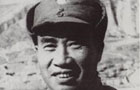
Zhu De, born in Yilong County of Sichuan Province in 1886 and passed away in 1976, is a great Marxist, proletarian revolutionary, statesman and military strategist.
Chen Yi

A native of Le Zhi, in Southwest China's Sichuan Province, and awarded by the People's Republic of China the military rank of marshal; Served as the country's Vice Premier (1954-1972) and Foreign Minister (1958-1972)