Milestones
Dates with destiny for CPC
(China Daily)
Updated: 2011-07-01 08:47
From its early beginnings, as a party with 50-odd members, the Communist Party of China (CPC) has weathered the storms of the 20th Century to become an 80-million-strong leader of the nation.
1949: Founding of the People's Republic of China

From Sept 21 to 30, 1949, various political parties, popular organizations, personages without party affiliation and representatives attend the first Chinese People's Political Consultative Conference (CPPCC). It elects the Central People's Government Council, with Mao Zedong as chairman, and appoints Zhou Enlai as premier of the Government Administration Council. After decades of warfare and social conflicts and an economy ravaged by high inflation, Mao proclaims the founding of the People's Republic of China on the Tian'anmen Rostrum on Oct 1, 1949. "The Central People's Government of the People's Republic of China was founded today!" declares Mao. More than 300,000 people hail the moment in the Tian'anmen Square. Fifty-four guns fire a salute 28 times, marking the CPC's 28-year history. China entered a new chapter. Oct 1 is declared National Day.
1921: Founding of the Communist Party of China
Between July 23 and 31, 1921, Mao Zedong, He Shuheng, Dong Biwu, Chen Tanqiu, Wang Jinmei, Deng Enming, Li Da, Li Hanjun, Zhang Guotao, Liu Renjing, Chen Gongbo and Zhou Fohai, representing 50-odd members of various Communist groups, hold the first National Congress in Shanghai. The last day's meeting is forced to move to a boat on the South Lake in neighboring Zhejiang province. The Communist Party of China is officially founded.
|
 A replica of the boat used for the First National Congress of the CPC in Jiaxing. The last day's meeting was forced to move from Shanghai to the boat on the South Lake of neighboring Zhejiang province. |
|
 Red Army troops cross the Jiajin Mountain in Sichuan province during the Long March. |
|
 The Eighth Route Army after winning a battle against Japanese aggressors in Laiyuan, Hebei province, in 1940. |
1934-1936: Long March
In October 1934, the main force of the Red Army sets out from Yudu in Jiangxi province and embarks on the Long March, which is seen as a strategic retreat to combat the Kuomintang regime. Later, various forces of the Red Army start their long marches, traverse more than 10,000 km and eventually join forces in Gansu province in October 1936. In January 1935, the Political Bureau of the CPC Central Committee holds an enlarged meeting in Zunyi, Guizhou province, along the way of the Long March. The Zunyi meeting establishes a new central leadership represented by Mao Zedong.
1937-1945: The War of Resistance against Japanese Aggression
In July 1937, Japan launches all-out aggression against China. The Eighth Route Army and the New Fourth Army, under the leadership of the CPC, fight against most of the Japanese forces, playing a decisive role in the eventual victory.
1945-1949: War of Liberation
From June 1946, the Kuomintang armies launch a concerted attack on the Liberated Areas led by the CPC, and a large-scale civil war starts. Through the Liaoshen, Huaihai and Pingjin campaigns, the CPC overthrows the Kuomintang and wins a great victory in 1949.
1958-1961: Great Leap Forward
The central government, led by the CPC, launches an economic and social campaign in 1958 to rapidly transform China from an agrarian economy into a modern Communist society. The campaign eventually comes to an end as it causes imbalances in the national economy, fiscal deficits over consecutive years and great hardship for the people.
1966-1976: "Cultural revolution"
The "cultural revolution", lasting from May 1966 to October 1976, is initiated and led by Mao Zedong. Taking advantage of Mao Zedong's mistakes in his later years, the "Gang of Four" engage in activities that bring great catastrophe to the country and people.
1978: The Third Plenary Session of the 11th CPC
The Third Plenary Session of the 11th Central Committee of the CPC, held in December 1978, decides to shift the focus of the Party's work to socialist modernization and sets a policy of reform and opening-up to the outside world initiated by Deng Xiaoping.
1982: Building socialism with Chinese characteristics
Following the initial successes in socialist modernization and the implementation of the reform and opening-up policy, the CPC holds its 12th National Congress in September 1982. At that congress, Deng Xiaoping sums up China's recent historical experience and draws a basic conclusion: The universal truth of Marxism must be integrated with the concrete realities of China, and China must blaze a trail of its own, building socialism with Chinese characteristics.
1992: Socialist, not capitalist
At the crucial juncture of China's reform and opening-up course in January 1992, Deng Xiaoping tours southern China where he delivers speeches aimed at clarifying whether the establishment of special economic zones is capitalist or socialist in nature. After a visit to Shenzhen, he says Shenzhen's achievements are socialist not capitalist in nature, as they have improved productivity and people's livelihoods. His words help push forward China's reform and opening-up in the 1990s.
1997: Private sector acknowledged
In the report to the 15th National Congress of the CPC held in September 1997, Jiang Zemin positions the non-public sector as an important part of the socialist market economy.
2003-2007: Scientific Outlook on Development
The Scientific Outlook on Development is a major strategic concept put forward by Hu Jintao, general secretary of the Central Committee of the CPC, in 2003. The concept puts people first and calls for comprehensive, balanced and sustainable development. The 17th National Congress of the CPC writes it into the Party constitution in 2007.
 CPC Heroes
Zhu De
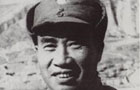
Zhu De, born in Yilong County of Sichuan Province in 1886 and passed away in 1976, is a great Marxist, proletarian revolutionary, statesman and military strategist.
Chen Yi

A native of Le Zhi, in Southwest China's Sichuan Province, and awarded by the People's Republic of China the military rank of marshal; Served as the country's Vice Premier (1954-1972) and Foreign Minister (1958-1972)