Summer Davos to pinpoint opportunities
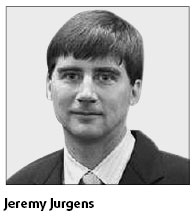
Editor's note: Jeremy Jurgens, Senior Director of Global Growth Companies at the World Economic Forum, talked to China Daily's Yao Ying recently on preparations for Summer Davos, opening in Dalian on Thursday. Excerpts:
CD: How big is this year's Summer Davos? How is it going to help economic recovery in Asia and the world?
Jurgens: We have more than 1,300 leaders from almost 90 countries. There is a very strong representation from the business sector, as well as political representatives, academics and scientists.
The Summer Davos plays a very important role in bringing leaders together to exchange ideas, understand where are the opportunities, what are the critical policy areas to be addressed, and how they can manage to achieve growth in the current environment.

What is particularly telling is that most of the companies joining us are comfortably growing. We have a selection process to identify the global growth companies. They have strong business models, strong leadership and demonstrated growth. They have continued to grow despite the crisis.
They're like China in the sense that China is a New Champion. Its growth may have slowed, but 8 percent growth for an economy of this size is nonetheless quite impressive.
CD: What would you comment on China's performance during the financial crisis?
Jurgens: It's very impressive how China has been navigating the crisis. We have been able to observe the benefits of consistent policy-making that enables the government to quickly implement policies and achieve the growth target of 8 percent. When Premier Wen Jiabao joined us in Davos in January, he said China had set the target for 8 percent. Many people were quite skeptical: How can you achieve 8 percent growth?
But the policy decisions related to the stimulus package have been quite effective. You have everything from advancing investment in infrastructure, to strengthening the social safety net through looking more closely into pensions and health coverage.
CD: How is this Davos going to be different from the previous ones? What are the highlights?
Jurgens: Two areas deserve particular attention. One is green economy and the other is science and technology. These are important tools for business leaders to achieve growth.
CD: We're told discussions about the green economy in this summit will be centered on "the most critical investments to be made" and their immediate effect. Can you elaborate?
Jurgens: The green economy is often associated with renewables and efforts to address climate change, but it also includes efficiency, regulatory policy, environmental protection, and so on. We believe it is important to take a broad view on the green economy, especially when energy prices are relatively lower and the topic may not get the same level of attention.
It you assume a long-term trend of gradually increasing energy prices, every step taken toward higher efficiency now will be beneficial throughout the production cycle. So companies set up assembly lines and make them more efficient. They develop minimal packaging and shipping materials, they take advantage to improve the logistical systems. These are very immediate aspects of the green economy that companies assess to reduce costs and improve efficiency.
Over the longer term, we can look into development of solar power, wind power and other renewable sectors that have longer-term benefit.
CD: Another pillar of the summit's agenda is to address societal needs through innovation. What do you think of China's efforts in social development?
Jurgens: That it's so high up in the policy agenda shows that the government is serious and looking to make improvements. It's important to consider the interconnections across different domains, e.g., social security and health. It will be a long process. If we look at the high-speed rail to Shanghai, everyone recognizes it will take several years to build. You have to build the pillars, lay the track, set trains on the track, putting everything in place.
The same is the case for social security and healthcare reform. Policymakers are working on it but it won't be an easy, overnight solution. It requires continued focus and attention. Effective social development requires a solid economic foundation and business plays an important role in this domain.
CD: What are the changes you have seen in China's development model after its external demand dropped during the economic downturn?
Jurgens: My impression is that there is definitely a re-calibration taking place. The stimulus package helps provide a cushion so that companies, in terms of investment, can re-adapt. Entrepreneurs are creating new models to meet the interests and needs of Chinese consumers, looking out to consumers in Asia and other regions, and probably reducing their expectations for demand from Western consumers.
Specific industries can be strongly affected but new companies rise up. Through the combination of focus on infrastructure, goods and services inside China, and improvement in social security system, individual Chinese can feel more confident about their future and spend some of their savings.
Analysts at Nomura International have been looking into the role of the growing Chinese middle class. They found that when economies reach the stage of development where a large section of the population enters the middle class, we can observe dramatic changes in behavior and spending. This can go hand in hand with the improvement in the social security system to free up savings and cash in the system.
CD: What would you say about Chinese entrepreneurs?
Jurgens: Overall I'm extremely impressed with the enthusiasm and dynamism of the Chinese entrepreneurs. They are critical in helping China achieve its growth. Dalian provides a great platform for the entrepreneurs. They can come together, exchange ideas and learn from each other. They can continue to develop their businesses and contribute, as well as gain, important ideas.
One of the reasons we invite technologists and scientists to join us is to help catalyze new ideas and new opportunities. Scientists benefit from interacting with entrepreneurs to say: How are we going to take advantage of this idea and bring benefit to society?
CD: What's your suggestion for Chinese companies seeking to invest abroad as we saw quite a few failed attempts in the past years?
Jurgens: It's a learning process. In many cases, companies buy distressed assets at a low price. To enter a new environment and manage a company that is already performing poorly can be quite challenging. This can be exacerbated by cultural differences.
As we move ahead, we'll see more collaboration, as we recently saw between GM and FAW, in which the opportunities and risks are shared. There are other positive examples in doing business well. Tencent has been quite successful in adapting to customer needs and creating new business models distinct to China. Suntech in Wuxi has become a world leader in the production of solar cells through its focus on international markets.
CD: How would you comment on China as the host for the Summer Davos?
Jurgens: That we have even more participants coming than last year is an excellent statement that people really enjoy coming to China. We selected the cities (Dalian and Tianjin) because we are confident in their ability to conduct successful summits.
They were chosen also because they represent the New Champion concept. Dalian has a rich international history, and it has a mix of traditional industries with new technologies, world-class infrastructure and strong leadership. Tianjin is the third pole of China's development after the pioneering steps taken in Shenzhen and Shanghai. We will definitely come to China for the next Summer Davos.
(China Daily 09/09/2009 page9)