Monopolistic media got social
When premier Zhou Enlai died in January 1976, Dong Jiyuan took her nine-inch television set to an ivory-carving factory in Beijing where she worked and watched the funeral with dozens of workmates.
The TV, a luxury for most people in those days, was placed on a make-shift stage, and a wooden frame that held magnifying glass was put in front of it so those at the back could see.
"Many people cried, including me," Dong says. "We were just workers, but we really cared about state affairs. Information was limited and we had few other cares."
With the paucity of "information" available, it was that TV that provided Dong with the few morsels on offer.
Even at home, watching TV was a public event. Dong's father, a Chinese medicine specialist, was one of the few who could afford a TV, and when he first put it in the courtyard for others to watch, neighbors would gather around and marvel at this little box with its flickering black and white pictures.
"People were so hungry for information," Dong says. "Once the television was turned on, there was an immediate hush, just like in a classroom. It was the way we got news: officials talked; we listened."
These days, it seems, the public are doing a lot more talking and public officials a lot more listening.
"Inexorably the centralization of information has turned into a process of decentralization, and that change has profound ramifications for society," Fu Guoyong, a historian and columnist, wrote in an essay published on Tencent.com - one of the many points of decentralization he talks of - and China's most popular social network.
"All the information used to come from a single source, but now the trend is for a multitude of sources, no tiers and rapid dissemination as the cost of information flow falls."
As for TV, Dong says programs began to be interesting in 1983, the year the annual Spring Festival Gala was first screened on China Central Television.
"Finally we had some entertainment."
Even as the entertainment improved, TV sets became cheaper and communal viewing became a thing of the past as people bought their own sets.
"I miss the days when people were closer physically, Dong says.
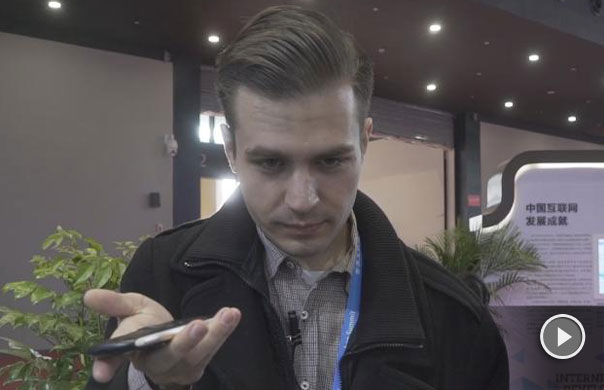
However, Li Heyang, 74, of Beijing, a former high school physics teacher, says new media can bring people together, too, even in a different way.
Li is the oldest member of a smartphone class for seniors his community has organized that has taught more than 200 elderly people how to access the internet using a phone and how to use apps to send and receive messages.
"I lost contact with many colleagues and friends when I retired," Li says. "At my age it is difficult to travel, but the smartphone brings us closer together. Young people are using smartphones to post microblogs, news reports and to book train tickets. I don't want to be left behind."
Li, born in a poor village in Jiangsu province, says that when he was 10 he used to listen to the radio while threshing wheat.
The only loud speaker in his village was installed at the top of a high pole outside, looking over Li and his fellow laborers.
"Most of it was political news, and it was all very solemn, echoing above our heads as we worked away.
"I read People's Daily and I talked with my classmates; I wanted to know what was going on in the world. I wanted to find answers, but in vain. What an individual could know at the time was very limited."
Nevertheless, newspapers were precious resources, he says. After dropping out of college because of the "cultural revolution" (1966-1976), Li says, he had the chance to resume his education at Peking University after the movement ended. But that opportunity was lost because the high school in rural Tianjin where he worked did not subscribe to the newspaper that carried the news of the movement's end.
"Isn't it bizarre how a lack of information can change a person's life? But that is exactly what happened to me then," Li says.
"You need information to stay connected with society."

(China Daily 05/30/2016 page15)