|
Home>News Center>World | |
|
|
|
|
|
|
|
|
|
|
||||||||||||||||||||||||||||||||||||||||||||||||||||||||||||||||||||||||||||||||||||||
|
|
4-day nuke talks end, US saying 'successful'
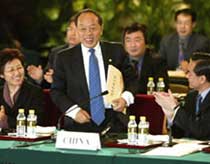
Six-party talks on North Korea's nuclear program ended on Saturday in Beijing, with all participants promising to push ahead with diplomatic efforts. The host, China, said that a third round of talks will begin no later than the end of June.
The disappointed North Korea criticized the United States, saying that Washington wasn't willing to make compromise and reach a settlement. The United States, North Korea and other governments agreed to hold more senior-level talks before July and form a lower-level working group to handle details of solving the 16-month-old dispute, China announced. The six nations failed to agree on the U.S. demand that Pyongyang abandon its nuclear program entirely.
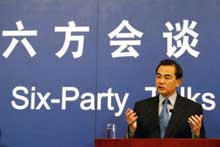
"The U.S. delegation did not have an attitude to resolve the nuclear issue through peaceful negotiations," Kim said at a news conference. The talks ended on a discordant note when the governments failed to issue a planned joint statement. In stead, the host China issued a "Statement of the Chairman". Still, a U.S. official said the atmosphere of two one-on-one meetings between the American and North Korean delegations was "much better" than during the previous round of talks. "The event has exceeded my expectations," said the senior official, who spoke to a group of reporters on condition of anonymity. However, he added: "The devil is in the details." Other participants in the talks were South Korea, Japan and Russia. South Korea said it was "satisfied" with the talks. Russia, in a statement from Moscow, said the talks were "useful." Washington repeatedly has demanded the comprehensive dismantling of the North's nuclear program, refusing to grant concessions if Pyongyang freezes the program but does not abolish it. The North says it won't give up nuclear activities that aren't related to weapons. "The parties did not have consensus on this proposal or the scope of North Korea's giving up nuclear weapons," said Wang Yi, the Chinese delegate and a vice foreign minister. However, he said, North Korea "made clear its readiness" to give up its weapons program "once the United States gives up its so-called `hostile policy' toward North Korea." The United States affirmed that had "no hostile intent" against the North. "It has no intention to invade or attack North Korea," Wang said. "It has no intention to seek regime change." The governments established what they called a framework to continue diplomatic work. Even before the talks started Wednesday, China warned that the dispute couldn't be solved in a single round of meetings. After conflict foiled the planned joint statement, China issued what it called a closing "chairman's statement." Wang, who read it out at a news conference, appealed to reporters not to dwell on disagreements. "There are plenty of them, which is an objective fact," he said. "I suggest you pay more attention to the positive." Nevertheless, he acknowledged, "The main reason for these differences is the extreme lack of trust." |
|
|
|
|
|||||||||||||||||||||||||||||||||||||||||||||||||||||||||||||||||||||||||||||||||||
|
|
|
|
||||||||||||||||||||||||||||||||||||||||||||||||||||||||||||||||||||||||||||||||||||||