
|
Home>News Center>Life | |
|
|
|
|
|
|
|
|
|
|
||||||||||||||||||||||||||||||||||||||||||||||||
|
|
China mass media blossom with popular magazines
China's biggest publishing success story is a 40-year-old, plain-looking magazine, filled with simple, grass-roots stories from the oral storytelling tradition. Circulation is still strong, but can `The Stories' survive the onslaught of the modern publishing world, wonders Zhao Feifei.
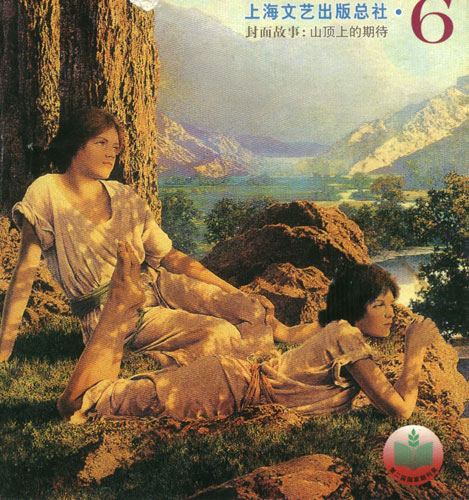
A retired accountant, Zhuang still possesses his trademark resonant voice, and says he still loves to tell stories. He credits the storytelling craze of the 1970s, which gave him the best years of his life, to the magazine ``The Stories.'' ``It fanned the enthusiasm of ordinary people for telling their own stories, whether they were real-life or fictional,'' he says. ``The Stories,'' published by the Shanghai Literature and Art Publishing House, is still, after four decades of ups and downs, one of China's most widely read monthly magazines today. People read it everywhere. It can be a good companion during a long journey or a steady ally, with regular bedtime stories for adults. With a current circulation of 4 million nationwide, second only to the 22-year-old Gansu-headquartered ``Readers,'' a ``Reader's Digest''-style magazine with a circulation that hits as much as 8 million, the publication seems to be on a continued upward trek. Beginning this year, the pocket-sized magazine is issued twice a month. Wu Lun, deputy editor-in-chief of the magazine, says that the increased frequency will better cater to readers' demands. ``The Stories,'' priced at 2.5 yuan (30 US cents) is not only a popular magazine in the country, but also what the domestic periodicals industry calls ``a miracle of publishing success.''
According to a survey by the International Federation of the Periodical Press in 1997, ``The Stories'' ranked No. 6 in the top 50 of the most popular periodicals around the world. Unusual in the publishing world, ``The Stories'' is a publication of oral literature and word-of-mouth tales. It publishes mysteries, adventures, old Chinese legends and jokes. ``The editorial board chooses stories for both entertainment and literary value. We want the characters our readers can care about,'' says Wu. Founded in 1963 on the orders of the late Chairman Mao Zedong, ``The Stories'' was devoted to stories from the grass roots. Yet it was not until 1979, when its circulation reached 267,933, that it became clear that the basic style of the magazine was here to stay. Shen Guofan, who spent a year researching the publication for his book ``Dissecting Stories -- The Legend of Chinese Periodicals,'' which traces the development of the magazine, says: ``In the 1980s, this was a quintessential magazine. Monthly celebrations of traditional Chinese values and an optimistic philosophy of moral and personal aspiration made it stand out in the lowest-common-denominator world of magazine publishing.'' ``The Stories'' remained an outstanding magazine well into the 1990s. Take a look at its cover: It simply wasn't hip, cool or glamorous. It's not a parade ground for beautiful faces, never genuflecting to celebrities or stars. The visual designs of the pages are not so eye-catching. So how did it distinguish itself from the swarm of other publications? Why is it so mighty that it resonates with millions of people in the country? ``The Stories,'' says Shen, is special for a number of reasons. The magazine offers a great variety and range of stories, from real-life adventures to mysteries and comic strips. Most stories honor individuals and their achievements, with the focus on ordinary people who have done extraordinary things. Some stories are mirrors, reflecting the dark side of social realities, and behind nearly every story lies a typical traditional moral, which seems to speak to audiences across the country. It has been a cash cow for the Shanghai Literature and Art Publishing House for more than two decades. Although situated in the heart of the city's hustle and bustle, the editing headquarters of ``The Stories'' remains distant from the fads and trends of the general publishing world. Astonishing commercial success unrivaled by anything else in the business has also helped it stand apart, Shen points out in his book. ``For decades, the intellectuals have looked down on the masses,'' says Wu. ``They've viewed `The Stories' as lowbrow. But I can't tell you how many times I've seen our work appear in newspapers or elsewhere without attribution.'' Plagiarism often happens, too. Students have stolen articles from ``The Stories'' and used them in examinations. In 1999's national college entrance examination, a student from Hubei Province copied an entire story, verbatim from the magazine, and won a full mark, but was later exposed. Similar cases occurred in 2001 and 2003. Li Songtao, a Fudan University journalism graduate, wrote a thesis last year explaining the phenomenon of the success of ``The Stories.'' In the paper, the magazine's old-fashioned business mode came under severe scrutiny. He made a survey during the process and found that the readers of ``The Stories'' are not highly educated; in fact most of them come from rural areas or are high school students. ``I used to be a fan of `The Stories' when I was a teenager. But when I grew up, I simply didn't find it interesting any more,'' Li says. ``When I learned that the magazine is still selling well, after all these years, I was so taken back I decided to write an article about it. To further investigate the secret of its longevity, I bought a copy again. It hasn't changed much at all -- I've just grown out of it.'' This echoes the concerns of many other scholars, which in some quarters verged on obsession that the readership base is too limited and shrinking -- a demographic dead-end. It is losing its grip on the young audience in big cities. ``The rise of niche media also took a toll, as general-interest magazines
died off. `The Stories' is doing well now, but may be battered sooner or later
if they don't make change with the times,'' says Li. |
|
|
|
|
|||||||||||||||||||||||||||||||||||||||||||||
|
|
|
|
||||||||||||||||||||||||||||||||||||||||||||||||
 The magazine's 10-strong editorial board brings in a net
profit of more than 30 million yuan annually. Two-thirds of the profit, says Wu,
come from subscriptions, with the remainder made up by advertisement revenue. In
1985, ``The Stories'' was the most popular magazine in China, with an all-time
high monthly circulation of 7.6 million.
The magazine's 10-strong editorial board brings in a net
profit of more than 30 million yuan annually. Two-thirds of the profit, says Wu,
come from subscriptions, with the remainder made up by advertisement revenue. In
1985, ``The Stories'' was the most popular magazine in China, with an all-time
high monthly circulation of 7.6 million.


