|
Home>News Center>China | |
|
|
|
|
|
|
|
|
|
|
||||||||||||||||||||||||||||||||||||||||||||||||||||||||||||||||||||||||||||||||||||||||||||||||||||||||||||
|
|
Free AIDS drugs trigger strong side effects
For most HIV/AIDS sufferers in China, the free medication scheme initiated last year brought a ray of hope.
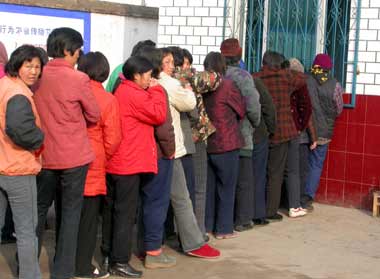
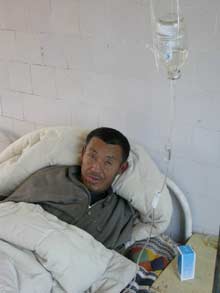
Last July China started to provide free anti-retroviral drugs that hold AIDS at bay for all HIV/AIDS sufferers in rural areas, and for those in urban areas who are not covered by medical insurance and lack the economic means to pay for treatment. Up to now, more than 6,000 HIV carriers are receiving regular treatment, said Hao Yang, with the HIV/AIDS division of the Ministry of Health. "It is a rare practice in the world to provide free medicines for HIV/AIDS patients," said Zhang Ke, a HIV/AIDS doctor from Beijing You'an Hospital, who has been engaged in HIV/AIDS clinical treatment and training work in Henan villages since 1999. In Henan's Xincai County, where the virus has claimed about 40 lives, only six people died last year after the government began to provide free medicine. Side effects Despite the possible positive effects the free medicine could bring, Wang Xiuling, an HIV/AIDS carrier in Shuangmiao Village, Shangqiu City of Henan Province, decided to stop the medicine completely last July after only 15 days. Wang and her husband were identified as HIV carriers three years ago. A total of 474 people have been confirmed as HIV carriers in Wang's village, and all of them began receiving free anti-virus medicine last June. However, the majority of them stopped treatment after one month, according to Zhu Yuanwei, the village doctor of Shuangmiao. "The taste of the medicine is quite bad. Before taking it I still could do farming work. But after I took the medicine I became so uncomfortable that I could not do anything," an unnamed villager said. In many HIV/AIDS patients' homes, bottles of drugs given free by village doctors are collecting dust because they have not been touched for a long time. The side effects generally include headache, blurred vision, numbness in the limbs, diarrhea, and many other uncomfortable feelings. Now the 42-year-old Wang is seriously ill because of the lack of treatment. "According to my investigation, about 40 per cent of HIV/AIDS patients in Henan have completely quit the anti-virus treatment, and most just take medicine for less than one month," said Zhang Ke. There are more than 10,000 HIV/AIDS sufferers in the province, according to an official report. It is normal for people to feel bad when they begin taking anti-virus medicines, according to Gui Xi'en, a HIV/AIDS expert from Central China's Hubei Province. However, maintaining the treatments is the only effective way to save peoples' life. And after a short time the side effects become weaker and patients feel much better, Gui noted. In fact, many people who insist on taking the medicine have recovered from the ill conditions and even have been able to resume farming. Follow-up treatment
In Henan, "health authorities just gave the drugs to the village doctors who have little AIDS treatment skills. And then the drugs are put in the hands of AIDS victims," said Gui. Doctors at the grassroots level give free medicine to every person with the HIV virus without strictly considering whether it is proper for him or her to take medicines. No efficient mechanism is available to monitor whether the drugs have been taken or not, and follow-up treatment is not available to help patients overcome the painful side effects, Gui said. One disastrous result of this situation is that the HIV virus might become drug-resistant, said Gui. Moreover, if the patient infects others, the treatment for those people will become more difficult than ever. It is therefore very urgent for health authorities to reform the present medical service system for HIV/AIDS patients at the grassroots level, Gui noted. The treatment should not depend merely on village doctors whose knowledge of AIDS treatment is limited. Due to economic limitations there is no definitive test for judging whether or when a rural HIV/AIDS patient needs anti-virus medicine. Generally, only urban disease control centres have the capacity to carry out such tests. And during the process of taking medicine, such tests should be regularly repeated in order to adjust the dosage. Many Chinese AIDS patients have missed the proper time for taking medicine. For many it's too late, and for some it's too early, Zhang Ke said. Meanwhile, better and wider educational efforts should be pursued to persuade these patients to take medicines properly, Gui said. And follow-up supervision is imperative. The practice in the past several months has shown that to provide free drugs is a vital step, but only a very beginning on the way for the country to properly treat its AIDS patients, Gui said. Except for providing free drugs, the health authorities have to do much more work to make the medical treatment effective, instead of doing it just as a mere formality, Gui noted. Official statistics estimate there are 80,000 AIDS patients in the country which totally may have 840,000 HIV/AIDS sufferers. Positive examples Thanks to an effective follow-up service the anti-virus treatment has done very well in Suizhou City, an epidemic area of Hubei, another province of Central China. Out of the 83 AIDS patients in Suizhou, only 10 have dropped out after showing strong side effects. "I feel I have become stronger and the herpes sores on my legs have also disappeared. But I am still too weak to do any farm work," said Xia Hongchu, who was bedridden for months before taking the free drugs. Xia is one of the 83 AIDS patients in Suizhou, approximately 300 kilometres away from the provincial capital Wuhan. Suizhou is among the first of 51 pilot programmes set up for seeking a more comprehensive system for the country's HIV/AIDS sufferers. The programme, launched by the Ministry of Health, distributes drugs from a special clinic called "Warm Homestead" at Junchuan town of Suizhou, where Xia reports his health condition to doctors and undergoes a check-up. The clinic also provides free health counseling and life assistance for people with HIV/AIDS. |
|
|
|
|
|||||||||||||||||||||||||||||||||||||||||||||||||||||||||||||||||||||||||||||||||||||||||||||||||||||||||
|
|
|
|
||||||||||||||||||||||||||||||||||||||||||||||||||||||||||||||||||||||||||||||||||||||||||||||||||||||||||||