|
Home>News Center>Life | |
|
|
|
|
|
|
|
|
|
|
|||||||||||||||||||||||||||||||||||||||||||||||||||||||||||||||||||||
|
|
Documenting time
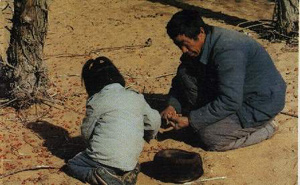
In the year 1989, Kang Jianning, a documentary director in Northwest China's Ningxia Hui Autonomous Region, visited Liu Zeyuan, a local herdsman living in the desert. Kang stayed with the family for several months, recording their daily lives with his camera.
"The Sand and the Sea," a documentary which tells the stories of these two families, won the Asian Broadcasting Union award in 1991 - the first Chinese programme within this genre to gain a recognized international accolade. Following his success, Kang called on the Liu family every two or three years. His plan was to capture the changes in their lives.
The directors were to be given carte-blanche reign over a project to re-shoot over 30 documentaries spanning over 20 years of Chinese television. In the summer of 2002, famed CCTV documentary maker, Chen Xiaoqing, was appointed the general director of the re-shooting project. New directions "At first I was not very excited about the idea. I just took it as an ordinary task assigned to me," Chen recalls, adding that he was at a loss as how to begin such a task, and that he did not expect too much in return for the efforts required.
The programmes he selected were all award-winning classics, occupying important places in the history of Chinese documentaries.
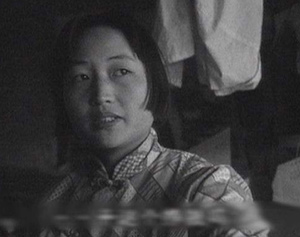
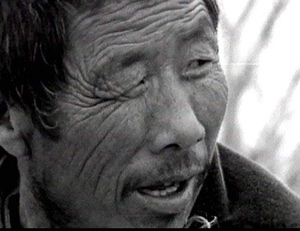
However, the budget Chen was handed for the project was modest - only 20,000 yuan (US$2,412) for every 30 minutes of film. Surprisingly, says Chen, all the directors responded with enthusiasm. The directors, most of whom were established and assumed high-profile posts at local TV stations, were excited at the prospect of revisiting the people whose stories they had recorded with their cameras years before. They cherished the idea of once again recording what life had thrown at their subjects. "In the late 1990s, the development of Chinese documentaries was in decline. Many established directors did not have the opportunities to shoot documentaries for several years," explains Chen. However, he adds the early 1990s witnessed a renaissance for the nation's documentary making. Previously, there were only mediocre films. Most of these works - made before 1989 - took the form of pre-scripted, illustrated lectures. They were dubbed "zhuanti pian," which translates literally as "special topic films." They covered a range of subjects via a series of short reports. But as the 1990s began, Chinese TV station chiefs gradually recognized the importance of documentaries. Local TV stations in China began broadcasting documentaries every week, and this had encouraged talented young directors into the genre. Among them were Sun Cengtian and Jiang Yue, both from CCTV, Jiang Ning from Shanghai, Shen Weiqin from East China's Zhejiang Province, Guo Yaohua from Central China's Hubei Province, Zhu Lihua from East China's Shandong Province, and Wang Haiping from North China's Hebei Province. Many of these pioneering directors have gone on to win international awards. But prior to their national success, responses were poor. Chinese TV viewers had not developed a liking for documentaries. As a result, most documentaries failed to recoup their costs let alone make a profit. Many TV stations soon suspended their documentary programming. "Regardless of this bad time many documentarians still had a deep love of documentaries," says Chen. "Because of this the plan to re-shoot past films made them excited." Re-shooting took a year of hard work by all concerned. As the finished programmes came in for viewing, Chen chose to watch first "Maomao turns 10 year old" (Maomao Shisui), made by Jiang Ning, and "The Life" (Shenghuo), by Kang Jianning. "They greatly exceeded my expectation. This time, it was my turn to be excited," says Chen. Passage of time In "The Life," Kang edited and montaged what he shot at Liu Zeyuan's home over the past 15 years. On arrival for his fifth visit to Liu's family, he was told Liu had died, found in the desert not far from his home. The lives of Liu's families between 1989 and 1993 were condensed into 90 minutes. Both the appearance and inner world of the protagonists had experienced profound changes. "The changes, caused by the lapse of time and shown in the documentary, have the power to touch people's heart," says Chen, who also re-shot two of his works: "A Faraway Home in Beijing" (Yuanzai Beijing de Jia), which is about housekeepers from rural areas of East China's Anhui Province, and "The Back of Dragon" (Long Ji), which is about dropouts in rural areas. "During the process of shooting I could sense changes all the time," he says. Ten years ago when "A Faraway Home in Beijing" was first shown, the provincial leaders of Anhui Province fiercely charged it with "defacing" the province. In 2003, when Chen revisited the scene, he found the local people were more open and tolerant to criticism and did not try to hide the reality of their poverty-stricken lives. "They talked much about how to get rich," Chen says. "After 10 years, the housekeepers, who came to cities such as Beijing and Shanghai from the impoverished regions, have divided into two categories," explains Chen. "Some of them returned to the villages where they were born, to the life their mothers used to live. The others, however, stayed in city and gradually became a part of it." Chen's feelings are shared by almost every director who took part in the re-shooting project. Almost all experienced similar heartaches during their revisits. The directors also felt the influence of time on themselves. "When I was sitting in front of Liu Zeyuan's grave, I suddenly realized that I have also grown older and aged 15 years," said Kang Jianning. In selecting the title for the series, Chen Xiaoqing was inspired by a poem by Hai Zi (1964-89), called "The Weight of Time." "Among all genres of arts and culture, the documentary is particularly apt at recording the reality and changes of human society. All the changes are caused by time. The phrase, 'the weight of time,' is perfect to describe our works," Chen says. The re-shot documentaries were first aired in May 2003. As the first batch of 35 documentaries were shown, more directors called to ask if they could join the project. Now over 60 re-shot documentaries are ready and more are in the process of shooting. The documentaries are aired from Monday till Wednesday at the programme "Witness" (Jianzheng), for which Chen Xiaoqing is both the producer and the anchor. Temporarily suspended in early August for a special programme, the documentaries will resume next week.
|
|
|
|
|
||||||||||||||||||||||||||||||||||||||||||||||||||||||||||||||||||
|
|
|
|
|||||||||||||||||||||||||||||||||||||||||||||||||||||||||||||||||||||