|
Home>News Center>China | |
|
|
|
|
|
|
|
|
|
|
||||||||||||||||||||||||||||||||||||||||||||||||||||||||||||||||||||||||||||||||||||||||||||||||||||
|
|
Will nation tune in to paid TV channels?
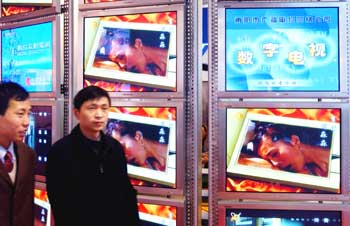
China Central Television (CCTV) last week launched the country's first six pay TV channels, as an ambitious plan to promote its digital cable networks.
"Having launched the channels does not mean the broadcaster is fully prepared for the new method," said Zhao Xiaobing, president of Global China (Beijing) Media Consulting Co. He pointed out the current pay channels lack of good content, which is the major selling point of the pay channels. Such channels work on a digital TV system due to the transfer methods. Currently, two of the six channels feature coverage of the Athens Games, which kicked off last Friday. The other four show TV serials, movies, scientific documentaries and music. "There should be some good content that audiences do not want to miss, otherwise it will be hard to popularize the channels," Zhao said. There are about 60 free channels in China, and the quality of the programmes is improving rapidly due to the fierce competition. "What can push the audience to pay for more channels?" Zhao said. The current charge is 58 yuan (US$7.01) per month per household.
"Taking similar dishes every day would definitely make you feel bored," he said, adding pay TV channels provide a brand new image for TV programmes in China. Wang cited an example of the pay music channel. "It rebroadcasts concerts of the most popular singers in the world, which is a must-see for music fans." He added the two Olympics channels will carry out the live coverage of all events of the Athens Games, while the free channels - CCTV 1, CCTV 2 and CCTV 5 - only provide events involving the Chinese delegation. Wang said the pay channels would put great attention to sports coverage, such as soccer, golf and tennis. "We have been studying the international experience on pay channels, and their sports programmes run very well in Western countries." Adult-content will not be introduced, Wang said. "But we will show some content that cannot be seen on normal networks." Wang told China Business Weekly his firm is in talks with the US-based National Geographic Channel, and is very likely to introduce the programmes soon. Wang said the input on the channels is "huge," but declined to tell the exact figures. Reuters reports CCTV has invested 300 million yuan (US$36.23 million), and the service will eventually reach 50 major cities. There are currently 120 million Chinese households watching TV. If only 10 per cent of them subscribe to the pay channels, the monthly income will be US$1 billion, he said, adding the annual advertisement revenues of CCTV, China's most profitable station, are 2 billion yuan (US$241.55 million). Both Zhao and Wang said the government policy is crucial at the current stage. "A more preferential policy will boost the development of the sector," Zhao said. He further explained pay channel subscribers must install digital cable set-top boxes to receive the service, and boxes cost an average of 1,000 yuan (US$120.77) each. "If viewers can have the set-top boxes at no charge, it will largely reduce the threshold of the channels," Zhao said. Reuters quoted Hong Kong media as saying the State Administration of Radio, Film and Television (SARFT) has persuaded Chinese banks to loan billions of yuan to subsidize set-top boxes under a plan to boost subscriptions to pay channels. But Wang declined to confirm the report. Shanghai Interactive Television has also recently received approval from the SARFT to operate pay channels. It is reported the SARFT plans to issue five to six licenses for the business, and the number of such channels may reach 30 by the end of this year. Reuters reports SARFT wants to migrate 30 million users to pay (digital) service in the next few years. Zhao said the successful popularization of the pay channels in China would boost the country's digital television sector. China plans to completely replace the existing analogue signal TV with digital TV in 2015, while the timetable for Western countries is from 2006 to 2008. |
|
|
|
|
|||||||||||||||||||||||||||||||||||||||||||||||||||||||||||||||||||||||||||||||||||||||||||||||||
|
|
|
|
||||||||||||||||||||||||||||||||||||||||||||||||||||||||||||||||||||||||||||||||||||||||||||||||||||