|
Home>News Center>Life | |
|
|
|
|
|
|
|
|
|
|
|||||||||||||||||||||||||||||||||||||||||||||||||||||||||||||||||
|
|
The legacy and future of the Chinese language
A picture tells a thousand words ... or is it the other way around? It's incredible to think that after 4,000-odd years, the basic structural tenets of written Chinese characters have remained relatively unchanged. It's even more amazing that a nation (make that a planet) of people who speak hundreds, perhaps even thousands of different Chinese dialects can all read the same script.
Consider this: Although English is largely considered the most practical language for business and commerce, Chinese remains the most widely used language in the world - spoken by one-fifth of the world's population. There may even come a day when learning Chinese, like present-day English, becomes compulsory for business, politics and cultural exchanges - a trend that has become increasingly plausible as more foreign students enrol in Chinese courses and China as a nation takes a more prominent role on the international stage. But what forces are shaping the ongoing development of the Chinese language? Making sense of this requires an understanding of the changes it's undergone in the past. Like most early writing systems, written Chinese evolved out of a 'pictographic' script - meaning that each character was a picture of an idea or thing (like the inscriptions on oracle bones and shells from the Shang Dynasty), into a 'logographic' system, in which each character stands for a spoken syllable. But what sets Chinese apart today is that it is the only logographic writing system still in use - others either died out or, like Egyptian hieroglyphics, were converted into alphabets.
In the centuries that followed, official Chinese (wen yan wen) was written following these guidelines - a condition that made it very difficult for ordinary citizens to learn how to read and write. Nonetheless, this standardization gradually allowed people of varying dialects (some of which are so different they could almost be considered separate languages) to all read and write in the same way. It wasn't until the early 20th century that reformers like Lu Xun and Hu Shi successfully campaigned to have official written Chinese follow the everyday vernacular we now refer to as 'baihuawen.' After Liberation, the government called for a new 'national alphabet' and began considering proposals for switching over to Roman, Cyrillic, Arabic characters and even a system based on numerals. Out of this emerged 'pinyin' - the highly useful writing system based on the Latin alphabet that's made learning Chinese a hell of a lot easier for many a foreign student.
The Chinese we hear, speak and read around us everyday is a direct outcome of this long evolution of reform and refinement - an interplay of visionaries chasing ideals, and common people trying to make themselves understood. Today, the centrally orchestrated reform of the Chinese script (along with centrally orchestrated decrees in general) is probably a thing of the past. The State Language Affairs Commission, which evolved from the government body responsible for script reform in the 1950s, plays a more passive role than it once did - mostly just watching the natural evolution of language and giving the official stamp to generally accepted terms. With the advent of new technologies comes new language (jingji, for 'economy,' entered the language during the Republican period; shouji, for 'cellphone,' much more recently), but it is the general populace that settles on the favored usage. Shouji won out over the more awkward yidong dianhua, for example, and the phonetic transliteration for 'laser' - leishe - fell to jiguang, (lit. 'machine light') which more or less means what it says. New technology is changing the language in more ways than one - the popularization of computers in the 1980s necessitated a practical method of getting Chinese characters onto the screen using the widely-available Western keyboard. Early systems where each character was assigned a four-digit code (usable only by highly trained typists) quickly gave way to a host of new input programs created by companies vying to make their product the industry standard. Next up were programmes modeled on the stroke-order of traditional calligraphy, where certain brush-strokes were assigned to certain keys. Fang Shizeng, now retired, was once at the heart of the effort to make a millennia-old tradition cooperate with 20-year-old technology. As a member of the State Language Affairs Commission, he worked with scholars at Peking University to develop the first really practical pinyin-based input programme - ABC. If you've got a Chinese version of Windows on your computer, you've got a copy of ABC (you've also got a copy of MS-PinYin, Microsoft's ABC knock-off - but if you want a discussion of Microsoft's business practices, it's best to contact Fang directly). "Pinyin input programmes are a great tool for literacy," says the fervent Fang. "We did studies - people who used wubi (brushstroke-based input programs) don't learn new characters, their putonghua doesn't improve, children's literacy is not increased. Pinyin helps people learn new characters, and spreads the use of putonghua." The program he helped create can analyse a sentence written in pinyin and guess, using a database of common phrases culled from years of newspaper text, which characters the typist wants. It adapts to users' preferences, and can even extrapolate from strings of initials - typing in p-t-h, for instance, will produce the characters for putonghua.
Fang is wholeheartedly in favor of technology's effects on the written language and there's no doubt that the programme is a small masterpiece of design, but Fang doesn't seem to have considered the extent to which it can, in turn, affect the language people use. Typing unusual characters can require several seconds of hunting through a list, increasing the chances that typists will settle for more common turns of phrase, and though newspapers are an accepted authority on language usage, straying from the programme's database can require a deliberate effort of will. The inevitable trend is towards a homogenisation of language. And, potentially, towards the elimination of characters themselves. "With a large amount of computer inputting being based on Pinyin with automatic conversion to characters, Chinese are increasingly forgetting how to write characters," says John DeFrancis, a professor of linguistics at the University of Hawaii who foresees the eventual demise of the written character. Though older generations of Chinese speakers are often unfamiliar with pinyin, younger generations are almost universally proficient in it. For now, Chinese schooling heavily emphasises written characters, but as computers become more common, it's conceivable that, in time (DeFrancis estimates about one hundred years), pinyin will replace characters altogether. Fang isn't so sure. "Have you looked at something written entirely in pinyin? It's not really readable." That's true, though it might be easier for someone who had never known anything else. DeFrancis cites the "increasing vernacularisation of the Chinese writing style" as a potential factor in the death of characters. Academic and literary Chinese are dense forms of the language, fraught with rare characters and esoteric references that would be almost impenetrable if rendered into pinyin. As written Chinese comes more to resemble spoken Chinese, this difficulty will be bypassed (spoken Chinese, after all, can be more or less perfectly represented by pinyin and the four tones). On the other hand one has to wonder - what will become of Chinese poetry (to take the most extreme example) when characters are gone? The Daode Jing would be gibberish in pinyin. The loss of characters would slam a door between modern speakers and the Chinese literary tradition, whose continuity is one of its greatest marvels. But perhaps complaints such as these are no longer pertinent - it may simply be too late for anyone to do anything about it. Fang's greatest wish is that the Chinese would learn to put spaces between words to make them easier to read. DeFrancis, though he predicts the eventual end of the Chinese character, seems to have no personal feeling about it one way or the other. The future will be decided by the evolution of usage; the Chinese language is in the hands of the Chinese.
|
|
|
|
|
||||||||||||||||||||||||||||||||||||||||||||||||||||||||||||||
|
|
|
|
|||||||||||||||||||||||||||||||||||||||||||||||||||||||||||||||||
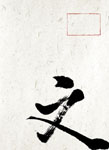 The Chinese language is unique precisely because of its distinct
history and development. But it is also a language in constant flux.
The Chinese language is unique precisely because of its distinct
history and development. But it is also a language in constant flux.  There have been many movements to standardize Chinese over the ages.
China's legendary emperor Qinshihuangdi is credited with making the first
attempt, when he devised a nationwide script called 'Small Seal.' Later, during
the Han Dynasty, this was further refined into four categories: the 'clerical,'
'running,' 'draft,' and 'standard' scripts.
There have been many movements to standardize Chinese over the ages.
China's legendary emperor Qinshihuangdi is credited with making the first
attempt, when he devised a nationwide script called 'Small Seal.' Later, during
the Han Dynasty, this was further refined into four categories: the 'clerical,'
'running,' 'draft,' and 'standard' scripts.  For a time it looked as if pinyin would replace characters altogether,
but when this proved infeasible, the jianti zi character system was
standardized, which simplified the strokes in a number of common words.
For a time it looked as if pinyin would replace characters altogether,
but when this proved infeasible, the jianti zi character system was
standardized, which simplified the strokes in a number of common words.