|
Home>News Center>Life | |
|
|
|
|
|
|
|
|
|
|
||||||||||||||||||||||||||||||||||||||||||||||||||||||||||||||||||
|
|
Care in the time of longevity
I have solved one of the mysteries about China and its people - to be more specific, its senior citizens. When I first came here 16 months ago, I wondered where the "oldies" were. Everywhere I looked, young people dominated the streetscape, walking briskly to work, riding their bikes to universities near my apartment in the Haidian District, but few elderly people appeared among them.
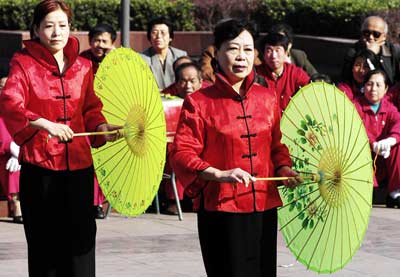
When I asked a local resident, she explained: "They come out early in the morning, and you'll see them again at night, often exercising." Were they some kind of nocturnal species, I wondered, unable to face the light and pace of day? I decided to investigate. Across the road from the Friendship Hotel is a set of exercise bars and swings. I had seen them during the day, mostly unused. Like Sherlock Holmes trying to crack a most puzzling case, I sneaked over to see for myself on a warm summer evening. It was about 8 o'clock and as I crept closer, there they were. People in their 60s, 70s and probably 80s, stretching, bending and exercising in ways that would cause creaks and groans in their much younger offspring. This was indeed grey power in action. As I watched, I could hear distant music in the still night air - not rock or pop but something more melodic. Heading towards it, I found myself outside a paved open space near the Beijing Modern Plaza, filled with about 60 mature-aged women holding fans and stepping out in a most elegant way as an instructor guided them through a traditional dance routine. Since then I have found even more, especially in the early morning, on my way to work at CCTV. As the car passed the Zizhuyuan (Black Bamboo) Park, seniors danced together and by themselves, moving effortlessly. Hardy strokes My biggest surprise was while walking with friends around the Houhai Lake on a fine but bitterly cold Saturday afternoon last winter. Still the detective, I was alerted to what sounded like water splashing, followed by people cheering. This lead to an even more amazing sight - elderly men wearing only their bathing costumes, as onlookers rugged up in thick coats, applauded. I stood open-mouthed, pulling my own coat tighter against my chilled skin, watching these thick-skinned seniors dive and survive their near-naked plunge into the freezing water. I had indeed found the Beijing equivalent of the Bondi Icebergs in Sydney and the Brighton Icebergs of Melbourne, elderly men who swim in those cities' famous beaches throughout winter. But the water in Houhai Lake must have been much colder than the Australian beaches because it was only days away from freezing over. My detective work had paid off. I had now uncovered the evidence and found the answer to my mystery: Elderly people are alive and well in China. But in finding the answer, questions arise as the population not only ages longer, but grows to numbers that put added pressure on the society to which we all belong. It is not just a problem here, but in many countries, developed and developing. In China, these problems seem exacerbated in urban areas where the load of looking after ageing parents is now falling on their one-child offspring, many being handed opportunities greater than their parents ever envisaged when they were young. Some of these young people are friends of mine. One who was offered a post overseas last year, said: "I feel guilty." When I asked why, she replied: "Because my parents cannot come with me and I will worry about their health all the time." I assured her that everyone who leaves home shares the same concerns, but for her, the only child, there are no siblings to help. It weighs heavily even at a time when Mum and Dad are in good health, not yet needing special care. Only a few days ago, another friend explained that keeping both parents literally under his own family roof, "will provide an environment of love and warmth. It is my duty," he added emphatically. While Western countries may promote family independence by offering a range of options for those who can afford it, China's tradition of keeping the family together through interdependence seems as important today as ever, no matter how wealthy individual members may become. In the West, retirement homes are a favoured option by a growing section of the community, often for sound reasons. They provide various levels of care ranging from independent accommodation in small villas where residents look after themselves, to dependent care in which everything from meals to medical facilities is provided within the complex. At the same time, it is a big business with huge money to be made, and a set of conditions to ensure residents "will back" each dwelling to the operators. Passage of time My mother-in-law has just entered one of these homes in New Zealand after a series of falls which made living alone a worry not only for herself, but her family living in the same city. A few years ago she told me: "I will never live in one of those places." But while her body is now not as sound as her mind, she admits the previous situation was untenable. As father of two sons and a daughter, I presently have no plans to live with either of them (they may be relieved after reading this). But after the recent birth of my third grandchild, I have become acutely aware of the passage of time. Adding to my concern is the regular appearance in this newspaper and other media, of stories about the rapid increase in China's ageing population and the burden it places on health and welfare services. A report in China Daily last month made clear how quickly China's ageing society is growing. It said the number of Chinese people aged 65 or older will rise from less than 100 million in 2000 to more than 200 million by 2007. By then, the elderly will make up 14 per cent of the total population. While those with one child may need help from other relatives, I have also met a growing number of young people who will face a different situation when they become aged. For reasons of cost and career, these married couples have decided not to have any children, opening up a new dependent sector as China, like other countries around the world, plans social welfare systems for the future. The outlook is not all bleak. As parents, we can sometimes prolong the period in which we remain lively and independent through diet and exercise. Looking after ourselves as we age becomes as important as when we were children. Hopefully with good health enhanced by active minds and bodies, we will add to our years by continuing to work in a society that can benefit from our skills and experience rather than simply retire and withdraw from it. Perhaps our children can pursue their own endeavours without feeling guilty, while still keeping an eye on how we are faring. Last month I heard an interview on China Radio International (CRI) with a leading expert on ageing, Professor Wu Cangping, who confirmed the growing problem for parents of one-child families especially as the tradition of looking after them continues. On the other hand, they might not have to worry so soon. According to Professor Wu, who holds a university position, travels and lectures regularly, one should keep active and become involved in all things like work, paid and voluntary. The good professor should know. He is only 82!
|
|
|
|
|
|||||||||||||||||||||||||||||||||||||||||||||||||||||||||||||||
|
|
|
|
||||||||||||||||||||||||||||||||||||||||||||||||||||||||||||||||||