|
Home>News Center>Life | |
|
|
|
|
|
|
|
|
|
|
|||||||||||||||||||||||||||||||||||||||||||||||||||||||||||||||||||
|
|
US Presidents in film not always so bland
At the movies during this contentious election season, American presidents have barely registered as people, let alone as political beings.
More recently, Michael Keaton's terminally genial president in "First Daughter" seemed committed to nothing more controversial than keeping his daughter in line. True, she does walk past protestors complaining about the government's Medicare and AIDS programs, but they're treated as so much background noise. It's no wonder that the most interesting president on the big screen this year has been Dubya playing himself in "Fahrenheit 9/11," "Bush's Brain," "Unprecedented" and other Bush-unfriendly documentaries. If reality TV now trumps fiction TV, is it any wonder the multiplexes have followed? Livelier leaders It wasn't always this way. Indeed, the history of presidents in the movies is astonishingly rich and dramatic. From "The Birth of a Nation" (1915), which vividly depicted the assassination of Abraham Lincoln, to "Love Actually" (2003), in which Billy Bob Thornton slyly played a commander-in-chief who combined the worst aspects of Clinton and Bush, the presidency has been an irresistible movie subject.
Universal Pictures
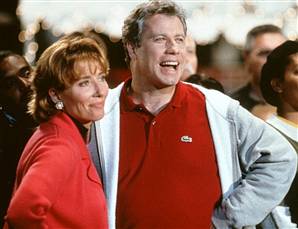
Some movies set in the Oval Office have been completely fictional, like the trashy "Absolute Power" (1997), in which Gene Hackman played a president accused of sexual assault and murder, and the more thoughtful "Seven Days in May" (1964), with Fredric March as a president threatened by a military coup. "Primary Colors" (1998), with John Travolta as a Clinton-esque character, daringly blended fact and fiction.
Occasionally the president has been a supporting character, but Brian Keith's Teddy Roosevelt in "The Wind and the Lion" (1975) and Ed Flanders' Harry Truman in "MacArthur" (1977) certainly made their peripheral roles count. At the other extreme: Michael Belson, who was nearly invisible as the hapless president in "Wag the Dog" (1997), a snappy satire that was dominated by the president's spin doctors. Most early films about the presidency tended to be terribly reverential. "Wilson" (1944), starring Alexander Knox as Woodrow Wilson, was a prestigious Oscar winner in its day, but it's now nearly impossible to sit through. "Gabriel Over the White House" (1933), with Walter Huston as a corrupt Depression president who turns visionary (and borderline fascist), manages to be much livelier, though the movie's bizarre optimism is hard to take. In Oliver Stone's three-hour-plus "Nixon" (1995), Anthony Hopkins was probably on-screen longer than any other actor who's played the president in a theatrical film, though his performance and the script were oddly cartoonish. Philip Baker Hall was more effective as a deranged Nixon in Robert Altman's much shorter "Secret Honor" (1984), while Dan Hedaya got considerable comic mileage out of playing him in the Watergate comedy, "Dick’ (1999). Multiple terms in office Some actors have impersonated the same president more than once. Charlton Heston was so effective as Andrew Jackson in "The President's Lady" (1953) that he landed the role again in "The Buccaneer" (1959). Raymond Massey, whose entire career seemed to revolve around Lincoln, played him in "Abe Lincoln in Illinois" (1940) and "How the West Was Won"(1963).
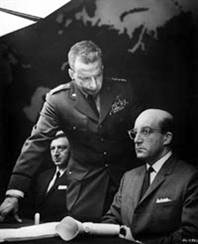
Perhaps the most frequently dramatized president is Lincoln. In addition to Massey, George A. Billings played the Civil War leader in “Abraham Lincoln” (1924), Joseph Henabery tackled the part in D.W. Griffith’s “The Birth of a Nation,” and Walter Huston took on the role in Griffith’s sentimental early talkie, “Abraham Lincoln” (1930). Henry Fonda emphasized his early years in “Young Mr. Lincoln” (1939). Fonda's portrayal led him to other political roles in the early 1960s, when he seemed as reassuring as Martin Sheen’s television president does now on “The West Wing.” Fonda was a candidate for secretary of state in “Advise and Consent” (1962), a candidate for the presidency in “The Best Man” (1964), and he finally got to play the president in the nuclear-disaster epic, “Fail-Safe” (1964). He sweated a lot as a chief executive forced by circumstances to set up a tragic exchange of bombs with the Soviet Union. However, Fonda's election to the top spot was eclipsed that year by the success of a similarly plotted film that took a satirical approach. “Dr. Strangelove: Or, How I Learned to Stop Worrying and Love the Bomb” starred Peter Sellers in three roles, not the least of which was President Merkin Muffley, a sincerely befuddled creature whose barely suppressed rage helped to express the movie’s gallows humor. Compelling leaders In “Thirteen Days” (2000), a skillful dramatization of the Cuban missile crisis that inspired “Strangelove,” Bruce Greenwood played the real President Kennedy with notable conviction. It was a remake of an old TV movie, “The Missiles of October” (1974), in which William Devane was just as effective as JFK — and Martin Sheen was Robert Kennedy.
Television has given us plenty of Presidents: Edward Herrmann as FDR, Gary Sinise as Truman, Tom Selleck as Eisenhower, James Brolin as Ronald Reagan, Martin Sheen as JFK, Barry Bostwick as George Washington, Timothy Bottoms as Dubya. Most were idealized portraits; a few emphasized the warts-and-all approach. On the big screen recently, the most convincing presidents have often been fictional: Jeff Bridges as a shrewd politician who chooses Joan Allen to be his vice president in “The Contender” (2000), Michael Douglas as a widower who falls for a lobbyist in “The American President” (1995), and Kevin Kline as a disagreeable president who suddenly becomes wise and likable in “Dave” (1993). This transformation is handled “Prisoner of Zenda” style. Kline plays two roles: the elected president, who is felled by a stroke, and his lookalike replacement, who utterly charms the skeptical press as well as the president’s distant wife (Sigourney Weaver). It is, alas, a fantasy.
|
|
|
|
|
||||||||||||||||||||||||||||||||||||||||||||||||||||||||||||||||
|
|
|
|
|||||||||||||||||||||||||||||||||||||||||||||||||||||||||||||||||||