|
Home>News Center>Life | |
|
|
|
|
|
|
|
|
|
|
|||||||||||||||||||||||||||||||||||||||||||||||||||||||||||||||||||||||||||||
|
|
Pet market raining cats - and dogs
Daisy Shen, who owns a pet accessories shop, surprised her friends during a recent party, when she told them she had bought a car - without financing. "They were amazed," Shen said.
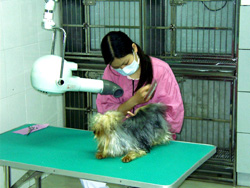
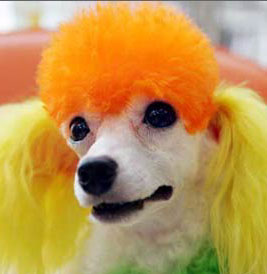
Believe it or not, many people in pets-related sectors, such as Shen, are making fortunes in major Chinese cities. "It was not rosy at first. But now, many more Beijingers like raising pets, and the business continues to grow rapidly," Shen said. Statistics, recently released by an animal-protection association in Beijing, indicated there are at least 3 million pets - mainly cats and dogs - in the capital. There are at least 100 million pets in China. "Pets-related businesses are even more profitable than selling animals," Shen said. For example, dog owners can spend - as their pets grow up - hundreds of times what they paid for their animals in accessories and health care. Shen said owners of dogs usually spend, in the first few months of ownership, between 200 yuan (US$24.10) and 500 yuan (US$60.20) on their dogs each month. Dog owners, on average, at least double their spending on their pets within six months, as the growing pet requires more services and care, and the owner becomes emotionally attached to the animal, Shen added. Betty Tang, a pet lover who owns three dogs, spends between 600 yuan (US$72.29) and 700 yuan (US$84.34) on each dog per month. "Half of the money is spent on food. I only buy imported dog food, even though the price is three times higher than domestically made food, and often hard to find in supermarkets," Tang said. "They are family members, like my parents and my sister. So, I have to take good care of them." Meeting pets' needs - from providing shelter, clothing, nursing and beauty treatment to medical care and training - has grown into a lucrative business in China. "But you have to know and understand the needs of the pets, or the pets' owners sometimes," Shen said. "Pets' needs are as complicated and diverse as those of humans." Tang regularly takes her pets to animal-care providers for grooming - such as bathing, nail clipping, earwax removal and teeth cleaning - and, every two years, physical examinations. She also takes her dogs to plastic surgeons and to photographers ahead of pet shows or contests. Cosmetic surgery costs about 150 yuan (US$18.07) per visit, while having photos taken, often prior to participating in pet shows, can be much more expensive, Tang said. "Training classes cost much more than that," she said. A pet-training course, which usually lasts 40 days, can cost 1,800 yuan (US$216.87). "Owners are proud of their well-trained pets, because elegant, well-behaved pets are an indication of their owners' wealth and taste," Shen said. Other services - such as vaccinations, breeding and kennel care - are also popular, Shen said. While some people might think Tang spends an exorbitant amount on her pets, other owners spend far more on their pets. Shen said some pet owners, especially single women in their 30s, in major cities - including Beijing, Shanghai and Guangzhou - tend to raise, and spoil, pets. "One client spends as much as 5,000 yuan (US$602.50) per month on her dog," Shen said. "For food, she buys only pet tins, which cost nearly 20 yuan (US$2.40) per can. For clothing, she buys expensive, foreign-brands, which cost about 1,500 yuan (US$180.70) each!" Insiders say pets-related businesses, especially sales of accessories, are very profitable - with profit margins exceeding 100 per cent. Pets-related businesses in China - including sales of animals, provision of services and sales of accessories - are worth a combined 15 billion yuan (US$1.8 billion) annually. And that is expected to increase rapidly within five years, statistics indicate. By then, China's pet market will mature, on par with many Southeast Asian countries, but will still lag behind the US market, Shen predicts. Insiders suggest the lack of rules and regulations regarding pets-related businesses is cause for concern. "I have three dogs, and each was purchased, by my friends, overseas," Tang said. "I never purchase animals in the local pet markets." Most of China's pet markets, which are operated without licenses, are too crowded, and the animals are sometimes sick. Sometimes, the animals have diseases that cannot be cured. Meanwhile, animals in overseas markets generally receive better care - from shelter and vaccination to appropriate handling methods, Tang said. But the situation appears to be changing for the better. Beijing, for example, now has its first licensed dog market. Located in the city's east end, the market opened late last month. More than 100 breeds of dogs can be found at the market. "It was necessary to open a formal market for traders, to prevent buyers from being cheated by illegal operators," said Chen Fengqi, who is in charge of the market. The animals must be vaccinated before they are brought to the market. Moreover, vendors must sign an agreement, regarding the dog's health, with each purchaser, Chen added. Three more pet markets are expected to open soon in Beijing. One, expected to be in the city's eastern reaches, is awaiting government approval. Authorities have yet to find locations for the other two markets.
In sharp contrast with the booming pets-related market, taxes levied on such businesses have increased only slightly in recent years. Some insiders suggest tax bureaux should draft and implement policies to strengthen regulations over the sector.Market raining cats - and dogs.
|
|
|
|
|
||||||||||||||||||||||||||||||||||||||||||||||||||||||||||||||||||||||||||
|
|
|
|
|||||||||||||||||||||||||||||||||||||||||||||||||||||||||||||||||||||||||||||
 In addition to Beijing, major cities - including Shanghai, Chongqing,
Guangzhou, in South China's Guangdong Province, and Wuhan, in Central China's
Hubei Province - are also taking measures to tighten their regulations over pet
sales.
In addition to Beijing, major cities - including Shanghai, Chongqing,
Guangzhou, in South China's Guangdong Province, and Wuhan, in Central China's
Hubei Province - are also taking measures to tighten their regulations over pet
sales.