|
Home>News Center>Life | |
|
|
|
|
|
|
|
|
|
|
|||||||||||||||||||||||||||||||||||||||||||||||||||||||||||||||||||
|
|
Ethnic clothes set int'l fashion trends
If you are a fashion follower, you'll be familiar with Nokia 7200, the visually stunning, trend-setting mobile phone released earlier this year.
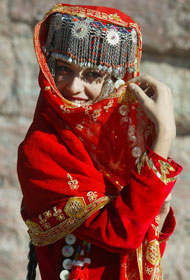
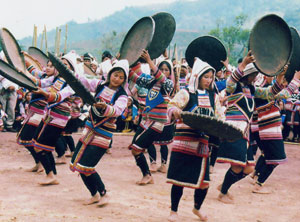
But the pattern is by no means a new invention. Similar patterns have actually been used by some ethnic minority groups living in the remote areas of China, for maybe 1,000 years or more. By the end of last month in Beijing, dozens of ethnologists from home and abroad marvelled at their traditional costumes, while visiting the Museum of Ethnic Costumes under the Beijing Institute of Clothing Technology. Modern elements, for example patterns similar to that of Nokia 7200, were frequently found in some of the traditional clothes. Yang Yuan, curator of the museum, said this was thought-provoking. "It might be a good choice for Chinese fashion designers to base their inspiration on ethnic costumes. The more it is national, the more it is international," Yang said. With a lack of international fashion brands and designers, China has made fewer contributions to the world's fashion industry than it should have. Between November 27 and 28, the visiting ethnologists attended a symposium on how to extend better protection of China's ethnic garments. The "Cultural Heritage and Ethnic Costumes," symposium was held by the Chinese Ethnological Society and the Beijing Institute of Clothing Technology. Ethnic costumes China is home to 56 ethnic groups, whose own characteristics and traditions are expressed in their unique clothes and ornaments with distinctive decoration.
Yang's museum is home to rare and bountiful collections. It boasts the country's most complete Miao collection, as well as the clothing of southern ethnic groups such as the Zhuang, and those of northern ethnic groups such as the Uygur. It also has collections of ethnic metallic accessories, brocades, embroidered items and batiks. These materials have elaborate designs and workmanship and also relate the myths, customs and culture of each group. All the exhibits were collected one by one by Yang and her colleagues at the museum. Yang began collecting as early as 1990, when she was invited by the Beijing Institute of Clothing Technology to help set up the museum. "It was a very strenuous task. Ethnic costumes are now rare even in regions themselves. In most circumstances, when we take a fancy to an item, the owner is very reluctant to sell to us. We often need to spend a great deal of time, maybe several months or even longer, to negotiate with them," Yang said. Yang spent two years persuading the descendants of a Mongolian princess to get hold of some of her headwear. On another occasion, while chasing the leader of a county in the Tibet Autonomous Region who refused to sell her a tiger robe handed down from his family, Yang fell off her horse and broke her leg. This actually moved the owner to sell the robe to her. Yang deems her work very important. As well as giving inspiration to today's fashion designers, studying traditional clothing has significance in many other aspects. A costume reflects an ethnic group's traditional value and concepts, and carries a nation's culture, she said. Customs and conventions, art traditions, religious beliefs, ways of life and so on, are all represented to some extent by the costumes and accoutrements of various minorities, she said. Yang's view was echoed by experts attending the symposium. A careful study of these costumes provides a better understanding of these minorities, said Qi Chunying from the Central University of Nationalities. Yang also believes her museum gives good lessons on patriotism. "Knowing more about the history of Chinese ethnic costumes will boost our pride in being Chinese," said Yang. Endangered clothes However, as China modernizes, traditional garb is seriously endangered. "Every day it is getting more and more difficult to collect pieces from the ethnic regions. Ten years ago it was much easier because at that time many people were still wearing the clothes," Yang said. Today society is developing so quickly that modern lifestyles have arrived in almost every corner of China. As the result of the popularity of synthetic fibres and changes in youngsters' tastes, many ethnic people choose more convenient modern clothing as their daily wear, dressing in their unique costumes only on festival occasions or during traditional ceremonies. Even in regions where ethnic costumes are still the main style, they have been simplified, as Yang has discovered, for example, replacing embroidery with printed cloth. Experts are also worried that traditional techniques of clothes-making are disappearing and fewer people are learning how to make them. The exhibit includes one garment made of the skin of carp, chum salmon and pike. It was collected from the Hezhe people living in Northeast China, the only people in China to use fish skin for this purpose. Yang said only very few old Hezhe people are aware of the technique of making cloth with fish skin. The techniques could die with these elderly people - if it weren't for Yang and her colleagues. In collecting the clothes, Yang also brings a documentary crew with her. The crew recorded the production process of many ethnic costumes, including this fish skin costume. Yang and her colleagues, as well as some volunteers, have also learned to make the clothes themselves, staying with local farmers to learn the skills. Yang said she would remember remarks by a well-known French fashion designer when the museum's items were exhibited last year in Paris. "He said he hoped that all the fashion forecasts of 2004 could be traced in
my exhibits," Yang said.
|
|
|
|
|
||||||||||||||||||||||||||||||||||||||||||||||||||||||||||||||||
|
|
|
|
|||||||||||||||||||||||||||||||||||||||||||||||||||||||||||||||||||