|
Home>News Center>China | |
|
|
|
|
|
|
|
|
|
|
||||||||||||||||||||||||||||||||||||||||||||||||||||||||||||||||||||||||||||||||||||||||||||||||||||||||||||||||||||||||||||||||
|
|
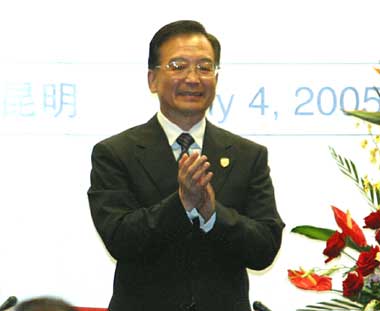
Summit to enhance co-ops along Mekong
The Second Greater Mekong Sub-region (GMS) Summit, which opens today, is expected to assess the achievements of the GMS Programme, as well as the challenges that continue to confront the region. The prime ministers of the six countries through which the Lancang-Mekong River flows - China, Myanmar, Laos, Thailand, Viet Nam and Cambodia - are participating in the summit.
China's commitment China has been active in participated in the economic development of the GMS, said a senior diplomat. "China's participation in the GMS programme is not only out of consideration for its own people, especially those in the southwestern region, but also the common development of the GMS member countries," said Shen Guofang, assistant to the Chinese Foreign Minister, ahead of the opening of the summit. He said the ongoing GMS summit would be a positive step in terms of co-operation, adding that China is looking forward to working even more closely with regional partners. Shen believes the summit will be worthwhile as a declaration by leaders is due to be signed that reviews programmes and outlines future co-operation. He said co-operative documents on transportation, information, superhighway construction, energy, trade and animal epidemic prevention are also expected to be agreed. The Chinese Government will release the second State report explaining the nation's stance with regard to Mekong sub-region co-operation. As a founding GMS member country, China has attached great importance to poverty alleviation and regional economic development, Shen said. China has offered the help it can to other member countries over the past years and has, in partnership with the Asian Development Bank (ADB), trained about 500 people from other countries in the fields of agriculture, trade, customs, telecommunications and tourism. Shen added that China has set up a US$20 million fund through ADB in an effort to promote regional co-operation and poverty reduction in other developing Asian countries. Speaking in terms of co-operation between China and fellow GMS nations, Chinese Foreign Ministry spokesman Liu Jianchao said China gives full consideration to the interests of downstream countries when planning hydroelectric facilities. Liu made the remarks in the latest regular press briefing in response to the concern that the dams built upstream along the Lancang River may damage the environment and economy of downstream areas. "China always informs its neighbours before taking any measures or actions that may affect them," he said, adding that China has done nothing that negatively impacts the interests of downstream countries, and that the nation's sincerity has won the understanding and trust of many of these countries. Chinese experts say the pragmatic and fast progress of GMS co-operation will help strengthen both political and economic ties among countries along the Mekong River. Lu Jianren, an international relations expert specializing in the Asia Pacific affairs, has said that China participates in the programme to enhance the co-operative relationship with the Association of Southeast Asian Nations (ASEAN), which is of political significance, and to maintain peace and stability in Southeast Asia. He said China reached consensus with downstream countries on the joint development of the Mekong River a long time ago, and has good relations with the Mekong River committee. VIPS' comments Jin Liqun, vice-president of the Asian Development Bank: The Second GMS Summit will be an unambiguous reassertion of the strong political will of the GMS leaders in pushing for regional co-operation and integration. It is an effort to keep up momentum and head in the same direction. Since the first GMS summit in 2002, deliberate efforts have been made to "raise the bar" of co-operation by accelerating the implementation of various GMS initiatives as well as breaking new ground. Significant developments within the region have challenged GMS governments to intensify co-operation to take advantage of emerging opportunities. These developments include the increased weight of China, whose Yunnan Province and the Guangxi Zhuang Autonomous Region are participants in the GMS. Vichit Xindavong, Laotian ambassador to China: The great majority of the GMS's population continues to live a rural and poor agricultural lifestyle. Despite some rapid changes and improvement in people's living conditions following the significant economic growth during the past few years, poverty is still widespread. Therefore, co-operative development in this sub-region, especially economic development, is crucial to all GMS member countries. The Government of Laos has been paying great attention to broadening and deepening co-operation within the GMS. GMS has always been regarded as not only contributing to the sub-region's prosperity and harmony, but also beneficial to Laos' own socio-economic development. Therefore, at the first GMS summit, Bounyang Vorachit, the Laotian prime minister, joined other GMS leaders in pledging to work closely with each other and with donors in order to promote greater sub-regional integration, to boost economic growth, to reduce poverty, and to ensure prosperity in Mekong countries. Thein Lwin, Myanmar ambassador to China: This is a great programme aiming to develop a large area of more than 2.3 million square kilometres where approximately 260 million people live. Projects such as the East-West Economic Corridor, North-South Economic Corridor, Regional Power Interconnection and Power Trade Arrangements, Flood Control and Water Resource Management and GMS Tourism Development are some outstanding examples of the fruitful co-operation from which people of the Great Mekong region are benefiting.
Myanmar has played an important role in the two corridors. The east-west corridor will connect Myanmar to Viet Nam while the north-south one will make the road journey from Southwest China's Kunming to the Thai capital Bangkok take just 20 hours. These projects will not only improve the living standards of local people, but also promote mutual trust and benefit between member countries.
(China Daily 07/05/2005 page5)
|
|
|
|
|
|||||||||||||||||||||||||||||||||||||||||||||||||||||||||||||||||||||||||||||||||||||||||||||||||||||||||||||||||||||||||||||
|
|
|
|
||||||||||||||||||||||||||||||||||||||||||||||||||||||||||||||||||||||||||||||||||||||||||||||||||||||||||||||||||||||||||||||||