Comments
  Print
Print  Mail
Mail  Large Medium Small
 |
|
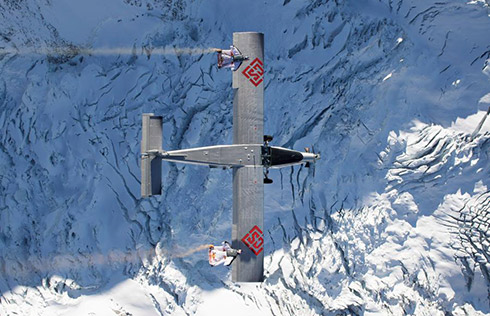
A scene from Bodyguards and Assassins, a film co-produced by movie makers from Hong Kong and the mainland. Provided to China Daily |
Co-productions have gone mainstream, uplifting a sagging Hong Kong film industry and teaching new tricks to filmmakers across the border.
Waves of Hong Kong-mainland film projects have held a firm grasp on audiences' attention in different phases of past decades. With more film industry professionals from Hong Kong crossing the border recently, it seems co-productions have reached a golden age.
Zhao Weifang, a film scholar at the Chinese National Academy of Arts, points out the collaboration between Hong Kong filmmakers and their mainland counterparts shone as early as the early 1980s.
Director Li Han-hsiang, one of the most important figures in Hong Kong cinema, went to Beijing's Forbidden City to shoot Burning of Imperial Palace (1982) and Reign behind the Curtain (1983).
Both classic palace intrigues gained full support by mainland collaborators and garnered critical and commercial success at that time, inspiring a few other Hong Kong auteurs' inaugural foray into the mainland market, Zhao says, adding there were more than 30 co-produced films in the 1980s.
In the 1990s, there was a surge in co-productions as such collaborative projects were high on the agenda of some mainland studios, which believed co-produced films tend to have good box office performances, Zhao says.
But the real proliferation of such co-productions occurred after the signing of the Closer Economic Partnership Arrangement in 2003, an important trade agreement that gives Hong Kong's firms preferential terms in trade in goods and services, he says.
Items in the deal related to film industry suggest movies co-produced by Hong Kong and the mainland can be distributed on the mainland as Chinese pictures. It is also specified that the number of mainland actors should be at least one-third of the cast in any particular co-produced movies.
"The preliminary stage of co-produced films' outpouring may have resulted from Hong Kong filmmakers' intention to enrich the subject and content of Hong Kong movies," says Wei Haijun, a famous film critic specializing in Hong Kong films.
Many Hong Kong directors deemed places of interest on the mainland as ideal choices for their films' exteriors in the 1980s, he says.
But the later mushrooming of co-productions, especially the spurt after the signing of CEPA, is more driven by monetary considerations, Wei adds.
"The developing mainland film market brought a promising alternative to Hong Kong filmmakers who had been stuck in a gloomy market," Wei says.
In 2006, only 52 films, in which Hong Kong filmmakers were involved, were screened in the theaters of the city known as the "Oriental Hollywood", but 39 of those movies were co-productions.
"In a sense, co-productions came to Hong Kong films' rescue," Wei says.
Professor Shi Chuan, a film expert at Shanghai University, says an apparent trend these years is big names in Hong Kong film industry not only headed north to shoot films, but also establish studios on the mainland.
While Hong Kong director Andrew Lau and Pang Ho-cheung founded their studios in Beijing, helmer Stanley Kwan created a base in Suzhou, Jiangsu province and producer Raymond Wong established a workroom in Hangzhou, Zhejiang province.
"The mainland is not simply a front for these Hong Kong filmmakers, it has also became their headquarters," says Huang Jianxin, a mainland director who served as the executive producer for many co-production hits such as The Warlord and Bodyguards and Assassins.
Huang is also a co-founder of Cinema Popular, a Beijing-based company established by Hong Kong director Peter Chan and mainland private film distributor Bona Film Group.
"Locating themselves on the mainland, Hong Kong directors could better build their connections with mainland film professionals and talents, and better understand the mainland culture and the market," Huang says.
Zhang Zhao, former president of Enlight Media, a company actively involved in producing Hong Kong-mainland film projects, believes co-productions are no longer a trend but the mainstream.
Co-productions have often topped the box office charts in recent years, Zhang says.
"Hong Kong filmmakers are more familiar with categorized production and the mainland side could learn a lot about how to make crime thrillers, martial arts movies and comedies," Zhang says.
"While the Hong Kong side brings ideas and technology, the mainland party offers manpower, sites and funds. It has always been a win-win situation," he says.
The majority of co-productions still feature more Hong Kong A-listers, but in the future, more mainland actors may take the lead, says film critic Wei Haijun, who notes the example of Jiang Wen's blockbuster, Let the Bullets Fly (2010), in which the only two Hong Kong stars are Carina Lau and Chow Yun-fat.
Wei says the favorable environment of co-productions does not guarantee quality work.
"Some co-produced films, which are the sequels of classic Hong Kong slapstick comedies, failed to meet viewers' expectations," Wei says.
"In a time when a co-production project could easily get the green light and grab audiences, filmmakers should work even harder on their films to produce a winner," he says.
Contact the writers at stushadow@chinadailyhk.com and sunli@chinadaily.com.cn


Copyright 1995 - . All rights reserved. The content (including but not limited to text, photo, multimedia information, etc) published in this site belongs to China Daily Information Co (CDIC). Without written authorization from CDIC, such content shall not be republished or used in any form. Note: Browsers with 1024*768 or higher resolution are suggested for this site.
License for publishing multimedia online 0108263 Registration Number: 20100000002731