China's reform model 'is the way forward'
|
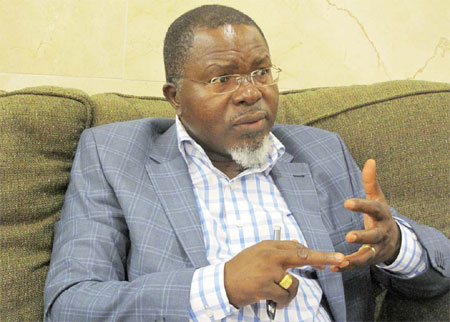
Jose Chichava says China is offering invaluable practical and technical support in agriculture. Wang Chao / China Daily |
Former minister says Mozambique should develop agriculture, not rely only on natural gas
Former cabinet minister Jose Chichava says Mozambique cannot rely on a bonanza from the huge gas discovery off its northern coast to guarantee its economic future.
The 59-year-old economist says it needs to follow China's model of development more than 30 years ago and prioritize developing agriculture.
"The key to developing Mozambique will not come from oil and gas. The risk is catching so-called Dutch Disease such as when Holland failed to develop its economy after discovering oil and gas in the North Sea in the late 1950s. There are many other examples of countries which have caught this disease in the past," he says.
The leading politician says Mozambique should look to China and how through agricultural reform in the late 1970s it started on the road to becoming the world's second-biggest economy.
"Agriculture is the key to our development and the technical assistance we are getting from China now could be a vital catalyst. If we can build a solid commercial agriculture sector, it will enable us to export first to neighboring SADC (South African Development Community) countries such as Angola, Zimbabwe and Botswana."
Chichava, a genial figure who is widely respected within Mozambique political circles, was speaking late in the evening in the lobby of the VIP Grand Hotel in downtown Maputo.
He had just flown in from Zurich but still managed to fit in an appearance at a family birthday party before our interview.
"I had a meeting in Switzerland in the role of consultant for a ministry of finance initiative here. We are trying to put in place a system for collecting revenue from the country's imports and exports and I was in discussion with a Swiss company," he says.
Chichava, the country's minister for state administration from 2000 to 2005, is now a member of the standing committee of the National Assembly, the country's parliament.
He is also an influential economist, lecturing and writing papers on a number of economic issues and speaking at international conferences, including ones in China.
He says China's role on the continent is provoking a real debate in countries like Mozambique, where he says people have become fed up of being lectured to by their former colonial overlords.
"Our relationship with Portugal and even our relationships with France, Germany and others involved the imposition of conditionalities. They say you have to improve your human rights or some other aspect of our society. Such demands take no account of the actual situation in Mozambique. You can't just take some blueprint from the West and copy it here."
Chichava, who speaks fluent English as well as Portuguese, says that it is easy to underestimate how much help and assistance an economy like Mozambique needs.
The country may have had near double-digit growth for the past 10 years but it still is classified as a low-income country with a GNI per capita of $565 in 2012, according to the World Bank, and has an adult literacy rate of just 56 percent.
"To talk about us being the next Dubai in 20 years is nonsense. What we need first is to help people produce food for themselves and to address this big problem of literacy standards. Without that we cannot move forward at all."
He says China is now offering invaluable practical and technical support in agriculture, particularly the Hubei province-based Wanbao's role in developing rice production in Xai-Xai in the south of the country.
"One of this country's huge riches is agriculture but neither Portgual nor other countries wanted to help us develop the sector after independence. The Chinese are very different, let me tell you," he says.
"What Wanbao is doing is addressing our big problem of lack of productivity because we use traditional methods of cultivation. They have introduced better technology."
The economist says Western aid is often an industry in itself involving NGOs and a lot of bureaucracy.
"The West comes here with their NGOs but there is no sense of anyone implementing anything. They are often just observers," he says.
Chichava studied economics and management at the University Eduardo Mondlane in Maputo before taking a master's degree in economics at the University of Swansea and then a doctorate at the University of Cardiff.
He was a career civil servant before entering politics, rising to be principal secretary at the Ministry of Planning and Finance in the late 1990s.
As minister for state administration in the early part of the last decade he coordinated local governments across the country.
In 2009, he was elected to the 250-member National Assembly of Mozambique representing Maputo City for the ruling FRELIMO (Frente de Libertacao Mocambique, or Mozambique Liberation Front) party in the assembly.
In Mozambique, assembly members are barred from being part of the executive and cannot be cabinet members. The president, who is elected separately, chooses the prime minister with other executive positions also appointed.
Chichava now plays a leading role in the assembly as one of the 16 members of the standing committee. He says he has yet to decide whether to stand again for election at this year's October elections.
"It depends on so many things. I would like to be involved in business but I have so many things to do. I have two books I am preparing to publish now and I need time."
Chichava says despite all the recent optimism about Africa - with it being one of the fastest growing areas of the world over the past decade - it still needs the right political leadership.
"What we need from my point of view is good leaders. This really is key. One of the strengths of China is its leadership and its clarity and strategic planning.
"I think this is vital because even if you have the right resources and everything else in place but don't have leadership you are not going to get where you want to go."
Chichava says the recent gas discovery has the potential to also expose the lack of skills within the Mozambique administration to negotiate with multinationals.
"You might think those guys from the oil and gas multinationals are being honest with you but you are at a massive disadvantage in any negotiations when you haven't fully prepared or don't have the expertise to do so in the first place," he says.
"We either need to train people up very quickly or hire expats to do the negotiations for us."
He says it is vital also for Mozambique to take a tough stance on corruption and adopt some of the measures China has recently introduced to tackle it.
"I think to do this we have to decentralize decision making. I am an economist so let us talk about money. If a project is $500 million then the decision needs to be taken centrally but if it is $100,000 it should be decided locally. If you centralize all your decision making you create conditions for corruption."
Chichava believes there is a growing awareness in the West that China's role in Africa is changing the dynamics of the continent.
"Things today are changing. The West knows that Mozambique and other countries have this new relationship with China. We now have a different line of credit."
But Chichava insists that despite the new relationship with China, it is important the country also learns to stand on its own feet.
"We can't just go around blaming everyone for our problems. We may from time to time blame the World Bank, Europeans or even China for our predicament but sometimes the blame may not reside with them but with us," he says.
Contact the writers through andrewmoody@chinadaily.com.cn