


Green building solutions for energy efficiency
China can slash harmful emissions - while boosting savings and health - by using more advanced technology
US President Barack Obama again praised the landmark China-US climate deal in his State of Union address. China's extensive coal-burning factories and auto emissions are widely blamed for the poor quality air in the country, but one important sector is often overlooked - its runaway real estate sector.
A staggering 40 percent of global greenhouse gas emissions come from buildings, and China's rapid economic growth and ambitious urbanization plans have spurred equally rapid construction. Within China's reach is one of the biggest levers to limit carbon emissions, that is, improving energy efficiency in new and existing buildings.
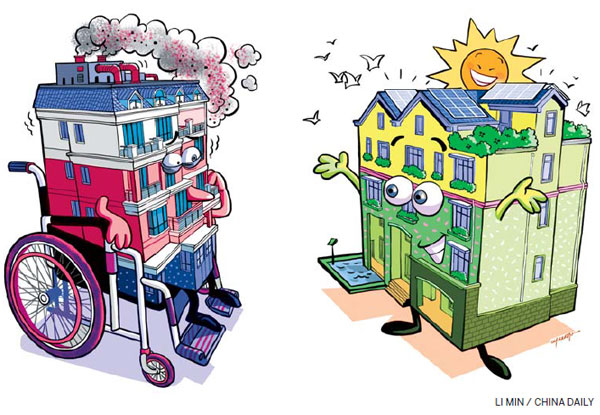
Under President Xi Jinping's new urbanization plan, China will build more than half of the world's new buildings to accommodate 100 million people relocating from the countryside to cities over the next six years. As a result, the total building energy consumption and commercial floor space are expected to double by 2050. China currently has 50 billion square meters of buildings, and will add another 2 billion sqm each year.
China can turn this situation to its advantage. As Hank Paulson, chairman of the Paulson Institute and former US secretary of treasury has said: "If China is able to reduce the energy footprint of its buildings - commercial, residential and industrial - the savings would be greater in reducing GHG emissions than those from all other energy-using sectors combined."
Recommendations focus on the need for practical and readily implementable solutions that will make a significant difference. Here are specific steps that China can take:
Deploy existing technologies: Low cost technology available today could reduce energy inefficiencies by 30 percent or more, according to the Rocky Mountain Institute and Lawrence Berkeley National Labs. For older buildings, retrofittings can yield an energy cost savings payback in about three years. Even installing insulation can yield immediate and significant reductions in energy consumption.
Strengthen the underlying legal infrastructure: Building-code standards that reflect the latest technological innovations and are updated on a consistent and regular basis, and vigorously enforced, could promote efficiencies of up to 30 percent.
Increase the role of market forces: Reform of resource pricing in the energy sector will ensure more efficient supply and demand of energy.
Use data more effectively: Tracking energy use would allow governments, building owners, utility companies and users to regulate their behavior in a more cost-effective manner.
Promote incentives to change behavior: Incentive programs, such as rebates, and awareness campaigns can encourage more widespread use of energy-efficient appliances and "three-star" building designates.
Raise awareness of - and access to - energy efficient building materials and methods: Training in the application of existing technologies for architects, developers and contractors will ensure better use. And creating awareness among the purchasers of new homes and apartments on the benefits of green buildings - cost savings, better resale values, even a healthier lifestyle - will drive demand for these energy-efficient technologies.
Actively enforce building codes and regulations: Vigorous enforcement through inspections, combined with raising awareness, will help ensure greater compliance with China's ambitious energy efficiency agenda.
The solutions to carbon reduction are within China's reach. And there is both an environmental and political urgency for it to intensify its "war against pollution", as Premier Li Keqiang calls it. Yes, there are systemic challenges to overcome - lack of capital, legal infrastructure and too few enforcement officials, to name a few.
We all have a stake in supporting and emulating China's new energy efficiency policies. Cleaner air in China and in the US means progress toward a sustainable future for all.
Deborah Lehr is a senior fellow at the Paulson Institute and chairman of the Antiquities Coalition, and Leigh Wedell is the chief sustainability officer of Paulson Institute. The views do not necessarily reflect those of China Daily.
















