


For the sake of a good drink
Some home truths about the best and the worst of that fiery little drink from Japan
If you have come across sake, Japanese rice wine, at all, chances are that you were in a sushi bar when you did so. This warm, fiery drink is served in teacup doses and is a little more bitter than some white wines but is not as aggressive as the Chinese spirit baijiu.
But then again, there is sake and there is sake, and given that it is such an exotic drink, unless you are Japanese or an aficionado, you are unlikely to know the difference between the exquisitely good and the excruciatingly bad.
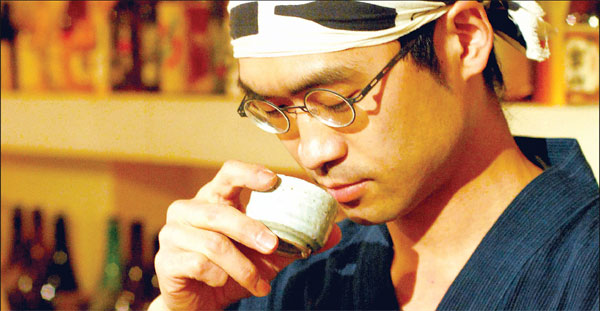
One thing that makes sake rare among alcoholic beverages is that it can be heated and served at the temperature of, say, coffee or soup. However, Taka Yamamoto, 41, a sake expert, says good sake is best served cold.
With the growing popularity of sushi, sashimi and other Japanese cuisine in China - there are reckoned to be 1,000 dining establishments in Beijing and 2,000 in Shanghai that feature Japanese food - the band of those who can appreciate good sake is beginning to grow.
Sake experts in Beijing are few and far between, but Yamamoto, from the small city of Matsusaka in southern-central Japan that is famous for its beef, is an International Wine Challenge sake judge and sake master, and has promoted sake culture in China for the past 15 years.
The earthquake and tsunami that struck the east coast of Japan in March 2011 severely disrupted his export company's operations and it took him more than a year to get it back on its feet, but since then, he says, its sake exports to China have grown about 25 percent each year.
Still, it is one thing to drink sake and another to be knowledgeable about what you are pouring down your throat. First, Yamamoto says, there are many misconceptions about the drink.
"There are myriad wine shows, but no sake shows in Beijing where people can do tasting, talk to brewers and learn about sake culture. Knowledge comes with trying and tasting. In that regard, Shanghai is a bit better than Beijing, but a lot more needs to be done."
Last month a sake carnival that Yamamoto organized in Beijing featured more than 100 kinds of fine sake brought in from Japan, and a group of senior brewers was flown in as well.
The four-hour show, held at the same time as lectures about sake, drew about 300 attendees. Some of the popular brands at the show were Kitaya Gokujo, Kamenokou 22, Born Wing of Japan, and Horaisen Bi.
Yamamoto says that 15 years ago, two years after having completed Chinese-language studies in Beijing he returned to the capital as a salesman for a Japanese sake brewery.
He now owns the boutique sake collection Tojikura, that name being a compound of two words, toji, meaning head sake brewer, and kura, meaning storehouse. He also owns two Japanese restaurants and bars in Beijing: Sake Manzo and Happi Sake.
In China a premium bottle of sake tends to be more expensive than comparable beer and wine at an entry level. A bottle of sake that costs anything less than 200 yuan ($31.50) is likely to be substandard, Yamamoto says. Prices for his imported sake range from 400 yuan to 6,000 yuan a bottle.
The high prices in China reflect taxes on imported sake that can amount to as much as 85 percent of the original price in Japan, in addition to the costs of cold-chain transport and distribution, he says.
Sake is more perishable than other alcohols and must be stored below 5 C.
"Unfortunately, even some supposedly good Japanese restaurants in Beijing store good sakes at room temperature," Yamamoto says.
Normally sake can keep well for about three years after being bottled and put onto the market. Once it is opened, it is more forgiving than wine, and will be good for about a month if stored properly in a fridge. Most sake does not age well, and usually the fresher, the better, he says.
Sake lacks the alcoholic punch of other spirits, being half the strength of most whiskeys and vodkas. Many sake varieties have alcoholic content of 13-17 percent, slightly higher than that of white wine (usually 10-13 percent), the Japan Sake and Shochu Makers Association says.
One problem for novices choosing a bottle is to be acquainted with sake terminology, with labels often being in Japanese or translated into other languages. Yamamoto says that such people should at least know the Japanese word seimaibuai, meaning the rice milling or polishing rate.
The two primary ingredients of sake are rice and water. White rice kernels are milled or polished to remove the rough part of the outer layers in which fats and proteins are predominantly found, then washed and steamed to be molded, and then fermented with water.
The seimaibuai is the proportion of rice that remains after milling. For example, seimaibuai 60 percent means that 40 percent of the rice has been ground away, the lower the seimaibuai percentage, the finer the sake is.
Just as wine has different grape varieties, such as riesling, sauvignon blanc and chardonnay, sake falls into various categories, such as junmai, ginjo and daiginjo. The amount of rice-milling is a basic criterion for categorizing the drink.
For honjozo and junmai (meaning pure sake, no brewing alcohol), at least 30 percent of the rice kernel is polished away. In normal sake, seimaibuai is more than 70 percent.
Ginjo and junmai-ginjo are higher grades, at least 40 percent of the rice kernel being polished away. Daiginjo and junmai-daiginjo grades are higher still, using only the core of its white rice, milling to 50 percent or less of the original grain.
As with wines, too, there are certain dishes that are said to go particularly well with sake. Sake connoisseurs will say that it is the natural accompaniment to sushi and sashimi and in that regard is better than white wine. Sake is also said to go well with most seafood and many other cuisines, but usually not with curries and other spicy dishes.
On the question about whether to serve it warm or chilled, again, like wine, it depends on the sake you are drinking and the circumstances in which you are drinking it. Different grades of sake have different styles. Heated sake gives a warm alcoholic buzz, closer to the palate, and is a wonderful sip in cold weather.
High-grade sakes are served cold, to let out their nuanced and subtle aromas.
Ginjo and daiginjo have to be served cold, between 5 C and 10 C, Yamamoto says. Others can be served either warm or cold, between 30 C and 60 C.
In Japan there is special sake for special occasions. When families welcome in the new year on Jan 1 they sit together drinking sake, betokening good luck, he says.
"As with baijiu in China, drinking sake is a social ritual. Etiquette dictates that you pour for others and that they refill your cup."
There are health benefits in drinking sake, too, he says, such as preventing cirrhosis, and reducing the risk of cancer.
"For ladies there's another good thing: It keeps your skin moist and soft."
dongfangyu@chinadaily.com.cn
















