 |
 |

當(dāng)前位置: Language Tips> VOA聽(tīng)力> Special Speed News VOA慢速

MARIO RITTER: This is SCIENCE IN THE NEWS, in VOA Special English. I'm Mario Ritter.
SHIRLEY GRIFFITH: And I'm Shirley Griffith. Today, we tell about efforts to learn what happened to the famous American pilot Amelia Earhart. We also tell about plans to use America's National Parks as classrooms. And we show how some areas could make electricity from coconut shells.
(MUSIC)
MARIO RITTER: Almost 75 years ago, an airplane carrying a pilot and her navigator disappeared over the southern Pacific Ocean. At the time, Amelia Earhart was attempting to become the first woman to fly around the world. Ever since, people have sought to learn what happened to that plane and its crew.
Secretary of State Hillary Clinton recently honored a group working to solve the mystery. She met at the State Department with members of TIGHAR -- The International Group for Historic Aircraft Recovery. The meeting took place a few months before the 75th anniversary of Amelia Earhart's last flight. Her Lockheed Electra plane disappeared on July 2nd, 1937.
The State Department event celebrated the announcement of the group's latest effort to find what became of Amelia Earhart. A private gift of 500,000 dollars will help pay for an investigation later this year. The group plans to search an area about halfway between Australia and Hawaii.
SHIRLEY GRIFFITH: A piece of old film may contain a new clue. The film may show part of the landing equipment of an airplane like Earhart's. The film was taken about three months after her disappearance. And the images were made in the area where her plane might have gone down.
The plane had left from what is now Papua New Guinea. The next goal of the flight was to reach Howland Island -- about 2,500 miles to the east. But Earhart and her navigator, Fred Noonan, never arrived there. The United States government later declared that Amelia Earhart died on July 2nd. Flight experts decided that the plane had crashed in the sea after using up all its fuel. Searchers found no other explanation.

MARIO RITTER: Some experts say the plane came down near an unoccupied island, then known as Gardner Island. It is now called Nikumaroro, a part of the Republic of Kiribati. But objects later found on the island raise the possibility that Earhart and Noonan had survived for a while and then died there.
Rumors spread widely, and sometimes wildly. One unconfirmed report said Earhart had made the flight while working as a spy for the United States. The story claimed that then-President Franklin D. Roosevelt had asked her to observe Japanese activity in the Pacific. At the time, American relations with Japan were tense. In 1941, Japan bombed the American military base at Pearl Harbor, Hawaii. The attack led to America's involvement in World War Two.
Another report suggested that Japanese forces or civilians had rescued Earhart and taken her to Japan. This rumor, or similar ones, said she died there. Still another rumor claimed she was freed after the war ended. It claimed that she lived under another name in the United States.
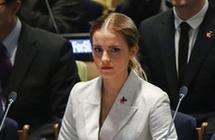
SHIRLEY GRIFFITH: Now, more than 70 years later, the search for what happened to Amelia Earhart continues. Secretary of State Clinton said that even if no answers are found, there is honor in the search. Secretary Clinton remembered that as a child, she herself had asked America's space agency if she could be an astronaut. The space agency said no, because she was female. At the time, only men could be astronauts.
But in her less than 40 years of life, Amelia Earhart opened new pathways, broke records and changed the world. Hillary Clinton praised the example that Earhart sets for others.
HILLARY CLINTON: "NASA may have said I could not go into space. But nobody was there to tell Amelia Earhart that she could not do what she chose to do...Her legacy resonates today for anyone, girls and boys, who dreams of the stars."
(MUSIC)
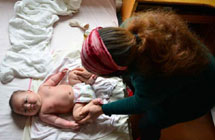
MARIO RITTER: The National Park Service will mark its 100th anniversary in 2016. As it nears its second century, the Park Service plans to increase its educational programs. The plans include transportation support for 100,000 students each year to visit national parks to learn about nature and history.
Yellowstone is believed to have been the world's first national park when it was established in 1872. Other students will get a chance to see parks in faraway places through Skype and other online programs.
SHIRLEY GRIFFITH: The Park Service also works with partners to provide education. One of its partners is a nonprofit organization called NatureBridge. NatureBridge says one million young people have taken part in its programs.

The organization works with students from kindergarten through 12th grade and uses national parks as its classrooms. It provides science programs at Yosemite National Park and four other locations in California and the state of Washington.
Now, NatureBridge is launching an East Coast center with a four-million-dollar grant from Google. The program opens this month at the Prince William Forest Park in Virginia.
Students stay for three to five days in NatureBridge programs. The activities are aimed at developing their science skills. For example, they learn about different soils and study water quality under a microscope.
Julia Washburn is an associate director of education and interpretation for the National Park Service. She says one important service that her agency provides every day is nature interpretation. Park rangers try to make visiting the outdoors more meaningful.
JULIA WASHBURN: "Interpretation is a form of informal education. Essentially, it is a word that we use for the people in parks that explain the park or help orient you. So park rangers are interpreters. They orient you to the place you are in and help you make connections, emotional and intellectual connections, with the place."
(MUSIC)
MARIO RITTER: Seth DeBolt is a plant scientist at the University of Kentucky in the United States. He and other scientists wanted to find a source of fuel that developing countries could use to make electricity.
The United Nations Development Program says more than one billion people do not have electricity. A billion others have an undependable supply.
Mr. DeBolt went to rural Indonesia on a study trip. He found that, everywhere he went, there was little waste in the use of agricultural products. Little waste means there was little that could be used for fuel. Everything the farmers grew was used for something. Even the remains of fruit were fed to chickens. Growing a separate fuel crop would take land away from food crops. This was something Mr. DeBolt did not want to do.
SETH DEBOLT: "The people most at risk with respect to energy poverty, typically they're the same people who have food insecurity issues as it is. And any change in availability would be most detrimental to that group of people."
SHIRLEY GRIFFITH: Mr. DeBolt found two things that were plentiful and would not create competition between food and fuel. Coconut shells and mango pits are generally thrown out. Yet they have a lot of energy stored in them. Mr. DeBolt says the heating value of a coconut shell compares to that of low- to moderate-grade coal. The same is true for the pit of an olive, or the shell of an almond or walnut. All someone needs is a way to release the energy.

Mr. DeBolt says a company in India called Husk Power Systems is using small generators to make electricity from rice hulls. The devices use a process called gasification: heating plant material in a low-oxygen container releases gases. The gases can be burned in an engine that turns a power-making turbine.
MARIO RITTER: Mr. DeBolt says his team saw the possibilities for coconut and mango power. Their findings were reported in the Proceedings of the National Academy of Sciences.
He and other scientists used estimates of coconut and other fruit production and the efficiency of the gas-powered generators. They found these systems could prove as much as 13 percent of the energy needs of a country like Indonesia.
Other countries producing large amounts of coconuts or similar fruits also could use this kind of energy. However, Mr. DeBolt warns there are technical concerns, like how to safely deal with the waste by-products of gasification. And there needs to be money to launch these projects. Still, Mr. DeBolt sees a possibility for coconut power to help in reducing rural poverty.
(MUSIC)
SHIRLEY GRIFFITH: This SCIENCE IN THE NEWS was written by Brianna Blake and Jerilyn Watson. Our producer was June Simms. I'm Shirley Griffith.
MARIO RITTER: And I'm Mario Ritter. Join us again next week for more news about science in Special English on the Voice of America.
almond: 杏
Making power from coconut shells, mango pits
Using national parks as classrooms
Amelia Earhart: the first woman to fly across the Atlantic alone
(來(lái)源:VOA 編輯:旭燕)

添加Chinadaily_Mobile
你想看的我們這兒都有!

中國(guó)首份雙語(yǔ)手機(jī)報(bào)
學(xué)英語(yǔ)看資訊一個(gè)都不能少!
關(guān)注和訂閱


口語(yǔ)
關(guān)于我們 | 聯(lián)系方式 | 招聘信息

電話(huà):8610-84883645
傳真:8610-84883500
Email: languagetips@chinadaily.com.cn