Also: New findings about a disorder in bees, and about help for stroke victims.
VOICE ONE:
This is the VOA Special English program SCIENCE IN THE NEWS. I'm Steve Ember.
VOICE TWO:
And I'm Doug Johnson. This week, we will tell about a drug treatment for stroke victims. We also will tell about a possible explanation for the mysterious disappearance of bees. And, we will tell about a lot of plastic waste in the Pacific Ocean.
(MUSIC)
VOICE ONE:
Strokes are a major cause of death and disability. A stroke is a loss of blood flow in the brain. There are two kinds of strokes. An ischemic stroke happens when a blood vessel in the brain gets blocked. A bleeding, or hemorrhagic, stroke happens when a blood vessel breaks.
People are more likely to die from a hemorrhagic stroke. But ischemic strokes are more common, and doctors may be able to treat them.
A drug called tissue plasminogen activator, or tPA, can break up blood clots. But experts generally advise against using the drug if more than three hours have passed after the first signs of a stroke.
VOICE TWO:
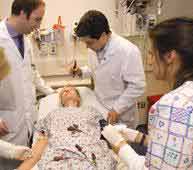
There is a risk that giving a patient a strong blood thinner during a stroke can cause bleeding inside the brain. The longer the wait, experts say, the more likely that the risks of treatment will be too great.
But recent findings suggested that tPA may be effective in saving brain tissue even if three to four and a half hours have passed.
Some studies have failed to produce clear evidence to support treatment after three hours. But researchers reported recently that the evidence was stronger when they combined the results of the four major studies already done.
VOICE ONE:
The findings were published in the journal Stroke. The researchers said tPA improved the chances of a successful result by 31 percent and produced no change in the death rate.
Scientists from Belgium and Germany worked with Maarten Lansberg of the Stanford University School of Medicine in California. One of the scientists worked for a company that makes tPA for use in Europe. America's National Institutes of Health paid for the study.
VOICE TWO:
If you think someone is having a stroke, you should seek help immediately. The warning signs often appear suddenly. These include trouble walking, weakness especially on one side of the body, difficulty seeing and difficulty speaking.
Yet people who seem healthy can suffer a stroke without even knowing it. A study published last year involved about 2000 people with an average age of 62. Brain imaging showed that nearly 11 percent of them had suffered what is known as a silent stroke.
The study found a link between silent strokes and a condition called atrial fibrillation. This is the most common cause of an unusual, or abnormal, heartbeat in older adults.
(MUSIC)
VOICE ONE:
Colony collapse disorder first struck honey bees in the United States in late 2006. Over the next two years, beekeepers lost more than one-third of their honey bees.
Scientists in the United States and other countries have been working to explain the mysterious disappearances of bees. Now, a new study suggests that several viruses may act together.

Scientists from the University of Illinois and the United States Department of Agriculture carried out the study. The scientists compared bees from affected colonies with those from healthy colonies. They were looking for differences in gene expression in the guts of the bees.
VOICE TWO:
The scientists found that the affected bees had a number of viruses from a group called picorna-like viruses. The infections observed in the bees included Israeli acute paralysis virus and deformed wing virus.
Extremely small insects are likely involved in spreading the viruses. Varroa mites have been causing serious problems in bee colonies in the United States since the late 1980s. These mites carry picorna-like viruses.
The viruses appear to harm the bees' ability to use their genes to produce proteins needed to fight infections.
VOICE ONE:
University of Illinois Professor May Berenbaum says it appears that bees could deal with one or two viruses at the same time, but not three or four. She says the picorna-like viruses seize control of the ribosome in cells. Ribosomes are structures in which proteins are made.
The professor says ribosome is important to the survival of any organism. If it is compromised, then the bees could not defend themselves against pesticide products, fungal infections, bacteria or poor nutrition. These have all been identified as possible causes of the collapse disorder.
(MUSIC)
VOICE TWO:
Imagine a mass of floating waste two times the state of Texas. Texas has a land area of more than 678 thousand square kilometers. So it might be difficult to imagine anything twice as big.
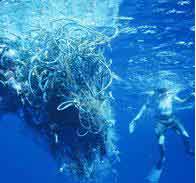
The waste includes bags, bottles and containers. Plastic products of all kinds -- even shoes. There also are lots and lots of extremely small pieces of plastic.
All together, this mass of waste floating in the North Pacific Ocean is known as the Great Pacific Ocean Garbage Patch. It weighs about 3,500,000 tons.
VOICE ONE:
The eastern part of the Great Pacific Ocean Garbage Patch is about 1600 kilometers west of California. The western part is west of the Hawaiian Islands and east of Japan. The two patches of waste are connected together in the shape of a dog bone -- a really big bone about 9000 kilometers long.
The waters surrounding the Great Pacific Ocean Garbage Patch are known as the North Pacific Gyre. The area has been described as a kind of oceanic desert, with light winds and slow moving water currents. Slow enough that garbage from all over the world collects there.
Experts say the garbage gets trapped in the currents for years before being pushed out. Some of the trash finds its way to coastal areas around the world.
VOICE TWO:
In recent years, there have been growing concerns about the floating garbage and its effect on sea creatures and human health. America's Environmental Protection Agency estimates that about 100 thousand sea animals die each year as a result of the plastic waste. An estimated one million sea birds are also affected.
Scientists say thousands of the animals get trapped in the floating waste, resulting in death or injury. Even more die from a lack of food or water after swallowing pieces of plastic. The plastic can block air passages. The trash can also make the animal feel full, lessening its desire to eat or drink.
The floating garbage also can have harmful effects on people. There is an increased threat of infection and disease from polluted waste, and from eating fish that swallowed waste. Divers can also get trapped in the plastic, and it can get caught up in boating equipment. The plastic also releases chemicals into the water. Some of the chemicals are harmful to both humans and animals.
VOICE ONE:
The existence of the North Pacific Garbage Patch first gained public attention in 1997. That was when racing captain and oceanographer Charles Moore and his crew sailed into the garbage while returning from a racing event.
Five years earlier, another oceanographer learned of the trash after a shipment of rubber duckies got lost at sea. Many of those toys are now part of the Great Pacific Ocean Garbage Patch.
Charles Moore and his team at the Algalita Marine Research Foundation have spent ten years studying plastic waste and testing water from the ocean. Their studies found up to six times more plastic in the water than zooplankton, the small organisms normally found floating near the ocean's surface. They have also found small pieces of plastic inside the stomachs of fish like mahi-mahi.
VOICE TWO:
Last month, a team from the University of California at San Diego became the latest group to travel to the Great Pacific Ocean Garbage Patch. The team of students and research volunteers set off on a three-week boat trip to examine the area.
They were shocked by the amount of waste they saw. They gathered hundreds of sea creatures and water samples to measure the garbage patch's effect on ocean environment. There were small pieces of plastic in every sample.
(MUSIC)
VOICE ONE:
This SCIENCE IN THE NEWS was written by June Simms and Jerilyn Watson. Our producer was Caty Weaver. Transcripts, MP3s and podcasts of our programs are at voaspecialenglish.com. I'm Steve Ember.
VOICE TWO:
And I'm Doug Johnson. Listen again next week for more news about science in Special English on the Voice of America.
ischemic stroke: the most common kind of stroke; caused by an interruption in the flow of blood to the brain (as from a clot blocking a blood vessel) 腦部缺血引起的中風
hemorrhagic stroke: stroke caused by the rupture of a blood vessel in the brain 腦部血管破裂引起的中風
tissue plasminogen activator: an enzyme that dissolves blood clots 對苯二甲酸
atrial fibrillation: fibrillation of the muscles of the atria of the heart 心房纖維性顫動
picorna-like virus: 類似于細小核糖核酸病毒的病毒
Varroa mite: a genus of parasitic mites associated with honey bees 瓦螨
ribosome: a small, dense, functional structure found in most known cells that assemble proteins and polypeptides used in cell division 核糖體
gyre: a circular or spiral motion, especially a circular ocean current 環(huán)流
oceanographer: a scientist who studies physical and biological aspects of the seas 海洋學家
zooplankton: plankton that consists of animals, including the corals, rotifers, sea anemones, and jellyfish 浮游動物
mahi-mahi: dolphin(海豚)
Related stories:
Beijing's trash heaps keep growing
Beijing headed for 'garbage crisis'
Countryside 'shadowed' by pollution
San Francisco to test turning dog waste into power
(Source: VOA 英語點津編輯)




