你是不是常在逛街回家后發現,自己買了一些本來沒有計劃要買的東西?其實你在不經意的時候,已經掉入了商家事先安排的“圈套”里,誘使你掏錢消費,你注意到了嗎?
Buyer beware — of how you're being coaxed into spending
Stores' music, lighting, 'deals' and pricing ranges can all influence what you buy. And if you want to spend less, pay in cash so you can see what you're losing.
Chances are, given the time of year and all, you're about to go shopping (and shopping and shopping and shopping and shopping).
But beware. It won't be just a walk in the mall. Shopping is a far more complex undertaking than you probably realize, according to researchers who delve into the intricacies of consumers' buying habits.
"We have a difficult time controlling our shopping behavior," says Alexander Chernev, associate professor of marketing at the Kellogg School of Management at Northwestern University in Evanston, Ill. "It's influenced by lots of forces we usually don't take into account."
We take account of some of them below.
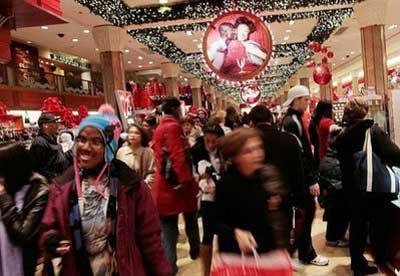
The five senses
"Everyone in the world of retail is trying to get you to spend in their location," says Paco Underhill, author of "Why We Buy: The Science of Shopping" and "What Women Want." "They try to engage you with all five senses."
What you see:
Retailers work to present their merchandise in the best light — literally. "They use lighting to make something that looks good look even better," Underhill says. "Everything tends to look better in the store than it does when you get it home."
What you hear:
If you like the music a store plays, chances are you'll like the products it sells — and vice versa. That, at least, is the message many stores hope to send with their soundtracks. For example, the strains of Justin Bieber crooning "Someday at Christmas" are pretty much a shout-out to young girls that this is the store for them. Middle-aged nerds? Not so much. "The music can tell you either you belong or you don't belong," Underhill says.
Just as music can attract people into a store, it can help to keep them there, or hurry them out the door. That's because customers respond to the tempo of a store's music, says Deborah MacInnis, professor of business administration and marketing at the USC Marshall School of Business. "Studies show that the slower the tempo, the slower people walk through the store, so the more they put in their baskets and the more they end up buying. If the tempo is faster, people walk faster too. They don't stop to look so much, and they don't buy as much."
What you smell and taste:
The sweet aroma of roasting chestnuts. Free samples of Christmas cookies. Like music, those are effective ways of inviting customers into a store and making them feel welcome.
Well duh, you may say. But smell and taste can serve another subtle function too, Underhill notes. "They get your saliva glands going, and that makes you hungry. And when you're hungry, you're more apt to buy anything, not just food."
What you touch:
Signs encouraging customers to touch the merchandise are far less common in stores than signs imploring them not to. But research shows that retailers may be missing a rather lucrative boat. "There are three ways that touching an object can make you willing to pay more for it," says Joann Peck, an associate professor of marketing at the Wisconsin School of Business in Madison who has conducted a number of studies analyzing the role of touch in shopping behaviors.
One way — the most obvious — is by giving shoppers information they can't get otherwise, such as how much the object weighs, how soft or hard it is, how rough or smooth it feels. A second way is also quite intuitive. You may be willing to pay more for a cashmere sweater or a small, sleek smart phone just because you like how it feels.
More surprisingly, Peck says, apart from any information or pleasure it gives you, simply touching an object can make you feel a certain sense of ownership. "And you'll pay more for anything you feel like you own."
(Sometimes a lot more. In an experiment at Duke University, researchers asked students who had won tickets for the Final Four basketball tournament how much they'd be willing to sell them for — the answer, on average, was $2,400. They also asked students who had entered the lottery but not won how much they'd be willing to pay for tickets — in that case, the average was a measly $170.)
There are big individual differences in how much people like to touch things, Peck says. But the rule of thumb should probably be, "If you don't want it, don't touch it."
Impulse buying
Suppose you go to a store to buy a new USB cable for your camera. That's all you need. That's all you want. But it may not be all you buy. For while you're standing in line at the cash register, all set to pay and go home, what to your wondering eyes should appear but "The Hair Traffic Controller — the world's greatest pet hair remover"? Now, it just so happens that you own the world's shedding-est sheepdog, and, well …
It's not merely random good fortune that you should find this fantabulous product — on sale, no less! — where you do. Retailers often identify potential "impulse buys" and stock them at the ends of aisles and close to the checkout stand. Shoppers may not plan to make these sorts of purchases, but stores do plan to make these sorts of sales.
相關閱讀
郁悶時的“購物療法”retail therapy
研究:亞洲人最愛網購
研究:買到便宜貨的快感如同做愛
“團購”英文怎么說?
(來源:latimes.com 編輯:Julie)






