The bottom line
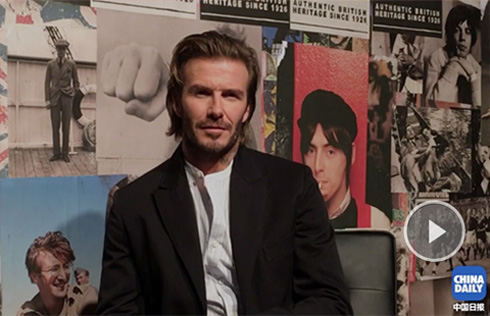
When Ma Jun stood on the banks of the mighty Yangtze River in 1994, he had little inkling of his future calling - saving China's rivers.
Named one of Time magazine's 100 Most Influential Persons of 2006, Ma often recalls the good old days of his childhood spent by the Jin'gouhe River, a major source of water for Beijing residents.
"The water glistened with swarms of fish," he says. It was where Ma learned to swim.
By the late 1970s, the start of reform and opening up, the Jin'gouhe River had started to smell foul, says Ma. Its water quality was rated Category V - not fit for drinking.
"Many rivers in Beijing have become mere outlets for waste water discharge by factories or households. Some of them have simply dried up."
By the time Ma graduated in 1993 and began work as a journalist, he felt deeply distressed by what was happening around the Yangtze River, the lifeline of South China.
"What I saw was rampant deforestation, soil erosion and damage to the environment."
Nationwide, nearly all of China's rivers and lakes were polluted. Dongting Lake, for example, once the country's largest freshwater lake, had dwindled in both volume and area. The Fenhe River in Northwest China's Shanxi province even became a threat to the local population owing to heavy industrial pollution.
Faced with water shortages, China looked at several options and zeroed in on the construction of reservoirs and large dams in southwestern China and projects to divert rivers from the south to the north.
Ma, however, questioned their feasibility, as these measures failed to take into account ecological concerns.
|
 |
He turned his observations into a book, China's Water Crisis, which has been compared to Rachel Carson's Silent Spring, published in 1962 and widely credited with launching the environmental movement. Ma's book published in 1999 was the first major work to put China's environmental crisis under the microscope.
"If policy makers do not approach water treatment from the point of view of environmental protection and sustainable development, many regions in China will face a water crisis in the near future," he wrote.
More than 60 percent of China's fresh water is contaminated and more than half of its major cities do not meet the country's modest air quality standards.
Ma was not content with just pointing out the problems. He started thinking about what he could do, and this resolve strengthened during his stint with an international environmental consulting company and tenure as a visiting scholar at Yale University for a year.
"I began to understand the power of the market in its disciplining role over company performance, and how this could be applied to environmental protection," he says.
"I realized that the whole process could hardly be meaningful or effective, without the widespread participation of the people."
In 2006 Ma set up an NGO, the Institute of Public and Environmental Affairs (IPE), launched the China Water Pollution Map and China Air Pollution Map, and set up searchable databases. These databases give the public access to data on environmental quality and to records of infractions by companies, released by various government agencies, including the Ministry of Environmental Protection.
The Chinese government's Measures for the Disclosure of Environmental Information, released in May 2008, bolstered Ma's confidence. The two databases have grown to include 49,000 records at the end of this August, involving about 30,000 domestic and foreign companies, which have been warned or penalized for violations of environmental rules.
While earlier many companies would rather pay the small penalties year after year, "the availability of information such as the Water Pollution Map and Air Pollution Map is changing the pattern as it touches upon different stakeholders because of its accessibility", says Ma.
The Shanghai case (see sidebar) also illustrates what Ma defines as a Green Choice Alliance. "It aims to curb environmental pollution in China's manufacturing hubs by integrating transparency and stakeholder participation in the existing supply chain management system."
By tapping into IPE's database, corporate users can do checks of their list of suppliers, says Ma.
Some multinational companies, including General Electric (GE) and Wal-Mart, are already using the databases to monitor sourcing practices in China.
So far, more than 130 blacklisted companies have approached Ma's institute, explaining what went wrong and how they planned to fix the problems. Many hope to be removed from the black list by the introduction of third-party audits of their improved performance.
Ma and his colleagues are also reaching out to governments. Earlier this year, they developed a Pollution Information Transparency Index, evaluating the performance of 113 environmental protection bureaus across China. Topping the list was Ningbo, a medium-sized city in eastern China. Beijing ranked 16th.
Ma believes China's NGOs should build credibility, by rooting their appeals in hard evidence. "I'm here for the long haul," he says.