Comments()
  Print
Print  Mail
Mail  Large Medium Small


 |
|
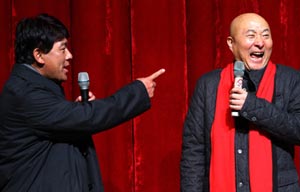
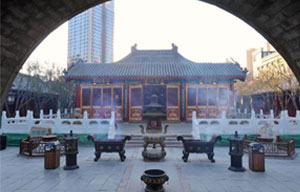
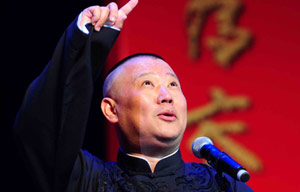
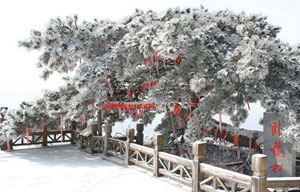
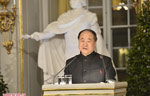
From top: Gu Duhuang is thrust into the spotlight as his family's ancient book collection set a record high price at a Beijing auction in June. Gu's favorite haunt - Kunqu Opera Museum in Suzhou, Jiangsu province. Guoyun Lou, the Gu family's former residence, was built during the Qing Dynasty (1644-1911). Photos by Mei Jia / China Daily |
A collection of rare books was recently auctioned off for 216 million yuan, which focused attention on the family that used to own the collection. Mei Jia reports in Suzhou.
It is not easy to gain access to 84-year-old Gu Duhuang. The great-great-grandson of the Guoyun Lou book collection's initiator Gu Wenbin (1811-89) leads a carefree life and only allocates two mornings every week for meetings.
The recent sale at auction for 216 million yuan ($33.9 million) of one quarter of the Gu family's book collection made it even harder to get a meeting with him. He has been swamped with interview requests.
China Daily managed to get an appointment with Gu through Suzhou Xinhua bookstore. We talked for about three hours at the Kunqu Opera Museum in Suzhou, one of Gu's favorite haunts.
|
Related:? |
Our conversation started with Gu talking about Kunqu Opera, his lifelong hobby and profession.
Time has been kind to Gu, leaving very few marks on his face, and even kinder to his agile mind.
When we touch on the topic of the book collection, widely known as a "secret treasure", he's frank in giving details.
His candidness came as a pleasant surprise as I had been told that "it's a loss of face for private book collector's descendants to talk about their collections going under the hammer", by Jing Gao, deputy general manager of the city's Xinhua bookstore chains.
"They grow up with the belief that books and other works in their collections should be kept and maintained, not sold for a profit," Jing says.
I later found out that the recent auction was not as straightforward as I thought.
Gu says his family is best known for collecting artworks rather than books. Some of his ancestors were artists and critics.
Nanjing Library's Historical Archives Department director Chen Li says "being unknown to the public" is probably the most unique feature of the Guoyun Lou book collection.
"We show the books to people who come to read them, just like how we introduce visitors to Yiyuan Garden (the family's former residence) to relish our paintings and calligraphy collections," Gu says.
The Gu family has two sets of artwork collections that it allows access to: rare masterpieces for potential artists; and colorful, pleasant works for amateurs.
"My grandfather, Gu Linshi, was a great supporter of young artists. He would even pay some of them who came to Yiyuan to study art," Gu Duhuang says.
But few arrived to see the books because there were other, larger book-collecting families in the area. Some even supply meals to visiting readers, he says.
Gu Linshi's father died young and he was brought up and adored by his grandfather Gu Wenbin, who started the tradition of collecting books and artworks.
Gu Wenbin was a Qing Dynasty (1644-1911) official who was in charge of government affairs at the provincial level. When he retired, he built Guoyun Lou and bought Yiyuan Garden to house his family and collections. The buildings gradually became a center of the city's cultural activities.
Guoyun Lou now houses the offices of several organizations, and Yiyuan Garden has turned into a tourist spot.
Gu Wenbin acquired books mainly from other collectors, so they were relatively well maintained and systematically catalogued. After he died, Gu Linshi inherited the entire book collection, while his uncles got the other properties and collections. The allocation was based on the inheritors' interest and acumen.
Gu Linshi enriched his collection but wars and turbulence during the first half of the 20th century destroyed some of the collection.
"My family paid a lot to protect the books," Gu Duhuang says.
"They're not estate, they can't be sold or used to feed or shelter the family. We had to pay to store them in vaults in Shanghai during the war," he adds.
He recalls the huge leather trunks used for storage. "We had tens of those chests made in Fujian province to keep the books. The neighbors thought we kept garments in them and commented that we had a lot of clothes."
Gu Duhuang was not an avid reader. But he tried his best to preserve the books by "sunbathing" them once a year to kill off the bookworms.
"But we couldn't leave the books under direct sunlight. The books had to be covered by a piece of cloth," Gu Duhuang explains.
It's not easy to preserve these ancient publications. During the "cultural revolution" (1966-76), to preserve the collection, Gu Duhuang's father, Gu Gongshuo, voluntarily offered the books to Suzhou Museum.
The books were later returned to the Gu family in the 1980s.
Gu Duhuang says that in 1991, Nanjing Library proposed acquiring the Guoyun Lou book collection. But one of the four Gu brothers did not agree to the proposal and the books were divided among the brothers.
About three-quarters of the collection went to the library on one condition: that it was kept as a single entity. The library paid 400,000 yuan - 300,000 yuan went to the Gu family and 100,000 to the middleman.
"We didn't set the price and we didn't bargain," Gu Duhuang says.
"Nanjing Library got 541 titles, in 3,707 volumes, including seven Song Dynasty (960-1279) prints and 10 from the Yuan Dynasty (1271-1368). They're kept in specially made shelves," says library director Chen Li.
In 2005, one of Gu Duhuang's cousins auctioned his quarter of the collection and an anonymous buyer paid 23 million yuan for it. The same collection was re-auctioned recently for about 10 times the price.
Gu Duhuang says the second auction had nothing to do with the Gu family. To him, books are priceless and he would never auction them.
"You can't choose buyers during an auction, and you don't know if the collection is in safe hands," he says.
"I used to give kittens to those who were willing to adopt them. But before I gave away the kittens, I always sent out someone to find out about the adopted families," he says. "These are cultural relics and they are not even treated with the same care as kittens."



Copyright 1995 - 2010 . All rights reserved. The content (including but not limited to text, photo, multimedia information, etc) published in this site belongs to China Daily Information Co (CDIC). Without written authorization from CDIC, such content shall not be republished or used in any form. Note: Browsers with 1024*768 or higher resolution are suggested for this site.
License for publishing multimedia online 0108263 Registration Number: 20100000002731