Comments
  Print
Print  Mail
Mail  Large Medium Small
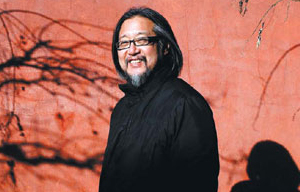
Ma Yansong is widely recognized as an important voice in a new generation of architects in China for his seamless combination of modernity and traditions.
Born in 1975 in Beijing, Ma spent his childhood in hutongs where he said he felt “safe and free”, and “started to learn more about the relationship between people, man-made things and nature.”
That may explain why his project Hutong Bubble 32 enjoyed huge success in 2010. The modern steel structure, inserted into a hutong building, provides a toilet and staircase that extends onto a roof terrace, and more significantly, introduces a futuristic element into a traditional courtyard-house in Beijing.
In 2012, his first international project, Absolute Towers, was completed in Mississauga, the sixth largest city in Canada. Sinuous yet arresting, the two curvaceous towers redefined the skyline and have been nicknamed ‘Marilyn Monroe’ by locals. Last June, they were listed among the world's best new skyscrapers by the Chicago-based Council on Tall Buildings and Urban Habitat, a non-profit group of architects and engineers.
All of its projects aim to “protect a sense of community and orientation towards nature and offer people the freedom to develop their own experience,” said the MAD official website.
In the 2012 Hong Kong Design of Business forum, Ma talked about his ideas on culture, design and architecture.
Q: What changes have you seen happening in the architectural design industry in China?
The architectural design industry in China has been looking for its own way in the past decade, and an answer to the question of what modern buildings in China should be. Generally, the industry is seeking to affirm its identity.
In the past decade, designers of different fields, including fashion and architecture, have been exploring possibilities of Chinese contemporary design from different angles.
Q: What kind of relationship do you see between fashion and traditional Chinese culture?
They are two totally different conceptions. Each era has its fashion. And in my eyes, prevailing styles of a certain era can be called fashion, including the spiritual things. Fashion exists in every phrase of all times. Tradition itself is fashion.
There are many pioneering things in traditional culture and we have to move forward with the spirit of creativity and innovation. After all, Chinese traditional culture does not clash with fashion.
Q: Does your Chinese identity pose any difficult problems in your international business and exchange?
I think it brings both difficulties and challenges.
Few Chinese architects have presented successful practices on the global stage, while the project managers will always check your works in the selection process. Since foreign people have a rare chance to see practices by Chinese architects in different countries and cultures, it is quite natural that they have little understanding of Chinese architects.
The challenge, I think, is that a lack of deep understanding enhances the air of mystery around Chinese architects, and gives them more chances. China is now a global topic. If an architect comes from China, everybody will pay close attention to his works.
Generally, being a Chinese architect is a good thing as the identity helps you stand out. But it is another story when foreign people give serious attention to Chinese architects and their works before deciding to commission local projects to architects from China. Many people like to talk about China today; foreign book publishers and exhibition organizers encourage the involvement of Chinese architects. But it is still rare that they invite Chinese architects to design buildings, which will become part of their life, in their cities and countries.
As a Chinese architect, you have to discuss Chinese culture, and still, present your works in different countries and cultures to see how it acts on local cultures.

Copyright 1995 - 2010 . All rights reserved. The content (including but not limited to text, photo, multimedia information, etc) published in this site belongs to China Daily Information Co (CDIC). Without written authorization from CDIC, such content shall not be republished or used in any form. Note: Browsers with 1024*768 or higher resolution are suggested for this site.
License for publishing multimedia online 0108263 Registration Number: 20100000002731