Comments
  Print
Print  Mail
Mail  Large Medium Small
Lunar New Year's Day is the first day of the year, according to the traditional lunar calendar. With the adoption of the solar calendar, New Year's Day came to refer to the first day of the solar year. In order to distinguish the two, Lunar New Year's Day is sometimes referred to as Spring Festival. The Lunar New Year is China's most important traditional holiday. However, this holiday is not just one day; rather it encompasses an extended period of time, often lasting until the fifteenth day of the first lunar month.
In northern China, the first meal of the New Year is boiled jiaozi (stuffed dumplings). In the south, it is niangao (New Year's cake). In Chinese, niangao is a homonym of the phrase "higher every year," signifying the wish for steadily increasing prosperity.
New Year's cake is made with glutinous rice and short grain rice, plus sweet osmanthus sugar, lard, nuts, and candied fruit added according to taste. New Year's cake can be steamed, boiled, deep-fried, or stir-fried. Its sweet taste and chewy texture make it a favorite holiday treat.
After the first New Year's Day meal is eaten, offerings are made to the ancestors in the family ancestral hall. After consulting the almanac to determine the luckiest route, the family sets out on a procession, bearing lanterns and offerings to the auspicious deities, burning incense, and setting off firecrackers. When they reach the temple, they burn more incense, pay their respect to the deities, and entreat them for good fortune in the coming year.
Another Spring Festival tradition is gathering sesame stalks into bundles. The height and straightness of the bundle symbolizes high achievements in the coming year.
No Spring Festival would be complete without the sound of firecrackers. Firecrackers and fireworks are traditionally set off on New Year's Eve and on Dragon Boat Festival, the fifth day of the New Year. In addition, it is also customary in many regions to set off fireworks early in the morning of New Year's Day, when the front door is first opened for the day. This tradition, known as "front door firecrackers," is meant to welcome the first day of the new year.
Firecrackers have a very long history in China. The first firecrackers consisted of segments of bamboo that were set on fire, causing them to explode with a loud noise. They were used to scare away ghosts and banish evil. Firecrackers have traditionally been associated with the supernatural. In addition to frightening ghosts, they were also used to see out the old year and welcome in the new. Eventually, they came to symbolize a prayer for peace. There are many different kinds of firecrackers and fireworks, including noisemakers, sparklers, and colorful pyrotechnics. Today, fireworks are used primarily to heighten the festive holiday spirit. However, because of the injuries and environmental pollution caused by fireworks, a number of cities have banned or limited their use, replacing them with other holiday activities.
Another distinctive Spring Festival activity is the custom of making New Year's calls to friends and family in the first days of the New Year. If New Year's offerings to the ancestors represent remembrance of the departed, New Year's calls represent appreciation of the living. Making the rounds to offer New Year's greetings expresses affection and strengthens the bonds of friendship and family. In the past, if the head of a household had too many friends and relations to pay them each a personal visit, a servant was delegated to deliver name cards or lucky characters. This custom was widespread among the upper classes. The people receiving callers often gave their elder visitors red envelopes containing lucky New Year's money.
The New Year's customs of the common people were influenced somewhat by those of the upper classes. During the Ming-Qing period, members of the court often paid New Year's calls in groups. This custom is still popular among the common people today.
Today, there are a number of new ways of conveying New Year's greetings. In addition to paying New Year's calls, people send New Year's cards, make phone calls, send electronic greeting cards, or use cell phones to send short text messages.


 Paintings feature the natural beauty of Beijing
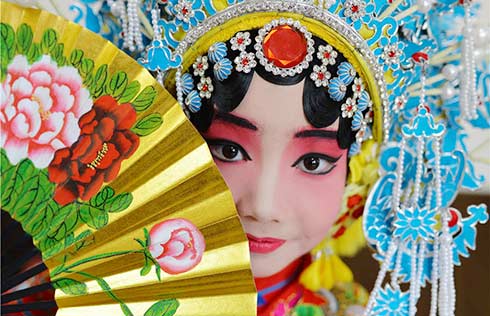 Peking Opera inherited in primary school
 What's on in Beijing (Nov 18-24)
 Young people continue the art of 'painting with fire'


Copyright 1995 - . All rights reserved. The content (including but not limited to text, photo, multimedia information, etc) published in this site belongs to China Daily Information Co (CDIC). Without written authorization from CDIC, such content shall not be republished or used in any form. Note: Browsers with 1024*768 or higher resolution are suggested for this site.
License for publishing multimedia online 0108263 Registration Number: 20100000002731