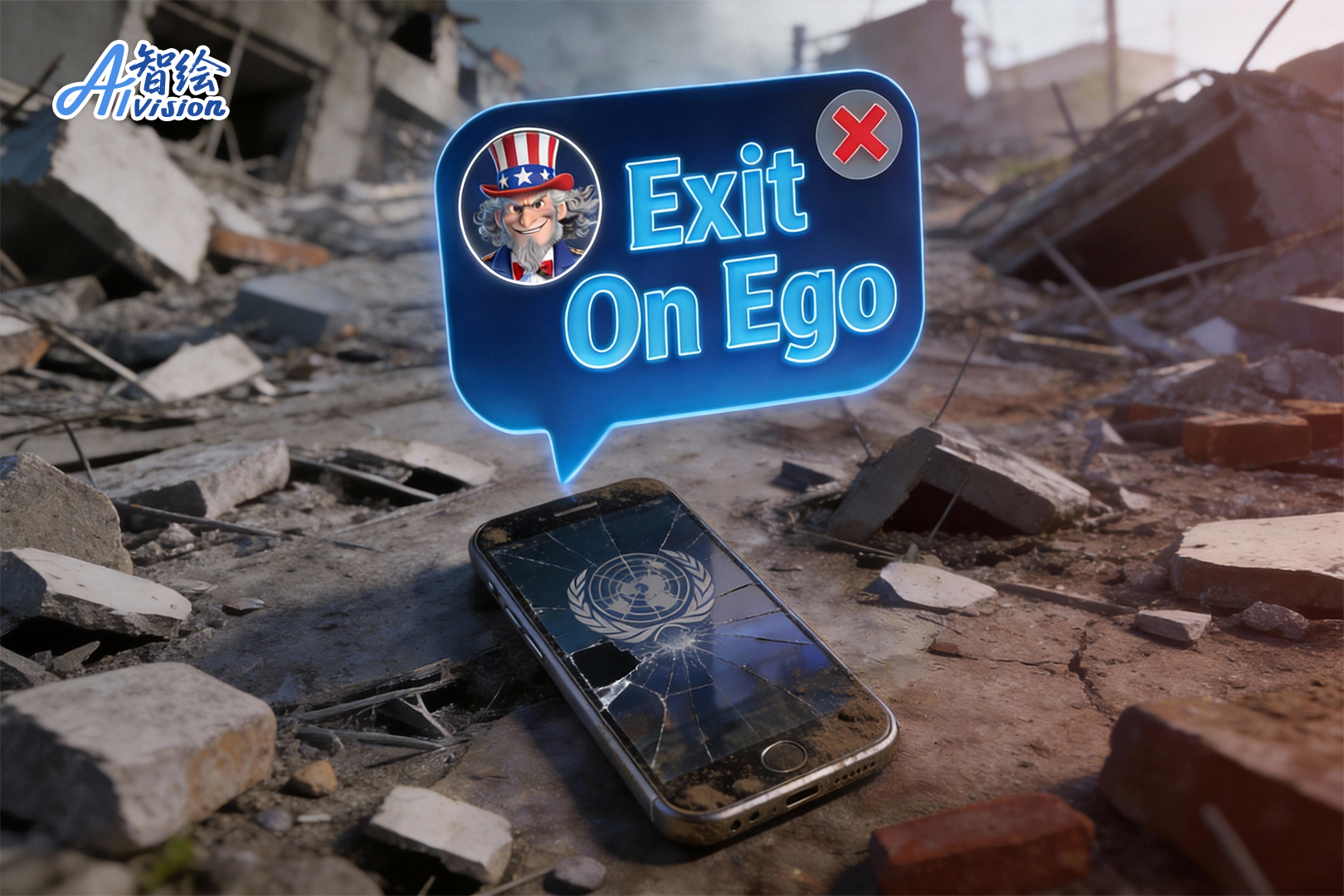
Stuck in a Cold War playbook










The US is stoking divisions and confrontation in Asia in an attempt to lock China behind a new "Iron Curtain"
The recent visits to China by several high-level US officials — Secretary of State Antony Blinken, Treasury Secretary Janet Yellen, Presidential Special Climate Envoy John Kerry and Commerce Secretary Gina Raimondo — have resumed the talks between the United States and China.
However, the US continues to spare no effort to isolate and suppress China. It not only smears China's constructive role in Asia's security architecture, but is also interfering in the South China Sea issue, the East China Sea issue and the Taiwan question.
The US is also trying to hinder the progress of China's high-tech industries. It has imposed sanctions on Chinese technology companies, restricting their access to key high-tech products and technologies of the US, creating a "silicon curtain". The US' goal is to hobble China's industrial upgrading and lock China in the lower end of the global industrial chain so as to maintain, or even extend, its lead over China.
The recent moves by the US indicate that the Joe Biden administration is trying to instigate a new Cold War targeting China, encompassing technology, trade and industry chains to geopolitics and geostrategy. Driven by Washington's hegemonic and bullying mindset that seeks its own narrow ends at the expense of other countries, the US is provoking confrontations and divisions in Asia by creating a new "Iron Curtain".
First, the US has been hallowing out its one-China policy and provoking tensions across the Taiwan Strait. The country has increased its military aid to Taiwan, arranged high-level exchanges between the US and the Taiwan authorities, and actively supported the island's "international participation" in an attempt to "Ukrainianize" the Taiwan question, which is the most important and sensitive topic in US-China relations. The US openly adopting a pro-independence stance on the Taiwan question marks a strategic shift in its China policy from cooperation to confrontation.
Second, the US is seeking to exploit the disputes over territorial sovereignty and marine rights and interests in the South China Sea, the Taiwan question, China-Japan dispute over the Diaoyu Islands, and the nuclear issue in the Korean Peninsula to suppress and demonize China's efforts to defend its sovereignty, development and security interests.
The US labels China's normal military maneuvers as "aggressive "and portrays China as the one that is attempting to change the "status quo" in Asia. While peddling the "China threat" fallacy around the world, the US is shifting its global strategic focus to the Asia-Pacific, and conducting "integrated deterrence" in Asia by strengthening its military presence in the region. Since the end of World War II, the US' military deployment has been concentrated in Europe, which was the main battlefield of the Cold War. Today, Asia has become the center of gravity in the new Cold War launched by the US.
Third, the US has been forming anti-China cliques by enlisting the support of its allies, be it the US' security alliance with Australia and the United Kingdom, known as AUKUS, the Quadrilateral Security Dialogue, or the recent US-Japan-ROK summit in Camp David. From pushing NATO eastward to the Asia-Pacific to gaining access to four more military bases in the Philippines, the US' movements in Asia show it wants the fall of a new "Iron Curtain" against China.
The US-Japan-ROK meeting in Camp David was a historical regression in the geopolitics of East Asia. The summit attacked China's legitimate actions to safeguard its sovereignty in the South China Sea and smeared China's role as a peaceful player in regional affairs, while forging an anti-China trilateral alliance.
After the breakout of the Korean War in 1950, the US and allied countries interfered militarily in the conflict on the peninsula under the banner of the United Nations. Following the signing of the Armistice Agreement in 1953, the US has kept the peninsula in a state of confrontation through forging a trilateral alliance with Japan and the ROK.
The three countries' recent Camp David meeting indicated a revival of the Washington-Tokyo-Seoul triangle. To preserve its geopolitical and geoeconomic dominance, the US has tied Japan and the ROK to its bandwagon to increase military pressure on the Democratic People's Republic of Korea, and push for "decoupling" from China by creating an exclusive "chip alliance" to stymie China's ability to develop advanced semiconductors and other high-tech products.
In mid-August, the three countries held a joint missile defense exercise in the Sea of Japan, and agreed to share real-time missile warning data. Moreover, Japan plans to carry out advanced fighter research along with the UK and Italy. The Fumio Kishida government toes the line of the US in its China policy by labeling China as the biggest challenge and threat, which indicates that Tokyo is moving away from its post-war pacifist idea and returning to militarism.
What is more alarming is that the US has recently passed the US National Defense Authorization Act for fiscal year 2024, according to which the US will expand its military command system in the West Pacific and draft military plans to block the transportation of energy to China in key waterways in the South China Sea, which is in essence making preparations for military interventions in the Taiwan question. The new law raised the country's defense budget to a record high of $868.4 billion despite a mounting government fiscal deficit.
The Biden administration's "Indo-Pacific strategy" has rung alarm bells in the region. After the end of Cold War, East Asia emerged as a key engine of the global economy, and it has been the most stable and peaceful region in the world in the past decades. To contain China's rise, the US and its allies are attempting to foment a new Cold War, which will hurt the sound development momentum that has brought prosperity to Asia over the past four decades.
In the speech by Chinese President Xi Jinping read out by Chinese Minister of Commerce Wang Wentao at the BRICS Business Forum 2023 on Aug 22, President Xi called for the world to avoid sleepwalking "into the abyss of a new Cold War." However, the Biden administration hypes up "de-risking" economic links with China, and is ganging the US up with its allies to suppress and contain China, increasing the risk of a conflict between the US and China. China, on its part, doesn't want to be dragged into a new Cold War, and is committed to pursuing win-win cooperation and peaceful coexistence with other countries, which is the common aspiration of people of all Asian countries.
The author is the dean of the School of International Studies at Nanjing University.
The author contributed this article to China Watch, a think tank powered by China Daily.
The views do not necessarily reflect those of China Daily.