For Cold Food Day and Qingming Festival, ready-to-eat cold foods are popular as more people engage go out on excursions. Cold Food Day is usually a couple of days before Qingming Festival, which originally banned fire and included eating cold food. These dishes have gone through the evolution of Cold Food Day, and embody Chinese ancestors' hopes for a better life.
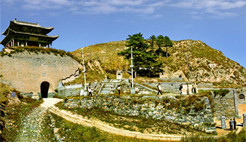
Mianshan Mountain in Shanxi province is the birthplace of customs related to Cold Food Day. Villagers around Jiexiu of Shanxi province still use traditional cooking for cold foods. Main courses include Zitui Dinner, in honor of a patriot named Zitui from Chinese history: steamed dough shaped like a snake coiling around a rabbit, baked wheat cake and cold willow buds with sauce.
In 2010, Jiexiu hosted the third forum on Qingming and Cold Food Festivals, at which the Cold Food Center of Mianshan Mountain unveiled a 1.5-meter dough tower. It sat on a base that measured one meter in diameter and made from 2,646 dough sculptures.
Between 206 BC and 220BC, the cold food custom spread from Mianshan Mountain to Taiyuan prefecture. From 220 BC to 589AD, this custom expanded throughout Shanxi province, even to the whole sovereign at the time.
In the Tang Dynasty (618-907AD), Emperor Xuanzong issued an imperial decree to incorporate the rite of tomb-sweeping into the newly compiled Kaiyuan Code of Etiquette, where the Cold Food Day tradition first appeared. There were licensed stores selling cold food products, such as round baked cakes, and peach or plum blossom porridge, in Chang’an city, now Xi’an in Shaanxi province.
During the Song Dynasty (960-1279AD), following the Tang practice, Cold Food Day was marked with seven days off and became a national holiday. Cold dishes included spring rolls and fried dough twists.
In the Yuan Dynasty (1271-1368 AD), in order to consolidate control over the Han people, Mongolian rulers kept the cold food custom. Rites for imperial and official tomb sweeping were included. At that time, the most popular cold food included Chunpan noodles, naan, shoe-shaped gold ingot pastry, freshwater snail, white sugar sponge cake and mugwort leaf rice.
During the Ming and Qing dynasties (1368-1912 AD), in addition to tomb sweeping, a new form of national sacrifice to evil spirits also were introduced. There also emerged various cold foods, such as fried dough twists, stuffed Qingming bun, dough shaped like a snake coiling around a rabbit, and date cakes. In the Qing Dynasty (1616-1912 AD), cold food was supplemented by fried sugar cake, round pancake, stuffed sugar cake, pea pudding, crisp thin fritter twists and Miancha (flour tea).