|
|
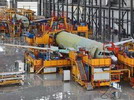
The State Development and Investment Corp (SDIC) proposes building more large desalination plants, like the one in this photo, in northern China to ease water shortages of cities there. Photos provided to China Daily |
Sea water desalination may prove to be solution to water shortages
Across northern China, water shortage has emerged as a regular feature of spring as fast-growing urban populations strain limited municipal water supplies.
Wang Huisheng, a member of the Chinese People's Political Consultative Conference (CPPCC), found a solution to the water woes - tapping the water of the ocean.
At the 2011 session of CPPCC, Wang suggested that the nation should look to seawater to quench its thirst.
Wang, who is also president of State Development and Investment Corp (SDIC), proposed more large desalination plants like one in North China's Tianjin, which is now helping alleviate an enduring drought in the coastal city of nearly 12 million people.
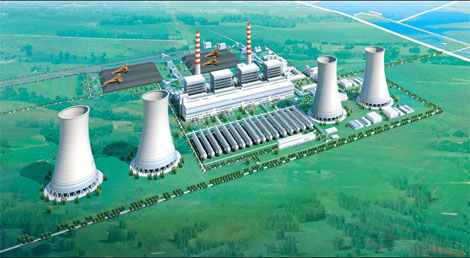
SDIC began construction on the nation's largest seawater desalination project in Tianjin at the end of 2009. Launched as a pilot program of China's recycling economy, it includes power generation, seawater desalination, sea salt production and reuse of waste resources.
The first phase of the 26 billion yuan ($3.82 billion) Tianjin Beijiang Power Plant has been completed and can now deliver 100,000 tons of fresh water a day.
It uses waste heat to help bring down cost of desalination and is now supplying the city with clean water for home use and drinking.
The second stage of the project is set to be completed by December this year, taking the total desalination volume to 200,000 tons a day, or a quarter of the city's consumption.
Wang envisions that such plants could be used across the nation where arid conditions threaten agricultural production.
China's main wheat belt - which spans the provinces of Shandong, Henan, Hebei, Anhui, Shanxi, Shaanxi, Gansu and Jiangsu - is one of the world's largest wheat-growing regions, where a long dry spell last winter threaten further jumps in the commodity's global price.
Water shortages are the most acute on the North China plain, home to 440 million people. Just 462 cubic meters of water are available to each person on average annually, well below the 1,000 cubic meter benchmark used by the UN to define a "water scarce" society.
The nation's another major State-owned water supplier, Beijing Enterprises Water Group, is also seeking to build a large-scale seawater desalination plant in Caofeidian port in North China's Hebei province to supply water for this industrial base and its neighbor Beijing.
The Hong Kong-listed company has signed a cooperation agreement with the government of Tangshan, where Caofeidian port is located, to launch this desalination project this year.
"The project aims at diversifying Beijing's water supplies and will help ensure the future water supply of the metropolitan," said Hu Xiaoyong, president of Beijing Enterprises Water Group.
Measures
The government has also announced several other measures to boost grain production including emergency wells and a south-north water diversion plan to ease arid conditions in central and northern China.
After the long dry spell, Wang concluded that desalinated seawater is the best answer, even though the cost of 8 yuan per ton is far higher than conventionally sourced water.
"Desalination is some distance from being commercially attractive," said Wang.
He noted that desalinated water from the Tianjin Beijiang plant costs 8.15 yuan a ton on average, but is sold at 4 yuan a ton in Tianjin.
"Desalination plants are also energy-intensive," Wang added.
Tianjin, an hour's drive from Beijing, has grappled with water scarcity since the 1950s. The city has built several projects to divert water from the Yellow and Luanhe rivers, but its per capita supply is still just 370 cubic meters.
Wang said desalination enjoys obvious advantages compared with trans-regional water diversion.
Large diversion projects face high costs in investment, operations and management along with losses from evaporation and seepage.
As well rivers are blocked, pollution can increase and large tracts of land are required. Water flows are also influenced by the availability in supplying regions.
Advances in technology and handling capacity are bringing down costs of desalination to the point "the cost will be lower than water transfers", Wang said.
Some industry experts say wide use of desalinated water would likely require improvements by water utilities, including more efficient water distribution, while households might be charged more for the water they use.
China can now deliver 600,000 tons of desalinated water a day, 20 times more than in 2000.
The State Oceanic Administration said the country will produce from 2.5 million to 3 million tons of desalinated water a day by 2020.
Statistics from the administration show the country collects about 40 billion cubic meters of fresh water from rainfall every year, not enough for some 400 cities throughout China that still thirst for water.
China Daily
|

Tianjin Beijiang Power Plant can now deliver 100,000 tons of fresh water a day to the port city for home use and drinking. |
(China Daily 04/26/2011 page15) |