US businesses oppose call for keeping tariffs on China









The cost of US tariffs on China has far exceeded any benefits derived from them, so the incoming administration in Washington should roll them back, a major American business group said on Monday as the United States' trade chief advised President-elect Joe Biden to retain the punitive measures on China.
US Trade Representative Robert Lighthizer, architect of the tariff policy that he claims has benefited American workers, said in an interview with The Wall Street Journal, "We transformed the way people think about trade, and we transformed the way the models are. ... My hope is that that will continue."
The outgoing trade chief also advised the next administration to weaken the World Trade Organization so that it can't overrule US policies and make it harder for American companies to move overseas despite the cost to their competitiveness, the Journal reported on Monday.
"Our members oppose the tariffs because of the high costs imposed on US consumers, households, and businesses," Doug Barry, director of communications for the US-China Business Council, told China Daily.
The USCBC represents more than 230 US companies that operate in a diverse range of industries and employ millions of Americans.
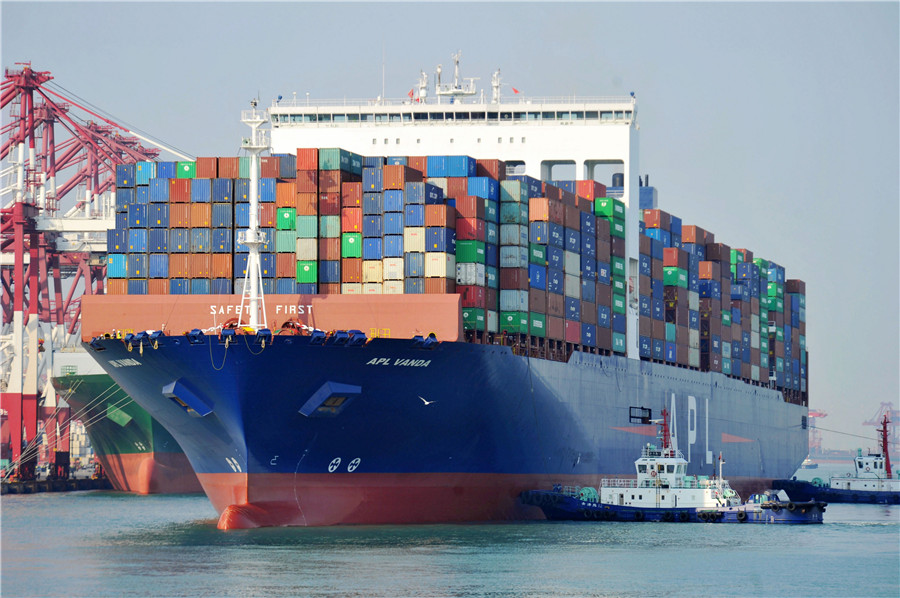
The US has left in place most of the new and increased tariffs on $360 billion worth of Chinese-made goods following the phase-one trade deal it signed with China nearly a year ago.
"Any benefits derived from the tariffs have been far exceeded by the costs. A moderate rollback of tariffs would increase US economic growth and stimulate employment," Barry said.
He said China, for its part, needs to fulfill its purchase commitment under the phase-one deal and support a phase-two trade pact that would lead to a "greater opening" of the Chinese economy.
However, some researchers in Washington, such as David Dollar of the Brookings Institution, have called the phase-one deal a product of "managed trade", whose targets were "completely unrealistic".
Chad P. Bown, a senior fellow at the Peterson Institute for International Economics, proposed that Washington "unilaterally drop the artificial targets of the purchase commitments" in the phase-one agreement, "as these do not encourage trade liberalization or market reform".
"In a globalized world, US companies need to be thinking about selling into other markets," Bown said on social media on Monday when commenting on Lighthizer's remarks.
"Trump's tariffs targeted imported inputs, raised their costs, and made manufacturing in America only that much harder," he said.
Loss of American jobs
USCBC President Craig Allen also said on Monday that the imposition of tariffs has had an impact on American imports, exports and productivity, and the tariffs led to the loss of many thousands of American jobs.
He argued that the tariffs also set the foundation for the phase-one agreement, and the removal of the tariffs should be "predicated" on further opening of the Chinese market as a part of a phase-two deal.
In "US Industry Priorities for US-China Commercial Relations", a report the USCBC released last month to present recommendations for the new administration, the organization said the phase-one deal "has served as a stabilizing force while the bilateral relationship has deteriorated in most other respects".
"However, the tariffs imposed prior to reaching the agreement, most of which remain in place, have harmed American jobs, consumers, and commercial competitiveness," it said.
In the report, the USCBC urged the administration to "fast track" phase-two negotiations to come to agreement on as many items as possible within the new year "as a precondition for a complete removal of Section 301 tariffs and China's corresponding retaliatory tariffs".
It also suggested that the administration "immediately remove Section 232 tariffs and quotas on steel and aluminum", which affect China as well as many US allies.
"Lifting the tariffs would provide much-needed stimulus to an economy still grappling with recession," the USCBC said.
As to reform of the WTO, Barry said, "Rather than working to weaken the WTO, we hope that the Biden administration will engage with other countries, including China, to strengthen it by leading reforms that will improve its effectiveness in creating trade rules that all members must follow."
Gary Hufbauer, a senior fellow and trade expert at the Peterson Institute for International Economics, said he "couldn't disagree more" with Lighthizer's advice to the administration as reported by the Journal.
"But I fear that Biden will follow Lighthizer's advice. Lighthizer's innovations are quite destructive to the world economy," Hufbauer said.
Biden said he would not act immediately to remove the 25 percent tariffs that Trump imposed on about half of China's exports to the US-or the phase-one agreement.
In an interview with The New York Times early last month, the president-elect said that first he wanted to conduct a full review of the existing agreement with China and consult with US traditional allies, "so we can develop a coherent strategy".
Hufbauer said US businesses will make their own deep assessments as to the direction of Biden's policies.
"If they conclude that a slow return to trade and investment rules that prevailed during the Obama administration is in store, then outward FDI (foreign direct investment) and trade engagement should enjoy a mild upswing," he said.
Asked if Biden should adjust US dealings with China on trade issues, Douglas H. Paal, senior researcher of the Asia Program at the Carnegie Endowment for International Peace, said he was confident the Biden team will have a strong desire to promote the economy and remove obstacles, but needs a comprehensive, strategic approach.
"My advice would go well beyond what is usually debated in Washington, to emphasize openness, incentives for greater competitiveness, and cooperation in foreign markets," he said.