A milestone for partnership with ASEAN










The establishment of the China-ASEAN Comprehensive Strategic Partnership (CSP) in 2021 was a well-deserved outcome of China's partnership diplomacy with its Southeast Asian neighbors.
While the naysayers try to portray the enduring China-ASEAN dialogue relations as a tool for Beijing to establish an exclusionary and hierarchical regional order centered on the gravity of China's economic might, the regional bloc continues to benefit from the inclusive and symbiotic Belt and Road Initiative through connectivity-based collaboration. The largely economy-driven Belt and Road cooperation has presented to the region and the world a stable, resilient and egalitarian model of cooperation.
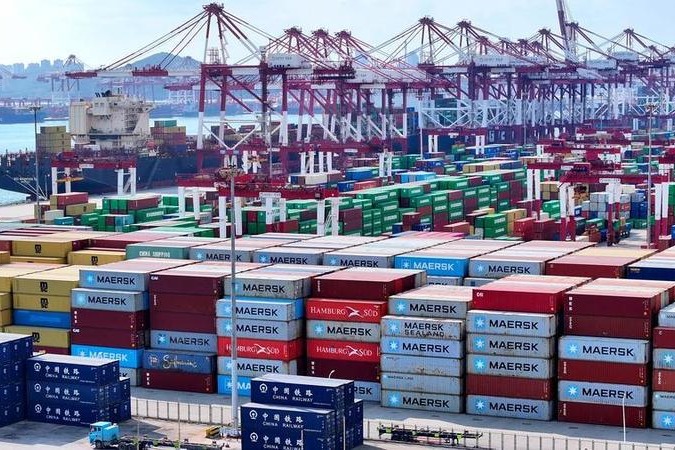
China, the first dialogue partner of the Association of Southeast Asian Nations, has been the biggest trading partner of the bloc for the past 13 years, while ASEAN surpassed the European Union as the largest trading partner of China amid the raging COVID-19 pandemic in 2020.
New drivers for economic cooperation are earmarked to be brought to the table to help boost the post-pandemic economic recovery in the region. Vaccine research and production, alongside the digital economy, green economy and blue economy, to name just a few, are all set to boost the collaboration between China and ASEAN.
The maritime-based blue economy is a case in point. At the ASEAN Summit last year, the ASEAN Leaders' Declaration on the Blue Economy was adopted, signifying the bloc's determination to promote the sustainable development of the blue economy, thus opening another window of opportunity for cooperation with China.
In retrospect, it was the inception of the Belt and Road Initiative in 2013 that triggered the anxiety among Western countries over the growing sphere of Chinese influence. By the same token, the Global Development Initiative that President Xi Jinping debuted in his speech at the Plenary session of the United Nations General Assembly last year might have made the Western countries even more unsettled as it is essentially more encompassing than the connectivity-driven BRI. The new initiative President Xi proposed is a vivid embodiment of the Chinese vision of building "a community with a shared future for mankind" to realize common development through international cooperation. The consistency of the Global Development Initiative with the United Nations 2030 Agenda for Sustainable Development has resonated well among the international community, notably among the developing countries.
In the context of ASEAN, the complementarity of the Global Development Initiative with the ASEAN Community Vision 2025 in the fields of regional political security, economic development and socio-culture looks set to serve as a coveted instrument in endearing the world's second-largest economy to the regional bloc. Indeed, the Global Development Initiative offers the latter a timely solution to help realize the long-hatched ideals of establishing an ASEAN Political-Security Community; ASEAN Economic Community and ASEAN Socio-Cultural Community. For China, it makes an ideal multi-dimensional platform for deepening and broadening collaboration with ASEAN beyond economic cooperation.
Amid the prevailing tide of de-globalization and geopolitical rivalry, this development model, consistent with the concept of "prosper-thy-neighbor" is a refreshing model. It can serve as a viable means for confidence building, managing disputes and addressing the trust deficit, all of which constitute the key building blocks for peace amid the current rising tensions and uncertainties.
From this perspective, China-ASEAN relations are no exception. Their essence lies not in the nomenclature of a comprehensive strategic partnership per se, but more in the ensuing efforts to strengthen mutual trust through multi-dimensional capacity development and confidence building between ASEAN and China.
The establishment of the China-ASEAN CSP signifies the high level of maturity in their relationship. This should be reflected in the breadth and depth of their cooperation and the institutional mechanisms for exchange on multiple levels and in multiple sectors. In this context, the Global Development Initiative is a practical solution that serves the contemporary needs of ASEAN.
By and large, Chinese diplomatic endeavors are not explicitly security-driven. Yet in reality, the robust expansion of functional economic cooperation helps build trust and confidence between trade partners. In this respect, the multi-dimensional model of the Global Development Initiative is no doubt a good enabler in helping China to build trust with ASEAN, thus paving the way for establishing a regional community with a shared future, where the security architecture is inseparable from the regional agenda.
Under the current circumstances, ASEAN is caught in the web of the Sino-US geopolitical tussle. It is engaged in a difficult balancing act of engaging with both sides against the backdrop of the US making no bones that its newly proposed "Indo-Pacific Economic Framework for Prosperity" is largely designed to contain China. ASEAN's ability to tread a delicate line between the two major powers looks set to be put to test again. Nonetheless, the regional bloc should not allow itself to be unduly distracted by the West's risk-portrayal narratives about it being drawn into the orbit of Chinese partnership diplomacy.
ASEAN should by now be mature and confident enough to know that its handling of relations with both the rival powers need not be a binary choice. After all, it is the long-term interests of its 650 million people that matter in the final analysis.
The views don't necessarily represent those of China Daily.
The author is chairman of the Centre for New Inclusive Asia in Kuala Lumpur, and the former deputy speaker of the Malaysian Parliament cum the former transport minister of Malaysia.