



Global exchanges need to be fairer









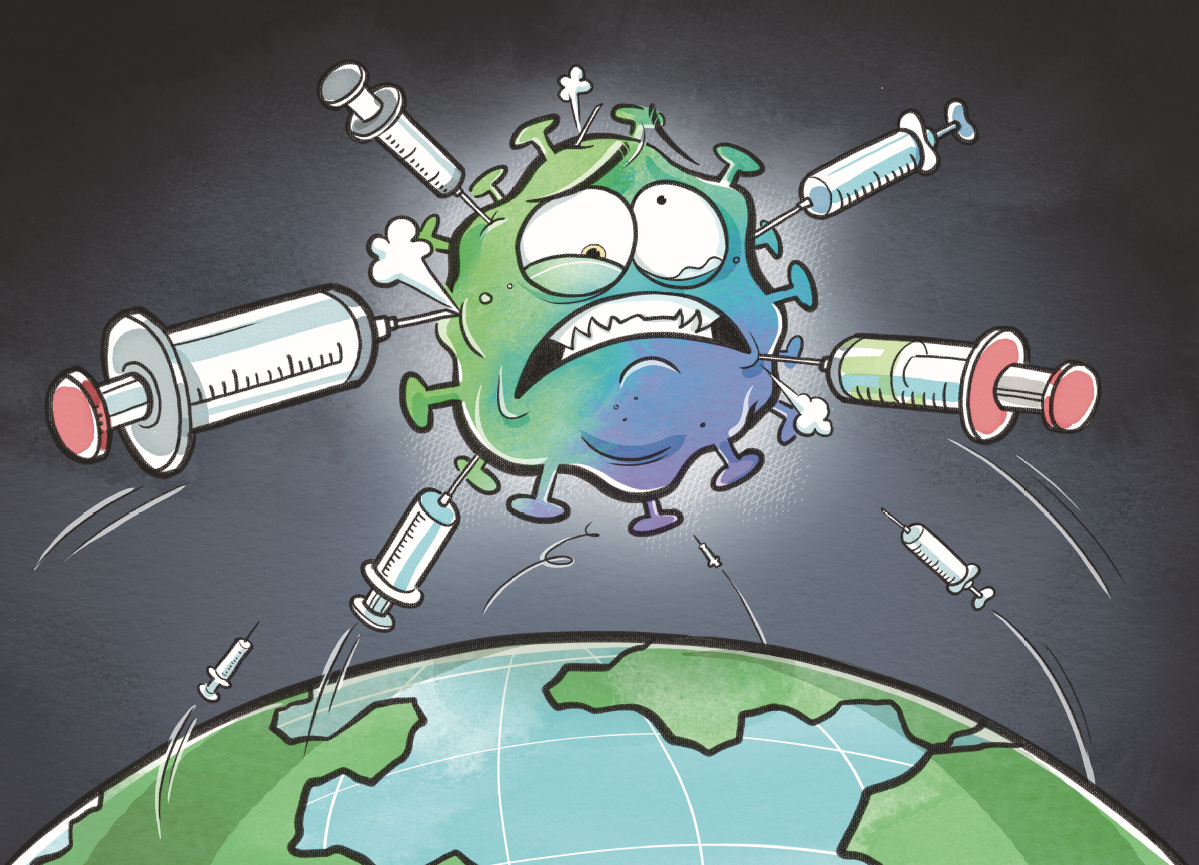
Much of the world has come to a standstill as countries struggle to limit the damage caused by the COVID-19 pandemic. These are highly trying times, for sure, and our prospects have been dampened further because we don't know when the pandemic will be contained and at what cost.
It is therefore natural to see people being increasingly worried about economic globalization. Many are asking whether globalization will survive the pandemic. In fact, "de-globalization" has been trending as a theme on some social media networks for some time.
True, the development in the four decades before the pandemic struck cannot be seen as the norm in terms of global interactions, exchanges or integration. The years since the early 1980s, especially the post-Cold War period, characterized by "excessive" globalization, saw capital, especially Western countries' capital, make huge gains from globalization. But the working people in those countries, despite benefiting from lower prices of goods imported from developing countries, have seen their wages stagnate and job opportunities diminish.
Discontent over globalization was always real. No wonder many serious scholars, including leading economists, had started talking about "de-globalization" even before the pandemic broke out.
While there is a need to make serious efforts to correct the excesses committed by global capital, we should not view global interconnectivity and cooperation pessimistically. Contacts, exchanges and cooperation beyond borders are as old as the history of national boundaries. The desire to reach out to other people is part of the human DNA.
Hence, we should start developing a better form of globalization in the post-pandemic era.
First, we have to sustain our trust in globalization-or the togetherness of the human race. That almost all countries are fighting the outbreak is a golden opportunity for them to reach out to each other and build a strong global front against the common enemies of humankind.
Second, "hyper-globalization" can never be sustainable. So after the pandemic is contained every country should give more emphasis to their domestic concerns, and use regional and global platforms to discuss how to limit the exploitative impact of global capital. The Global South, especially the less-developed countries, deserve greater protection and support from the developed world.
Third, since regionalization seems to hold greater promise than globalization, countries in a particular region should use their geographic proximity and cultural similarities to engage more vigorously in transnational community building. In this regard, the three East Asian powers-China, Japan and the Republic of Korea-and the 10 member states of the Association of Southeast Asian Nations and the other countries in the Asia-Pacific region have a special responsibility.
For China, its economy faces the challenge of declining external demand. As such, it should invest more in developing its domestic economy, most notably in what Zheng Yongnian of National University of Singapore calls "soft infrastructure".
China should build up its supplies of social goods, such as medical facilities, schools and affordable housing, and improve its information infrastructure such as 5G networks to better serve its people. This will help expand the middle-income group with stronger purchasing power, and make China the world's largest consumer market, with which other countries can do business for greater mutual benefit. And if China contributes more to other countries' prosperity, nobody will worry about globalization that much.
The author is a professor at the School of International Relations&Public Affairs, Fudan University. The views don't necessarily represent those of China Daily.





