Here are some steps that could be taken to put the world on track for an inclusive and sustainable future
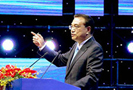
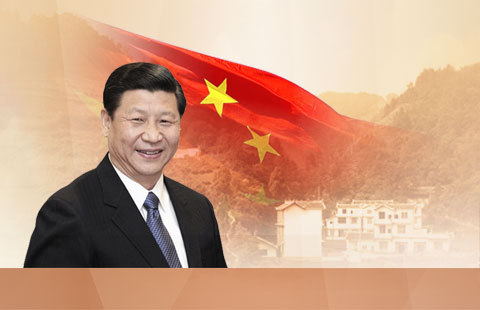
Globalization is under attack these days from all quarters - except, it seems, from China. In fact, the reverse is the case. China's President Xi Jinping attended the World Economic Forum in Davos in January. He was the first Chinese president to address Davos, taking with him an 80-strong delegation of business leaders, academics and journalists. What's more, he gave a marvelous and very warmly received speech.
Xi set out an arresting vision of a more inclusive form of globalization that worked for the many and not just the few. In other words, not only did he defend globalization as we have known it, but he went on to call for its reform and improvement. In a world in which the UK is seeking to leave the EU and, above all, one in which Donald Trump has now taken office as US President, China suddenly became the great hope of the Davos world and perhaps also of everyone who recognizes that globalization, in some form or other, is here to stay.
So what is going on? Can China do it? Can this huge country, which still seemed to be feeling its way diplomatically when it convened the most recent G20 summit in Hangzhou in China last September, really assume the mantle of global economic leadership apparently being cast aside by Trump? I follow these issues closely and I certainly don't know the answer.
But I do think I know some of the measures that need to be taken if the global economy is to deliver the kind of inclusive growth that President Xi talked about in Davos, and indeed about which he managed to get the whole of the G20 to sign up to last year in Hangzhou.
The official communique set out the essential elements of what it called the "Hangzhou Consensus", promising in the most important part of the statement that G20 countries would henceforth "work to ensure that our economic growth serves the needs of everyone and benefits all countries and all people . so that no one is left behind".
It was an inspiring vision, but how might such a world of inclusivity be built? Consider just for a moment how the global economy would look if all of the following imagined political moves were to occur, and then ask why they are not possible:
Leading global states agree to assess at each annual G20 summit the condition of the global economy (i.e. growth, investment, employment, inflation) and agree among themselves on necessary national measures to foster its continuing health and dynamism.
All states whose societies contain inadequately funded and dubiously controlled banks and other financial institutions (and there are plenty, including China) sign a compact requiring their own national supervisory bodies to work in conjunction with each other, supported by key global bodies like the Financial Stability Board and the Bank for International Settlements, to bring them back under satisfactory regulatory control.
Key states that are losing badly needed tax revenue to the unseen hands of global corporate tax management decide collectively to challenge their declining fiscal bases by making the necessary national legal changes to empower them to collect taxes effectively from global business actors.
New commitments are made by the boards of governors of the International Monetary Fund and the World Bank to further take forward the rebalancing of voting powers between member states that has tentatively been started, although as yet without great impact or full implementation, over the past few years.
Member states of the World Trade Organization react to the failure of the Doha Trade Round by embarking on serious reform of the organization with a view to reorienting its purposes in future around socially progressive and egalitarian, as well as merely trade-expansionist, goals.
Leading countries, notably the United States, EU members and China, act to break the logjam caused by the current management of climate change negotiations by the United Nations and move to establish a new global institution tasked with bringing climate change fully into the global policy debate alongside issues of growth, stability and development where it belongs.
I think that in the aftermath of enacting such a program over the course of, say, a decade, the G20 could really be said to have engineered inclusive growth wherein no one was left behind (and the environment was not wrecked). A thorough process of reglobalization would have occurred and the politics of deglobalization espoused by the far right and seemingly taken up by US President Trump would have been defeated. If China were to put itself at the front of such a set of measures and was able to push them through the G20 over the next few years, I think it could truly be said to have rescued globalization and saved the world.
Can it? Will it?
The author is co-director of the Sheffield Political Economy Research Institute.




Copyright 1995 - . All rights reserved. The content (including but not limited to text, photo, multimedia information, etc) published in this site belongs to China Daily Information Co (CDIC). Without written authorization from CDIC, such content shall not be republished or used in any form. Note: Browsers with 1024*768 or higher resolution are suggested for this site.
License for publishing multimedia online 0108263 Registration Number: 130349