China needs to take steps to enlist others and emphasize that the proposal is an exciting opportunity for the whole world
The Belt and Road Forum for International Cooperation created a sense of exhilaration in Beijing. However, although the Belt and Road is pitched as a new approach to driving the momentum for globalization, much of the discourse is centered on China. Outside China, the initiative has encountered more doubters than believers. Skeptics perceive Beijing's program as a grand vision without a practical plan, a largesse that China is handing out to its neighbors in exchange for geopolitical cooperation - or worse, a rising power's intention to challenge the existing world order.
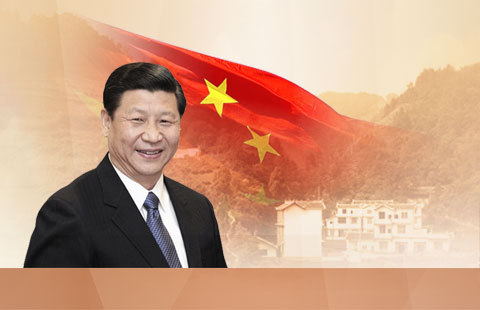
As President Xi Jinping said in his keynote speech at the forum, the Belt and Road embodies "openness and inclusiveness, mutual learning and mutual benefit". The initiative needs not to be an agenda "by China for China", but "by China for the world". Indeed, if it fails to define itself as a global agenda that harnesses social and commercial, as well as political, forces around the world, these words will fall on the naysayers' deaf ears. To achieve win-win cooperation, China must enlist global partners. The following 10 paths can help Beijing do just that.

Incorporating the Belt and Road Initiative under the United Nations' framework of governance. The Belt and Road is part of a UN resolution predicated upon the concept of "building a community of common destiny for mankind". It also aligns with the UN's 2030 Agenda for Sustainable Development. There are more than 130 countries and international organizations participating in the Belt and Road. Coordination and concerted actions could be brought about by a Belt and Road-oriented agency established under the UN structure.
Engaging the world's major international institutions. To foster greater movement of goods, capital and people linked to the Belt and Road, rules and standards need to be streamlined. The World Trade Organization, the World Bank, the International Monetary Fund, the International Organization for Migration, and the International Labor Organization are among the partners that can help establish a regulatory framework for Belt and Road related issues.
Stepping up efforts to win acceptance from both North and South. The Belt and Road needs not to be distinctively associated with China's ancient history. Countries and international organizations, such as the United States, the European Union, Japan, South Korea, Russia and India, have all used the concept of a "Silk Road" in their own economic strategies. Beijing can find the common denominator among these plans. France, with its newly elected pro-globalization president, and the Commonwealth countries led by the United Kingdom are all poised to become Belt and Road partners. Great powers, advanced as well emerging economies, can all trek the Silk Road alongside China to make Belt and Road a global, rather than a China, project.
Forging a Belt and Road business alliance with multinationals. Global giants such as Siemens and General Electric have already participated in the Belt and Road Initiative. Multinationals that have operations related to the Belt and Road can help Chinese companies navigate local situations with their experience and networks. Rising tides lift all boats. The infrastructure boom related to the Belt and Road Initiative provides opportunities for businesses around the world. A networking platform modeled after the B20 business summit could facilitate collaboration and partnerships among the Belt and Road business leaders.
Pooling financial resources from across the globe for Belt and Road related projects. Infrastructure investments provide stable returns and institutional investors love them. There might be vast incentives concentrated in the world's financial hubs, such as London, New York and Tokyo, for participating in the Belt and Road.
Promoting cross-border e-commerce. The market size for global B2C is estimated to reach $1 trillion by 2020. With its drive to establish an Electronic World Trade Platform, Chinese e-commerce behemoth Alibaba is a leading champion for the globalization of digital retail. Amazon has a global logistics network that spans 185 countries and regions. It may join the ranks of e-commerce leaders linked to the Belt and Road as well. A digital Silk Road has room for more global players.
Broadening international partnerships to foster people-to-people exchange. Tourism boasts enormous potential with more than 120 million Chinese overseas tourists spending $10 billion annually. The number of Chinese people travelling abroad could reach 700 million in the next five years. Education linked to the Belt and Road regions is not only a huge market, but will also help develop local workforces. Chinese and foreign universities as third-party partners should engage with the Belt and Road.
Further reforming talent acquisition policies to foster global human capital flows. Overseas Chinese have traditionally played the role of driving investment and overseas expansion of Chinese businesses. In recent years, the Chinese government has eased the barriers to foreign talent migrating to China. The Belt and Road Initiative has a rapacious appetite for international talent across professional fields. There is a need to develop a multilateral mechanism for all Belt and Road partners to work together to address the talent shortage.
Engaging global civil society linked to the Belt and Road. Given the rise of de-globalization sentiment worldwide, China should realize that the Belt and Road must be more attuned to grassroots voices to make sure that it benefits local communities. Think tanks, in their role of bridging the policymaking and academic worlds, are poised to become the primary agents of helping Beijing strengthen ties with nongovernmental organizations and other non-state actors and groups.
A permanent secretariat. As China expands the Belt and Road orbit to include more countries and regions, an annual conference is not sufficient for all participating members to channel disputes and articulate concerns. It needs a permanent secretariat that can function as a platform for dialogue and communication at least, if not a multilateral negotiating mechanism.
The author is founder and president of the Center for China and Globalization. The views do not necessarily reflect those of China Daily.




Copyright 1995 - . All rights reserved. The content (including but not limited to text, photo, multimedia information, etc) published in this site belongs to China Daily Information Co (CDIC). Without written authorization from CDIC, such content shall not be republished or used in any form. Note: Browsers with 1024*768 or higher resolution are suggested for this site.
License for publishing multimedia online 0108263 Registration Number: 130349