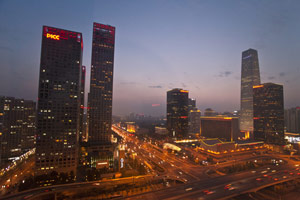
Years of rising housing prices have made China's real estate sector anathema to many young people and a butt of jokes on many online and social media platforms. In response to public appeals to stabilize housing prices, the government has launched many price and transaction control measures. And the latest data show real estate prices have stopped rising in some major cities; in Beijing, for instance, they have even dropped mildly.
No doubt, such administrative measures do yield temporary results. But overall, realty prices in China have surged in the past decade, with those in some major cities increasing more than tenfold. This strong surge in prices has made many doubt the sincerity of policymakers in cooling the real estate market.
So policymakers have to rethink their short-term demand-repressing strategy and find a more effective way to stabilize the real estate market. Perhaps, as last year's tone-setting Central Economic Work Conference said, China should put in place a "long-term mechanism" to effectively manage the market. Such a mechanism would include increasing land supply, stabilizing money supply, reforming the real estate tax system, and developing public rental housing.
China has achieved some headway on these fronts. For example, the growth of money supply, measured by M2, dropped to 9.6 percent in May, one of the lowest levels in recent years. The government is also mulling imposing a tax on people who own more than one house.
However, China still lacks a sound public rental housing system that can provide accommodation for low-income people who cannot afford high-rental commercial housing.
According to Sheng Songcheng, a senior official of the central bank, those covered by the public rental housing program account for only 3.4 percent of the permanent urban residents in the country. The low ratio means a large number of low-income people still do not have access to subsidized housing and therefore have to pay huge amounts to buy or rent an apartment. Public rental housing not only has a bearing on the livelihoods of low-income people, it also plays an important role in helping stabilize the real estate market by reducing the demand for commercial housing, which in turn eases housing prices.
In Chongqing, for example, the public rental housing program covered about 60 percent of new permanent residents in the 2011-15 period, during which prices of commercial apartments increased by less than 3 percent.
In contrast, Tianjin's public rental housing program covered only about 20 percent of the new permanent residents from 2011 to 2015; as a result, commercial housing prices there increased by 24 percent.
Therefore, the Chinese government has to increase inputs in order to expand the public rental housing program for the benefit of low-income urban residents while taking measures to control price rises. It also needs to take steps to eliminate irregularities in the building and distribution of public rental apartments. For example, media reports say some people not eligible for the public rental housing program have cheated their way into such housing units only to let them out on higher rentals to sub-tenants.
Besides, some local governments are reluctant to supply land for building public rental apartments. In 2012, the Xinjiang Uygur autonomous region and Anhui and Yunnan provinces, where the increase in the number of new urban residents is relatively slow, provided the highest acreage of land nationwide for the public rental housing program, which accounted for about 30 percent of the country's total land supply.
In contrast, in major cities such as Beijing and Shanghai, where housing prices surged over the past years, the increase in land supply for the public rental housing program has been lower than the previous years.
Given the still-high housing prices, it is time the authorities pushed forward the public rental housing program to "kill two birds with one stone". That is, meeting the housing demand of low-income earners while anchoring the market.
The author is a senior writer at China Daily.
Contact the writer at xinzhiming@chinadaily.com.cn.




Copyright 1995 - . All rights reserved. The content (including but not limited to text, photo, multimedia information, etc) published in this site belongs to China Daily Information Co (CDIC). Without written authorization from CDIC, such content shall not be republished or used in any form. Note: Browsers with 1024*768 or higher resolution are suggested for this site.
License for publishing multimedia online 0108263 Registration Number: 130349