Op-Ed Contributors
A unified rate can cure taxation woes
By He Bolin (China Daily)
Updated: 2010-04-01 07:48
 |
Large Medium Small |

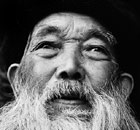
Editor's note: To impose income tax at a flat rate on both the rich and the poor is more suitable for the situation of China than a progressive rate, according to Mao Yushi.
The widening income gap has to be bridged. One way of doing it is to substantially raise the threshold of personal income tax. That, say many experts, will ease the economic burden of medium- and low-income people, who earn about 2,000 yuan ($293) a month. The authorities, too, have discussed the idea while drawing up the country's tax reform plan.
Theoretically, however, imposing progressive tax rates would be a perfect solution to the problem of unequal wealth distribution, which has given rise to many a social problem. But ask Mao Yushi, the founder and chairman of the board of Unirule Institute of Economics, and he will disagree.
|
||||


Indirect taxes are unfair because all consumers - most of them without knowing - are made to pay it. There are numerous examples of manufacturers, retailers and service providers transferring their tax liability on to consumers by imposing indirect taxes. On the other hand, a direct tax cannot be transferred to others.
So, to narrow the income gap, the authorities should reduce indirect taxes and increase direct taxes - preferably by applying a progressive rate. Progressive tax rates could force wealthier people to pay more taxes and the poor to pay less or no tax at all. And China does have different personal income tax rates, ranging from zero for people earning less that 2,000 yuan a month to 45 percent for those making more than 100,000 yuan.
But the system is not foolproof. Taxes are seldom collected from people in the highest income bracket, even though salary earners never escape the tax authority's eyes, Mao says.
So, what is wrong with the system? Tax authorities determine who pays how much tax by checking potential taxpayers' income statements, Mao says. They get the income details of salary earners from their employers but don't have access to the records of the highest-income group. Besides, one income statement is not enough to calculate the right amount of tax to be levied on them because they have many sources of income - investments in property and stocks, interest on capital and income from companies - which are beyond the reach of the tax authorities. Therefore, the advantage of a progressive tax rate remains confined to theory.
No wonder, personal income tax accounts for only 7 percent of China's total tax revenue, much lower than other countries' average of about 50 percent. Ironically, the "progressive" tax rate turns out to be regressive in practice. To be frank, Mao says, there are big loopholes in the tax system, which allows most of the high-income earners no tax on their income beyond "salaries".
China has to look to other countries to fix the problems because its previous efforts to strengthen supervision on taxation have failed to bring about any significant change. And, Mao says, Russia's model is worth a look.
Russia abolished its progressive income tax in 2001 and instead imposed a flat rate of 12 percent. But if China were to impose the same tax rate on the rich and the poor, as Mao suggests, it will raise another controversy.
Controversy, it seems, is made for Mao. What else can we call his earlier suggestions? Sample some of them: indoor toilets should be replaced by public ones when constructing low-rent houses for the poor, while those "pretend to be poor" won't get the government-funded & low-priced houses due to the disinterest of shared lavatories; university tuition fees should be raised to collect more money in order to help more poor students to get access to higher education; and it is unnecessary to have at least 1.8 billion mu (120 million hectares) of arable land for agriculture because there is no direct relation between the total land under cultivation and rice production. In fact, some of his suggestions raise doubt about whether he remains neutral between the rich and the poor - though he still speaks for the rich and works for the poor.
Mao says China's situation is similar to Russia's because both changed from planned economy to market economy. One of the most important things in this transformation is to make people agree to pay taxes - for only after that can advanced taxation systems such as progressive personal income tax be introduced. The problem is few people in China are in the habit of paying taxes.
That's another reason why he suggests a unified rate for personal income tax. Once the tax rate is lowered, it could encourage tax-evading high-income earners to pay their share of taxes. Experience shows that the higher the income tax rate, the more the rich avoid paying it.
Tax evasion was rampant in Russia before its tax reform in 2001, because high-income earners were expected to pay up to 30 percent of their income in taxes. Since China's highest personal income tax can be double that of pre-2001 Russia, more high-income earners could be evading tax in the country.
To streamline tax payments and make every taxpayer pay his share of taxes it is necessary to strengthen supervision, too. Mao, however, suggests that initially a moderate fine be imposed on tax evaders so that people don't risk their reputation on it.
Russia's personal income tax rate before 2001 ranged from 12 percent for people earning between 3,168 to 50,000 rubles to 30 percent for those who made more than 150,000. This arrangement made a large percentage of the high-income earners evade paying tax. But after Russia imposed a unified tax rate of 12 percent on all taxpayers, its total tax revenue rose by about 25 percent. And since then, more than 20 countries have emulated Russia's example.
But Mao is uncertain whether Chinese would accept such a rational logic, and whether policymakers can bear enough social pressure, that is predictably to pose by the country's vast population of medium-and low-income earners, to give the scheme a green light. But he argues that even though the scheme appears to favor the rich, it is equal to all.
(China Daily 04/01/2010 page9)