Comments()
  Print
Print  Mail
Mail  Large Medium Small

The Yangtze River dolphin, or baiji, is functionally extinct. And the Yangtze River porpoise, or jiangzhu, seems set to meet the same fate. For all we know, the law of the survival of the fittest is at work here.
But is it? Doesn't evolution usually take thousands, if not hundreds of thousands, of years to have its effects? The Yangtze River, according to many experts, is 45 million years old. The baiji evolved about 20 millions years later. It took another 5 million years for it to swim from the Pacific Ocean into the Yangtze and make its permanent home there. Yet it has only taken a few decades for it to become functionally extinct.
Many would argue that almost the same fate befell the dodos and yet the world hasn't been any poorer for it.
The main value of the Yangtze is its water (and fish), they would say. It still carries millions of cubic meters of water every year, slaking the thirst of the land and its people.
So what if it runs wild at times?
There would have been no cause for worry if China had enough fresh water to meet its demands.
But how could China possibly be running out of water? Look at its great rivers and giant lakes and the massive glaciers the Qinghai-Tibet Plateau is home to. And don't forget the torrents of water it receives when the heavens open up, as we saw in Beijing on July 21. And remember China is sixth from the top on the global list of water resources.
Yet the fact remains that China, like many other countries, faces a water shortage that threatens to slow down its socio-economic development.
The problem is not new. But the country's changing demographics and fast paced economic development have made it more complex.
For instance, despite having the sixth largest reserve (resource) of water, China's per capita availability of freshwater is only one-fourth of the world average. Also, the demand for water in China has increased many fold in the past three decades, thanks to its high rate of economic development and urbanization.
The lion's share of the water used in China goes to agriculture. In fact, the agriculture sector accounts for two-thirds of the water used in the country. Perhaps modern technology can reduce farmers' reliance on water. But will that be enough?
If the demographics have changed, so has the climate. Droughts or drought-like conditions have becoming more frequent, proving a drag on the country's economy. Floods, too, have harmed the country's economic growth.
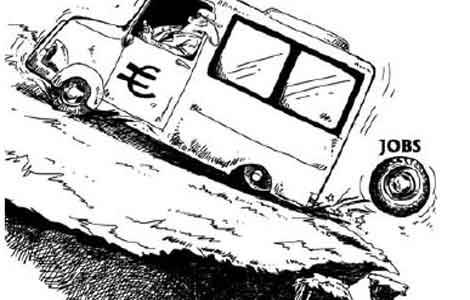
This lopsided focus on GDP and other economic indicators is precisely where the trouble lies. We place too much importance on economic graphs and economic growth rates. We seem to believe that we can make do with bottled water if tap water is in short supply.
China has achieved great things on many fronts. Its economy has boomed for more than three decades. It is still booming compared with the rest of the world. It has pulled hundreds of millions of people out of poverty. But it still cannot guarantee later generations will have enough water.
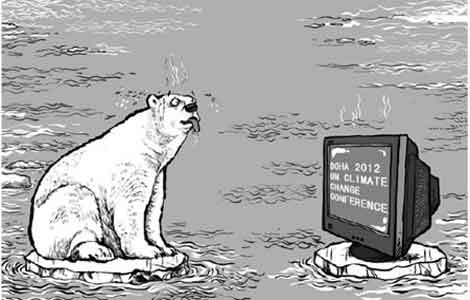
The United Nations climate negotiations will resume in Bangkok on Aug 30 and continue until Sept 5. Experts fear that the average temperature could increase by up to 6C by the end of this century, making the planet unlivable. The "informal" negotiations may not necessarily have a bearing on the formal UN Climate Change Conference scheduled for November in Doha, Qatar, but their focus again seems to be on abstract topics such as carbon trade and countries' commitment to tackling climate change rather than concrete things such as the availability of water.
Of course, rising temperatures will be discussed, but the talks leave no room for water, even though it could be almost "functionally" unavailable by the turn of this century if we do not stop wasting it now.
What has been the elixir of life for millenniums, it seems, has come to be taken for granted. And that is dangerous.
The author is a senior editor with China Daily. E-mail: oprana@hotmail.com.
(China Daily 08/28/2012 page8)
Copyright 1995 - 2010 . All rights reserved. The content (including but not limited to text, photo, multimedia information, etc) published in this site belongs to China Daily Information Co (CDIC). Without written authorization from CDIC, such content shall not be republished or used in any form. Note: Browsers with 1024*768 or higher resolution are suggested for this site.
License for publishing multimedia online 0108263 Registration Number: 20100000002731