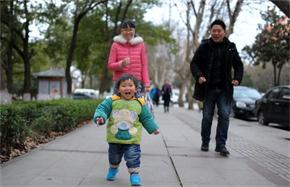
Single children 'little emperors'

A study recently published in Science by four Australian scholars (myself, Professors L. Cameron and L. Gangadharan of Monash University and Associate Professor N. Erkal of University of Melbourne) suggests that individuals who grew up as single children as a result of the strict implementation of the family planning policy in 1979 are, on average, less trusting, less trustworthy, more risk-averse, less competitive, more pessimistic and less conscientious.
The research is based on data collected from economics experiments involving 421 people born in Beijing just before and just after the introduction of the family planning policy, under which most urban families are required to have only one child. The samples spread evenly across the (pre-policy) 1975, 1978, and (post-policy) 1980 and 1983 birth cohorts, with gender balance within the groups. Surveys to elicit personality traits were also used.
The behavioral consequence of not having siblings has been of interest in developmental psychology for many decades. It is believed that pro-social development is shaped by parents as well as through social interaction with peers, including siblings. The difference in relationships with parents and lack of interaction with siblings have been identified in psychology as two reasons for a single child to develop differently from those having siblings.
However, if parents give birth to single children differ in their personality and behavioral traits from parents who choose to have more than one child, such differences may be inherited by their children. Thus, behavioral difference observed from simply comparing children with and without siblings would be a combination of the effects of growing up with or without siblings as well as the differences in personality traits children inherit from their parents.
To tease out the inherited behavioral differences, we used an econometric method called "instrumental variable" approach. It allowed us to use the family planning policy as an exogenous shock to individuals' fertility to identify a group of people who would otherwise have grown up with siblings but because of the family planning policy did not.
This is important because it allows us to compare the two groups - whose parents have almost the same personality and behavioral traits - and attribute their behavioral differences to the sole fact that one grew up as single children while other did so with siblings. The average difference in the behavior of the two groups tells us the effect of growing up as single children as a result of the family planning policy.
The four experiments (the Dictator Game; the Trust Game; the Risk Game; and the Competition Game) we conducted were standard games from economics literature. For example, in the "Competition Game", which investigates participants' competitiveness, participants were asked to add up as many sets of five two-digit numbers as possible in five minutes. The numbers were randomly generated and presented in rows, and the participants were asked to choose between two payment schemes.
Option 1 was a piece-rate that paid 5 yuan for every sum correctly completed. In Option 2, payments were determined in a competitive way. Each participant was randomly and anonymously paired with someone else in the room. He/she was paid 10 yuan for every sum correctly completed if he/she had completed more sums than the person with whom he/she was paired, 5 yuan if both participants completed the same number of correct sums, and 0 yuan if he/she lost the competition. In the competition game, many fewer single children par-ticipants chose to compete than those born before the policy (44.2 percent versus 51.8 percent).