Strengthening TB prevention, control
Sunday was the 18th World TB Day, highlighting the fact that tuberculosis is still a global public health problem.
Like hunger, malnutrition and poor living conditions, TB is often linked with poverty and backwardness, and to many people TB no longer seems a problem. Very few people pay it much attention.
However, 1.4 million people around the world die of TB every year. China has the world's second- largest tuberculosis epidemic, after India, and 50,000 people die of TB every year. That means that one person dies of TB every 10 minutes in China. Although the rate is declining the World Health Organization estimates that China has 1 million new instances of TB each year.
TB is caused by the bacterium named mycobacterium tuberculosis, which is easily spread through airborne particles. An infectious TB patient can infect 10 to15 people on average in a year.
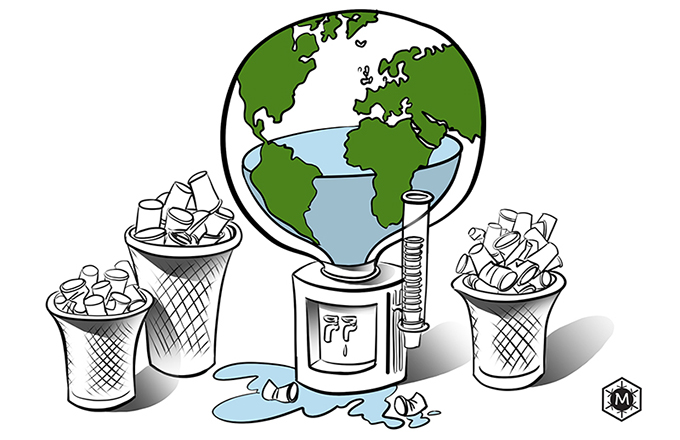
The BCG neonatal vaccination cannot prevent adults becoming infected and TB mostly affects young adults. However, students in middle school and university are also susceptible to TB, and they are often overlooked. In a recent investigation into an outbreak of TB in a junior high school, China's Center for Disease Control and Prevention found that, in a class of 77 students, 37 students had developed TB over the same period. Stress, inadequate nutrition, lack of exercise and poor living conditions are the major risk factors for the illness.
But TB is preventable and curable. With the help of foreign aid, the government provides free diagnosis and treatment for TB. In the period of 1990 to 2010, our prevalence of tuberculosis infection is reported to have halved and mortality reduced by 80 percent. The vast majority of TB patients can be cured after six to eight months of an uninterrupted daily drug regime.
However, more than 80 percent of China's TB patients live in rural areas or are part of the floating population, and they have far less medical services available to them than urban patients. Poor compliance to the long-term standard treatment often results in ineffective treatment. Several existing anti-TB drugs have been in use for more than half a century and there have been no new drugs available in recent years, so if the treatment process is not followed, it can result in resistance to one or multiple drugs.
According to the National Anti-Tuberculosis Drug Resistance Survey conducted from 2007 to 2008, an estimated 120,000 new multidrug-resistant TB cases emerge each year, the highest rate in the world. Since the majority of multi-drug resistant patients cannot get effective treatment and management, their continuous discharge of the bacteria that causes TB is a serious public health threat. Today, more and more previously untreated patients are found to be multidrug resistant.
The quality of TB control is compromised by the weakness in early detection and treatment management. First, due to the limitations of the technique used to detect occult TB, diagnosis is reliant on passive discovery when a patient seeks medical treatment. Therefore in order to make the fight against TB more focused we need to find a way to identify high-risk populations.
The detection rate of sputum smear microscopy, which has been widely used for 130 years, is low and multidrug-resistant TB cases remain undetected due to the lack of expensive testing technology. There is also a high treatment dropout rate, especially among multidrug-resistant patients.
The treatment of multidrug-resistant TB, which is mainly dependent on second-line anti-TB drugs, can last up to 24 months and involves complicated and more expensive treatment regimens that have lower patient adherence and a higher dropout rate.
In view of the seriousness of TB and the difficulties in prevention, we need to raise people's awareness of the disease. We cannot become a well-off society in an all-round way with millions of TB patients. There is a lack of human resources and funds available for TB control. We need to significantly increase the government's input, establish a mechanism to coordinate prevention and treatment, and extensively mobilize society to participate in the fight to reduce the emergence of new cases of TB.
The author is a member of the National Committee of the Chinese People's Political Consultative Conference, and director of the Center for Disease Control and Prevention.
(China Daily 03/25/2013 page8)