The annual BBC World Service GlobeScan survey results were released last week. This survey of more than 26,000 respondents asked if a country's influence in the world was "mostly positive" or "mostly negative".
China ranked 9th just after the US but its positives dropped 8 percent to 42 percent "mostly positive" and negatives rose 8 percent to 39 percent "mostly negative". After several years of improvement, positive views of China's influence in the world have dropped to their lowest levels since polling began in 2005.
According to an op-ed piece in the New York Times in March by China watcher David Shambaugh, European attitudes about China have been the most negative for much of the last decade but now they are joined by the US and Asia. China's focus on Africa and Latin America and the physical presence of many Chinese workers there have not resulted in the goodwill China envisioned.
In my own country, the US, people don't hate China or the Chinese people but are deeply suspicious of the government, especially in light of numerous recent allegations of cyber-espionage aimed at US military, NGO and civilian targets.
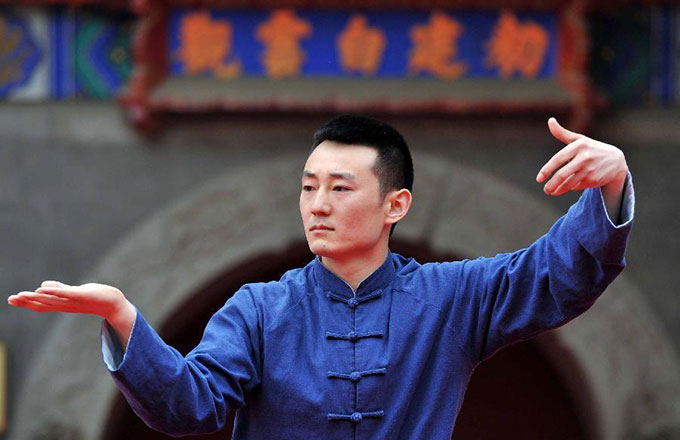
China has had some notable successes in the exercise of its soft power through cultural diplomacy. I visited the Shaolin Temple in Henan province in March. Thanks to their kung fu, Shaolin has become one of China's best known brands as their monks tour the globe astounding people with their amazing feats. So too for Chinese acrobats and gymnasts. The nascent but growing trend of Hollywood-Chinese co-productions will eventually have an impact too.
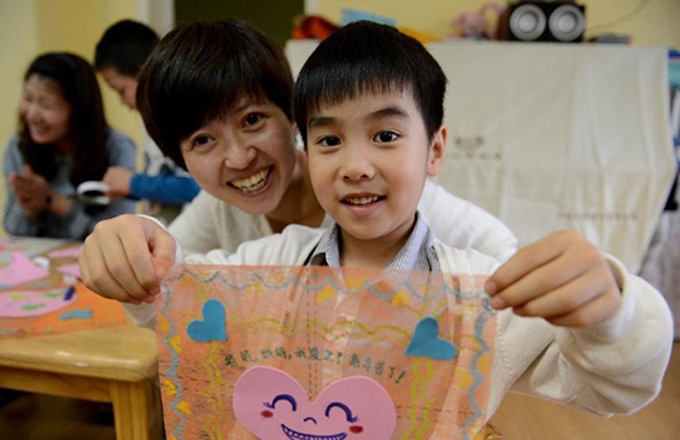
There have also been some great museum shows. Xi'an's terracotta warriors have conquered places like London in a way that even China's first emperor Qin Shihuang who created them could never have foreseen! China's 370 Confucius Institutes, the first of which was established in 2004, have successfully introduced highly educated people across the world to China and its language and culture. A new one opened one month ago at George Washington University, literally only a few steps from the White House.
In attempting to address this soft power deficit, in a little noted ceremony on the last day of last year, China established the China Public Diplomacy Association (CPDA) comprised of ex-Chinese ambassadors and other distinguished citizens. According to its chairman, Li Zhaoxing, former Chinese Foreign Minister and Ambassador to the United States, the purpose of this NGO will be to contribute to the strengthening of China's soft power by mobilizing, coordinating and organizing social resources for the promotion of China's public diplomacy.
This is a bold step in the right direction. However, it is not sufficient if China is to improve its soft power around the globe. Much more is needed.
A more holistic approach is needed. It's what my colleague Tim Love, who used to be a senior leader in the global marketing services behemoth Omnicom calls "Sovereign Relationship Marketing (SRM)," a new discipline that intersects the world of communications, branding and marketing with public policy strategy.
A key component of SRM is being culturally sensitive to those countries and their opinion leaders that China seeks to positively influence. I don't care how much experience foreign ambassadors have in other countries, unless they grew up and lived in that country they can never have a full appreciation for the nuanced perceptions of those who live there. If the CPDA is going to be successful, it must have expert foreign input not merely from public opinion survey research data, but from experts.
One of the biggest services that foreign experts can provide is to help combat ignorance. In my opinion, China's biggest enemy is a lack of understanding between cultures.
We tend to seek consistency in our beliefs and perceptions. So when one of our beliefs conflicts with another, we feel uncomfortable and our beliefs must change to resolve this mental conflict. Thus all the goodwill generated by terracotta warriors, Shaolin monks, Hollywood-Chinese co-productions, Confucius Institutes, etc. can easily be negated by stories of corruption, unfairness, cyber-espionage and so on that are so frequently reported today in China and abroad, thanks in part to the new media, especially social networking. How to resolve this dilemma is surely one of CPDA's greatest challenges in the months and years ahead. How they do so will in large part determine how others perceive this country.
The author is a senior adviser to Tsinghua University and former director and vice-president of ABC Television in New York.



Last weekend, I was hanging out downtown with a friend and my sister. We were walking through a public spare when all of a sudden a heated argument between a student and a middle-aged woman arrested our attention.
Copyright 1995 - . All rights reserved. The content (including but not limited to text, photo, multimedia information, etc) published in this site belongs to China Daily Information Co (CDIC). Without written authorization from CDIC, such content shall not be republished or used in any form. Note: Browsers with 1024*768 or higher resolution are suggested for this site.
License for publishing multimedia online 0108263 Registration Number: 130349