



World dialogue on the Chinese Dream
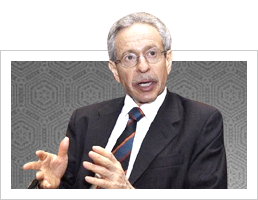
Dr. Robert Lawrence Kuhn, author of How China’s Leaders Think and the biography of former President Jiang Zemin, has long-term relationships with China’s leaders and the Chinese government.
5. Antithetical
The “Antithetical Chinese Dream” takes a different perspective, focusing on the tensions or contradictions among the various kinds of Chinese Dreams. These are the normal tradeoffs that all societies must consider continuously, the classic expression being “Guns vs. Butter”(Note: I’m sorry, but this really isn’t a classic American expression. Never heard of it. Did some quick online research - It was coined about 100 years ago by a failed candidate for US president, and referred to once by former US president Lyndon Johnson in the 1960s. Nazi Germany’s Joseph Goebbels used it more. So I think we should take “American” out)—how to allocate national resources between military strength and social improvements. In China’s case, however, the primary tradeoff is not between military and civilian funding, but between economic development, which is required to build the country and alleviate severe social imbalances, and the problematic byproducts of rapid development, particularly pollution and the creation of social imbalances.
Following are several natural tensions implicit in The Chinese Dream. 1. Economic development vs. environmental damage.
2. Economic development vs. social imbalances: investment tradeoffs between urban and rural, coastal and inland (i.e., it is usually more efficient to invest in developed areas, but that would make social imbalances worse).
3. National vs. personal: investment tradeoffs between national projects such as basic science research, space program, defense needs, and the like, and the immediate needs of the people, such as healthcare.
4. National vs. global: balancing China’s vital sovereignty over disputed borders or maritime territories with the concerns of neighbors; protecting the national without disturbing the global.
5. Long-term vs. short-term: investment tradeoffs between long-term projects such as the South-to-North Water Diversion Project and the many short-term needs such as subsidies for poor or rural citizens.
These are not unusual tensions in themselves—in fact they are quite normal—but to be always aware of them and to address them directly will enable The Chinese Dream to move from a general vision, exemplary as it is, to a guiding principle that can drive practical implementation. The point here, remember, is not to address the specifics merits of the arguments, but rather to present diverse ways of thinking about The Chinese Dream.
Connotations of Chinese Dream
Inspired by the Chinese Dream, more and more people have begun to chase their own dreams, including dreams to receive better education, start businesses, purchase homes and get rich. People firmly believe that as long as they work hard, their dreams would come true. [more]

Chinese dream and China's governance
A great deal will depend on how Xi Jinping will actually implement the core features of the program he has laid out and how he will seek to create incentives and constituencies to support his programmatic goals.In sum, President Xi has now made very clear where he stands and where he wants the country to go under his leadership, and he has achieved wide-ranging endorsement of this overall program. [more]

Chinese Dream includes strong PLA
The PLA as a pillar of State security follows the trend of the times and follows a principle that is different from colonial aggression and expansion. And China firmly believes in the principles of peace, cooperation and development of military ties with other countries. [more]

The Chinese dream and peaceful development
The most difficult issue in the region now is the the relationship between China and Japan regarding overlapping claims on the Diaoyu, or Senkaku, islands group. The problem is residual from World War II, and the historical part of the issues is complicated. That is why Japan PM Abe’s revisionist statement on World War II and its impact does not help. [more]

The year of Chinese Dream
Distinct from the American Dream, the Chinese Dream cannot be a narrative of pure newness. It is the imagining of a better future with the memory of 4,000 years of history, a movement of renaissance expressed in the vision of "civilizational China". [more]

Defeat challenges, realize Chinese Dream
High economic growth in recent decades may have made China more confident of realizing the Chinese Dream, but the country's new leaders face serious challenges that could hamper their efforts to realize the goal.First and foremost is the need to fight widespread corruption. Making this his main priority, President Xi warned that corruption could lead to "the collapse of the Party and the downfall of the State". [more]
World dialogue on the Chinese Dream
The “Personal Chinese Dream” focuses on the well-being of individual Chinese citizens and thus modifies traditional notions of the primacy of the collective over the individual. The dream of the Personal is balanced with the dream of the National. In fact, the fulfillment of The Personal Chinese Dream constitutes a good part of what it means to fulfill the National Chinese Dream. [more]

Making a nation's dream come true
Promoting Chinese concepts in the rest of the world is not very difficult - stop translating key Chinese terminologies (at best, give the appropriate or closest meaning and continue with the Chinese terminology). If kung fu, wushu, rujia, shengren, junzi can be understood and accepted by the outside, why not zhongguo meng? Once you translate a Chinese term you give away the definition of thought. [more]


