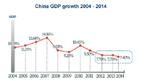
"Opening-up" has been gradual with the authorities carefully taking note of policy repercussions, if any, before enlarging their scope. The calibrated preference is visible even today as China experiments with new generation reforms in latest laboratories like the Shanghai Free Trade Zone.
China's has not been an entirely unblemished story. High economic growth has had its side effects. These include widening of economic and regional disparities and a heavy toll on sustainable indicators through depletion of water resources, and massive carbon emission and pollution.
China's success and the more undesirable consequences of that success have influenced modern development discourse. While China's success in building infrastructure, reducing poverty and upgrading slums have become almost mythical, the income inequality and pollution indices have also become yardsticks in different contexts.
How to explain the social and economic costs of China's growth on the way to building up of socialist market economy?
It is important to remember that the experiment of guiding the market with socialist oversight and outreach is an unprecedented project. Being top-down in order, it is also vulnerable to setbacks dealt by local characteristics. This probably explains why Guangdong province succeeded in creating exemplary special economic zones while Hainan province didn't.
Market forces are genies that once uncorked can produce spectacular results. The qualitative aspects of these results become known much later.
Almost two decades after the launch of reform and opening-up, Chinese authorities responded to widening regional disparities by proposing specific development plans for its relatively underdeveloped western region. But the western region will still take a lot of time and efforts to catch up with the eastern and southern parts of the country. Businesses and markets do not always respond to even the most favorable of incentives, unless they can see enabling conditions, which are far more in China's coastal provinces than its hinterland.
The socialist aspect of the economic policy has helped China take quick action wherever gaps have emerged. On many occasions, the socialist State and its organs have encouraged and helped businesses. But a pro-business outlook is not necessarily pro-market. There are probably sectors and areas where several businesses have prospered because of their ability to use State organs to their advantage.
Nonetheless, these are areas where markets have not matured because of lack of competition. China's socialist market economy continues to experience the tension, but it needs to encourage more competition.
The author is a senior research fellow and head of Partnerships & Programmes at the Institute of South Asian Studies, National University of Singapore.
(China Daily 08/20/2014 page9)


Copyright 1995 - . All rights reserved. The content (including but not limited to text, photo, multimedia information, etc) published in this site belongs to China Daily Information Co (CDIC). Without written authorization from CDIC, such content shall not be republished or used in any form. Note: Browsers with 1024*768 or higher resolution are suggested for this site.
License for publishing multimedia online 0108263 Registration Number: 130349