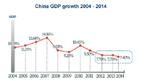
A Chinese scholar has sparked a fierce public debate by saying that the rapid pay rise will hinder China's economic growth. The remark and the subsequent debate are suggestive of a big problem China is facing: the middle-income trap.
The middle-income trap is a phenomenon that occurs in countries whose economic growth relies on cheap labor to produce goods for exports. With increase in wages, these countries lose their cost-based competitiveness. The countries ultimately fall into the trap if the wage levels increase beyond the critical point before they manage to transform the economic development model - and their products cease to be cheap for the global market and they cannot find any higher value-added alternative.
The trap occurs roughly when a country's per capita GDP is between $6,000 and $10,000, a point at which economic development falters and per capita GDP tends to flatten. China has reached such a point in its development cycle. So, what can it do to avoid the trap?
China has waited too long to implement some important reforms. Hence, any new initiative taken now, or in the near future, will produce undesirable side effects, whose costs have to be borne by other components of the economy - this means solving one problem could create another, depending on the relative negotiating forces at play.
But let us be clear, all reforms in all countries come at a cost. So the question is: "How is China going to allocate this cost, and are the relevant parties willing to pay for it?"
China is also in the process of transforming itself into a more consumer-based economy, which is possible only if there is a healthy increase in workers' salaries. Of course, increasing workers' salaries will have a direct negative impact on companies' profits. But this is not the end of the story, for increasing salaries will also increase private consumption, and this additional consumption will boost companies' revenues. This, to a certain extent, will counterbalance the negative effects of higher salaries.


Copyright 1995 - . All rights reserved. The content (including but not limited to text, photo, multimedia information, etc) published in this site belongs to China Daily Information Co (CDIC). Without written authorization from CDIC, such content shall not be republished or used in any form. Note: Browsers with 1024*768 or higher resolution are suggested for this site.
License for publishing multimedia online 0108263 Registration Number: 130349