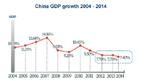
In principle, this windfall could boost GDP by a similar margin if it was all spent. The boost is unlikely to be quite so big because companies and households in China typically save a large share of their income. Nonetheless, for a large oil consumer like China, the fall in prices reduces the downside risks to growth.
We expect inflation to continue falling next year. That said, we think deflation fears are overdone; we are not expecting consumer price inflation to turn negative. In any case, the fall in inflation is largely being driven by falls in global commodity prices which should actually benefit most firms and households.
Besides, wage growth and profit margins remain healthy.
The focus here is likely to remain on keeping financing costs low. The recent rate cut has not been fully passed on by banks and is unlikely to help smaller companies so policymakers may have to do more. We expect two more cuts to benchmark lending rates by the middle of next year, as well as liquidity injections, including in the form of reserve requirement ratio (RRR) cuts, in order to bring down market interest rates.
But we shouldn't read too much into any given move. Tougher banking regulation will have a tightening effect over the months ahead. A slowdown in foreign exchange purchases would be felt in a similar way. To some extent, liquidity injections and RRR cuts will be needed to offset these shifts.
Crucially, we don't see the recent benchmark rate cut as the start of a new easing cycle similar to that in 2008. Interest rates are likely to fall but we believe that the PBoC will stop short of driving a sustained rebound in credit growth, unless the economy and labor market deteriorate markedly.
How policymakers respond to the revision to China's budget law, which will come into effect on Jan 1, will be key in determining the fiscal stance for next year. The new law requires that the two-thirds of government spending that currently takes place outside the formal budget, either by branches of government or notionally independent local government financing vehicles, be included in the budget.
While this is a welcome step toward boosting transparency, it will force officials to either drastically tighten the effective fiscal stance or see the budget deficit soar.
As expected, financial reforms are progressing the fastest. The recently announced deposit insurance scheme should come into force early next year and lay the foundations for the launch of more private banks and further steps toward interest rate liberalization. In that regard, while we expect the benchmark deposit rates to be cut again, we think the PBoC will keep the ceiling on deposit rates unchanged next year by increasing the margin by which retail deposit rates can exceed the benchmark.
The result would be to give banks more flexibility in setting interest rates and to support greater competition.
Other areas to watch include the hukou (household registration) system, where liberalization is inching forward, and State-owned enterprises where more pilot programs for mixed ownership schemes could be launched.
We also expect further efforts to reduce the regulatory burden, particularly on smaller companies, and encourage more private sector investment in currently protected parts of the economy. Also, a nationwide property registry could be launched, paving the way for the eventual expansion of the much-touted property tax.
In some other areas reforms may make slower progress. The strength of the US dollar and rapid appreciation of the renminbi in trade-weighted terms looks to be pushing the PBoC to resume foreign exchange intervention, setting back hopes within the PBoC that the renminbi could soon be allowed to float freely. In turn, this implies that full opening-up the capital account remains some way off.
The authors are economists with Capital Economics, a London-based independent macroeconomic research consultancy.
 Considering money as the end is the tragedy

Copyright 1995 - . All rights reserved. The content (including but not limited to text, photo, multimedia information, etc) published in this site belongs to China Daily Information Co (CDIC). Without written authorization from CDIC, such content shall not be republished or used in any form. Note: Browsers with 1024*768 or higher resolution are suggested for this site.
License for publishing multimedia online 0108263 Registration Number: 130349